On Tuesday, nearly two-thirds of India was under a spell of a heatwave that is on course to become the longest ever, according to the India Meteorological Department (IMD). This is in line with predictions that the intensity of heatwaves is rising. DS Pai, a scientist at IMD, Pune, told Hindustan Times that a study of long-term heatwave data of 35 metrological sub-divisions showed a threefold increase in heatwaves every year since 1991. “Our observation indicates that the increase was steeper in the last two decades,” he said.
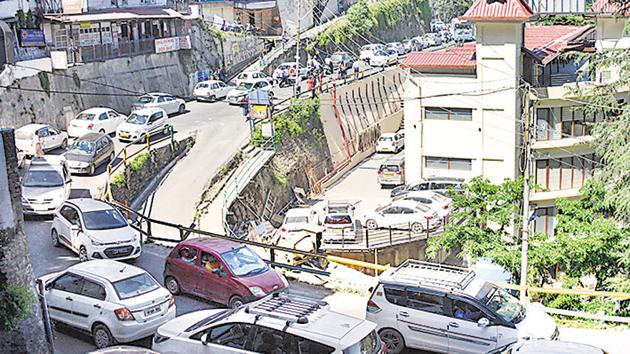
While heatwaves affect people who live in that region, they can also have a deleterious impact on faraway areas. Every year, the sweltering heat of the northern plains drives tens of thousands of people to hill stations like Shimla (Himachal Pradesh), Nainital and Mussoorie (Uttarakhand). This year, nearly 15,000 vehicles have already entered Manali (Himachal Pradesh) and Shimla, clogging all approach roads to these hill stations. This is unfortunate because these small hill stations and their delicate ecosystems cannot handle such an influx. Last year, Shimla suffered a major water crisis, and experts blamed it on relentless construction to accommodate tourists, deforestation and destruction of Himalayan springs. After concretising India’s cities and turning them into heat islands, pressure is being put on places that are still in somewhat better shape. This kind of unbridled tourism will not only devastate these beautiful hill towns but also have a severe downstream impact in the long run.
According to NITI Aayog’s ‘Sustainable Tourism in the Indian Himalayan Region’, an average of 100 million tourists visit the region — home to about 50 million people — every year. With an aim to generate funds to offset this environmental damage, the Aayog recommended an “introduction of a green cess — in the form of payments from service consumers” because it “can increase tax revenue and help maintain and enhance critical services”. While one understands that these tourist destinations need funds, a green cess or tax on tourism alone is unlikely to have any impact if it is not accompanied by strict regulation and the implementation of existing laws. The government also needs to devise a plan to evaluate the carrying capacity of these regions, and, if need be, restrict the number of tourists. More important, the State needs to tackle the root cause of such a rush to cooler climes: unsustainable development in the plains and their impact on climate.
{{/usCountry}}According to NITI Aayog’s ‘Sustainable Tourism in the Indian Himalayan Region’, an average of 100 million tourists visit the region — home to about 50 million people — every year. With an aim to generate funds to offset this environmental damage, the Aayog recommended an “introduction of a green cess — in the form of payments from service consumers” because it “can increase tax revenue and help maintain and enhance critical services”. While one understands that these tourist destinations need funds, a green cess or tax on tourism alone is unlikely to have any impact if it is not accompanied by strict regulation and the implementation of existing laws. The government also needs to devise a plan to evaluate the carrying capacity of these regions, and, if need be, restrict the number of tourists. More important, the State needs to tackle the root cause of such a rush to cooler climes: unsustainable development in the plains and their impact on climate.
{{/usCountry}}