
 E-Paper



History and geopolitics bind Delhi and Moscow
Foreign policy is determined by both practical interests and principles. Russia is not the Soviet Union, but it is an old and reliable ally that can still possibly assist us in accommodating and managing Chinese influence in the region.

 Prefer HTon Google


Almost exactly a year ago, I was in Sydney with some of the most astute strategic analysts of the western world. We were discussing, predictably, the consequences of the new war in Ukraine. I cannot remember even one brilliant thought leader there contesting the general sense of the house — that Russian President Vladimir Putin made a dreadful mistake; not only would the war be concluded within weeks in Ukraine’s favour, but also Russia would almost disappear into the sands of history, and so would Putin.
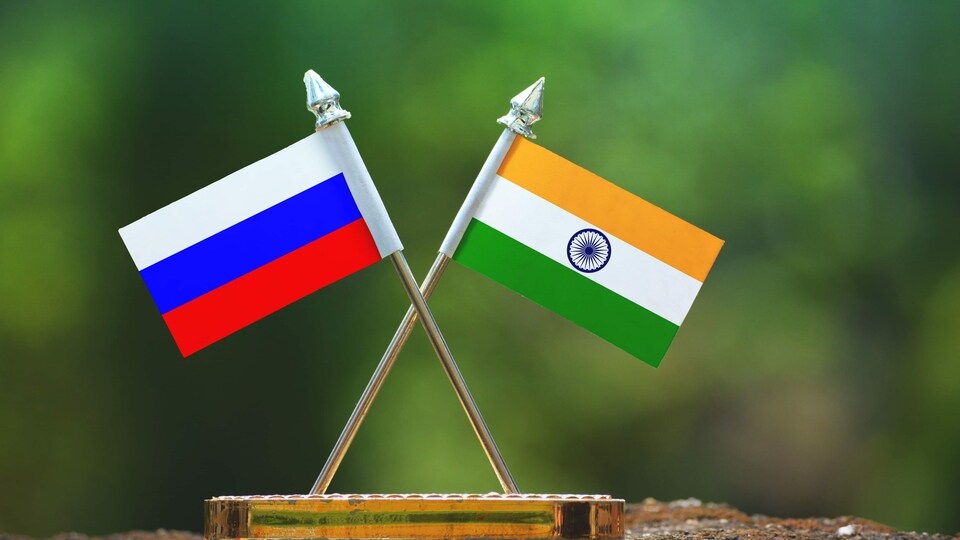
I was also counselled that if I had any influence in New Delhi, I should advise the Government of India that this is India’s moment. New Delhi had the choice of bandwagoning with the West or to cynically do what seems to come naturally: Sit on the fence. The former, I was told, would bring huge strategic dividends and the latter would shame India and position it even more firmly as an unlikely ally unwilling to take responsibility for the management of the international system.
One year later, the war has not ended, Putin has not collapsed, and India has not submitted itself to the pontifications of the western world. We have not sold our interests at the altar of a self-serving crucifix created by the United States (US) but done what we’ve always done: Taken a view, a position, which conforms to our weltanschauung. And reasserted our strategic autonomy.
Understandably, many western analysts cannot quite comprehend why India is hesitant and not embracing what they see as realpolitik — why can’t India understand that it’s in its own interests to cling on to the coattails of the US? But India is too big, too exceptional, very messy in a way, but certainly too complicated to be captured by the sensibilities of a stereotypical western educated elite.
To understand India’s position, you need to go back and understand its own history. After all, the West has colonised us, sanctioned us, and catalysed all the forces that want to divide us. India will have to fight its own battles, including those created by the Chinese threat. The history of the West, after all, is a history of using nations and dumping them. It is only those who are amnesic about their own history, the brutalities of colonialism, the malfeasance of American policies, and the wretchedness brought by neo-imperialism, who can think of firm alliances with the superpower.
The Nedous Hotel in Srinagar may seem to have an unlikely connection with the war in Ukraine, but it was here in 1955 that India’s long-standing quest for strategic autonomy and special relationship with Russia arrived. That was the year when then premier of the Soviet Union, Nikolai Bulganin, and secretary-general of the Soviet Communist Party, Nikita Khrushchev, visited Jammu and Kashmir at a time when the Cold War was at its peak, and India was facing pressure from the United Nations Security Council (UNSC) and particularly the Anglo-American bloc to agree to a plebiscite in Kashmir.
Bulganin and Khrushchev were invited to the Nedous Hotel to inaugurate an opera Bumber Yumberazal about how an innocent narcissus flower, flourishing on its own, was warding off the forces of toofan (storm) and imperialism. Bulganin and Khrushchev, in unison, that day went on record to say that Jammu and Kashmir is an integral part of India. No other permanent member of the UNSC had made such an unequivocal statement. Can India forget this as a mere anecdote?
India’s special relationship with the erstwhile Soviet Union continued through the decades and then, of course, was strengthened as Richard Nixon and Henry Kissinger plotted against us, and India signed a special treaty with Moscow in 1971. Even during the years of discomfort with the Soviet Union’s aggression in Afghanistan, Moscow’s support was critical in every sense. Even today with changing equations, 60% of all our arms supplies come from Russia, and it is the only permanent member of the UNSC which backs New Delhi’s position on Jammu and Kashmir, and virtually on every issue that matters in the international system.
Foreign policy is determined by both practical interests and principles. Russia is not the Soviet Union, but it is an old and reliable ally that can still possibly assist us in accommodating and managing Chinese influence in the region. The US remains a young suitor for India’s affection. A determined America has invested in India, its phantasmic conferences on the hill and its strategic thinkers. But that is not the reason enough for India to completely support America in the war in Ukraine. India is larger, much larger than those on the support staff of Langley, or the Beltway or Lockheed Martin.
What New Delhi and Prime Minister Narendra Modi may want to do is to invite President Vladimir Putin, President Joe Biden and President Volodymyr Zelensky to Varanasi and let the wisdom of the city and the Ganga help provide a way forward. That would truly be India’s way.
Amitabh Mattoo is professor, JNU and the University of Melbourne
The views expressed are personal


