China’s military aggression in Ladakh, which continues to date, led many of us to ask: How does India respond to and meet the China challenge? Based on our discussions at the Pune International Centre (with Raghunath Mashelkar, Vijay Kelkar, Ganesh Natarajan and Ajit Ranade), we have offered Indian policymakers our ideas in a paper titled Strategic Patience and Flexible Policies: How India Can Rise to the China Challenge.
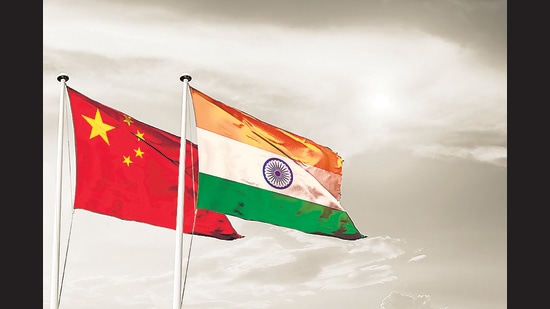
Our armed forces have responded magnificently in the immediate and near term. However, the India-China relationship is a long-term game, which is not merely about military affairs but also about economics, science, technology and innovation. One of the reasons for Chinese aggression toward India is the huge discrepancy in economic, military and national power, which has emerged between the two over the past decade.
In the short-run, India will have to build balancing coalitions with like-minded countries. Quad is one example. There are three groups of countries we can contemplate for such coalitions: Major democracies of the world; countries bordering China; and India’s neighbours. The United States (US), Japan, France, Sri Lanka, Bangladesh and Russia spring to mind. There are roughly 20 such countries. India needs to build deep partnerships with these coalitions of nation-States, going beyond treaties and agreements to forge linkages between peoples and institutions. Education, travel and tourism, cooperation among scientists and innovators need to be nurtured. Good partnerships are grounded in give-and-take, where each country reshapes its domestic policy in ways that are favourable to the other. India will have to rise to this challenge, and go beyond being wedded to a narrow vision of strategic autonomy.
There is a debate about protectionist measures that will harm Chinese exports or investments in India. A significant proportion of those moves are self-defeating. There is a case for three groups of restrictions: Limit companies controlled by the Chinese State from a controlling stake in a hotlist of sensitive infrastructure assets; steer clear of Chinese-controlled technological standards; and block surveillance of Indian persons. India must aim not for a “China less” economy, but for one in which we have “less China”.
{{/usCountry}}There is a debate about protectionist measures that will harm Chinese exports or investments in India. A significant proportion of those moves are self-defeating. There is a case for three groups of restrictions: Limit companies controlled by the Chinese State from a controlling stake in a hotlist of sensitive infrastructure assets; steer clear of Chinese-controlled technological standards; and block surveillance of Indian persons. India must aim not for a “China less” economy, but for one in which we have “less China”.
{{/usCountry}}Strategic planners in Indian firms need to rethink business plans in the light of these complexities. In some areas, where China-centric sourcing and technological dependence can elevate business risk, a selective retreat from economic engagement with China, and increased emphasis upon the global market, is optimal. In other areas, India can become the dominant alternative to the China-centric supply chains of the past, addressing the desire of global firms to reduce their exposure to China.
We visualise the distinct possibility that India can roughly match China’s strength in about 20 years. This is not wishful thinking, and it is not predicated upon China stumbling in its current growth path. It requires reversing the Indian growth malaise of the post-2011 period and foundational change in public policy frameworks around three main ideas: Decreasing the scale of government micro-management of the economy, slowing and reversing what is currently an expanding administrative State; and countering the growing erosion of the rule of law.
A critical element of the journey lies in innovation policy. India needs to match and improve upon China’s achievements in fostering research institutions and intellectuals that inhabit them. By 2047, if we can maintain 8% GDP growth per annum, then India will be a $64-trillion-dollar economy in Purchasing Power Parity (PPP) terms. In the same period, if China grows at 5% per annum, it will be a $86-trillion economy in PPP terms. In other words, the current mismatch will reduce significantly.
Becoming an advanced economy has always been India’s objective. What has changed in recent years is Chinese hostility, which has given fresh urgency to solving our growth malaise, learning how to be a mature market economy located in a liberal democracy. The judicious use of self-reliance (atmanirbhar), grounded in self-confidence (atmavishwas), where a confident India engages with the world without insecurity, forms alliances with like-minded countries, and leverages democracy and a skilled workforce to good effect, is the path through which the China challenge can be addressed.
Gautam Bambawale is a retired diplomat and served as ambassador to China. Ajay Shah is a research professor of business, Jindal Global University. Both are associated with the Pune International Centre. The views expressed are personal