The climate crisis no longer remains an issue with merely climatic implications. Its reverberations are felt in the world of development and strategy. Our nation is particularly vulnerable to the adverse effects of the climate crisis. Increasingly, unpredictable patterns of monsoon rainfall, while catering to the second largest population in the world, might overwhelm the drinking water infrastructure of India. Hence, it is vital for the government to work towards comprehensively overhauling the existing water infrastructure of the nation, thereby recalibrating it with India’s needs in the 21st century.
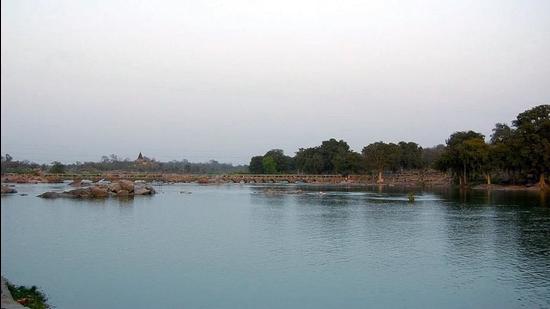
The answer to this recalibration lies in the national water grid, and the Interlinking of Rivers (ILR) programme, making them perhaps the most important need of the nation at this hour. The question that arises at this stage is: What is a national water grid? The national water grid is the network of canals and dams to be constructed under the ILR programme of the Government of India, which seeks to sustainably divert water from regions with rivers having excess water to geographies deficient in this natural resource. The ILR programme received an impetus during the National Democratic Alliance (NDA) government’s tenure, under Prime Minister (PM) Atal Bihari Vajpayee.
An intricate web of a comprehensive policy involving various ministries is required to be created to implement a project of the ILR’s magnitude. Federal sensibilities must also be accounted for through forming a consensus. The subtle art of policymaking needs to be backed with resolute and decisive leadership. This is where the United Progressive Alliance (UPA) government was deficient, and where PM Narendra Modi’s leadership has made a difference to projects that long lay dormant between 2004 and 2014.
In less than five months of the NDA government’s swearing-in, a special committee on ILR, as per the directions of the Supreme Court, was constituted by an order on September 23, 2014. The ILR has two components — the Himalayan River Development Component and the Peninsular Rivers Development Component. The National Water Development Agency (NWDA) has already identified 14 links under the Himalayan Rivers Component and 16 links under the Peninsular Rivers Component, for inter-basin transfer of water after having conducted geographical and topographical surveys with due diligence.
{{/usCountry}}In less than five months of the NDA government’s swearing-in, a special committee on ILR, as per the directions of the Supreme Court, was constituted by an order on September 23, 2014. The ILR has two components — the Himalayan River Development Component and the Peninsular Rivers Development Component. The National Water Development Agency (NWDA) has already identified 14 links under the Himalayan Rivers Component and 16 links under the Peninsular Rivers Component, for inter-basin transfer of water after having conducted geographical and topographical surveys with due diligence.
{{/usCountry}}The benefits of the national water grid have four distinct dimensions: Agricultural, economic, strategic, and sociological. On the economic front, the interlinking project will enable the production of 34,000 MW (megawatts) of energy, while curbing irrigation shortages to 35 million hectares of land. The benefits are sociological too. Research by the World Bank shows that halving the time required to fetch water for households increases school attendance among girl children by 2.4 percentage points on average, with the impact being far greater in rural areas. Thus, interlinking rivers, by increasing water supply, invariably results in women’s empowerment — a dream already being realised by PM Modi’s Ujjwala Yojana.
With our adversaries trying to disrupt the natural flow of rivers in the subcontinent by constructing dams, the ILR programme will ensure a safety net of water supply, if these foreign powers ever try to divert the natural flow of our rivers. All four dimensions are vital for the PM’s vision of ensuring an aatmanirbhar India — a self-reliant India that is under no compulsion to be dependent on the world. Therefore, the ILR and the national water grid are essential policy imperatives in tapping into India’s full potential to grow as an economic powerhouse.
The first chapter of this promising success story is being authored by the PM in the form of the Ken-Betwa River Interlinking Project. The Cabinet, last Wednesday, under the PM’s direction, approved the funding and implementation of this historic project, which has a total cost of ₹44,605 crore. The government is committed to delivering on its promise of the project’s completion in eight years.
The project has far-reaching positive implications on the region that I have the good fortune of calling my janambhoomi (birthplace) and karambhoomi (workplace). The 13 districts in the Bundelkhand-Chambal belt bordering Madhya Pradesh and Uttar Pradesh have, for generations, battled withering drought. For generations, despite promises by successive governments, this region had remained neglected.
With PM Modi at the helm of affairs, the project has been infused with renewed vigour. Statistics from the jal shakti ministry underline that the project will realistically provide irrigation to 10.62 lakh hectares of barren farmlands, and provide safe drinking water to about six million people. The benefits also extend to industry and the power sector, with infrastructure providing for the generation of 103 MW of hydropower and 27 MW of solar power.
PM Modi is committed to making India a geopolitical power, self-reliant and strong. A new dawn awaits Madhya Pradesh, and, in turn, India.
Jyotiraditya Scindia is the Union minister for civil aviation and a senior leader of the Bharatiya Janata Party
The views expressed are personal