
 E-Paper



Keeping up with UP | Decoding the Maya factor as the battle lines for 2024 are drawn
The BSP chief and former UP CM will play spoiler in the northern region as she will cut into Opposition votes


Before joining the 38-party-member National Democratic Alliance (NDA) in mid-July, Om Prakash Rajbhar of Suheldev Bahujan Samaj Party (SBSP) was rooting for Mayawati as first the Dalit prime minister (PM) of the country, a dream that his mentor Kanshi Ram had once cherished.
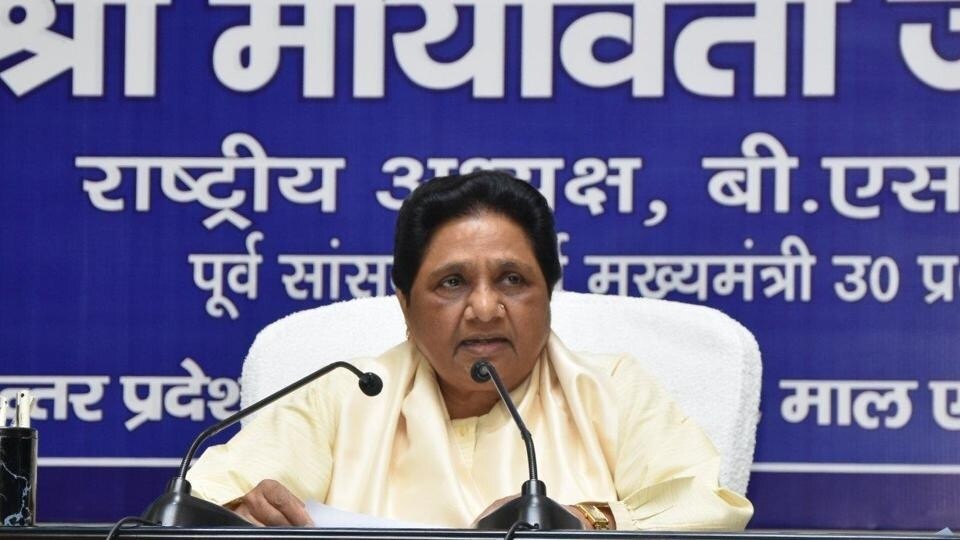
Mayawati, the Bahujan Samaj Party (BSP) national president, is a Dalit icon in northern India. Many had envisioned her as the tallest Dalit leader of the country after she had formed a majority government in Uttar Pradesh in 2007. At the time, there was a vacuum of Dalit leadership in the country. The last pan-India Dalit icon was the late deputy prime minister Jagjivan Ram. That position remains unfilled, even today.
Rajbhar had cogent arguments in support of his political assertion. First, the BSP has an organisational presence in 13 states of the country with a vote percentage of 4% in Rajasthan and 5.11% in Madhya Pradesh (during the 2018 assembly elections) and 12.88% in Uttar Pradesh in the 2022 assembly polls). Second, he maintained that her projection as PM would galvanise Dalits across the country to vote for the opposition camp.
“Caste remains the driving force in our electoral politics. The appointment of a tribal person as the President of India [Draupadi Murmu] has mobilised the STs (Scheduled Tribes) in the BJP’s favour,” he added.
Rajbhar had also done some arithmetic, calculating the voting strength of the newly formed I.N.D.I.A (Indian National Democratic Inclusive Alliance) at 40%.
“Add 12.8% vote of the BSP and 3% of the SBSP, I.N.D.I.A would have touched the winning 55% mark,” he claimed.
Rajbhar had also spoken to Mayawati, who reportedly laughed away his advice. There were also no takers in the opposition camp for the simple reason that the four-time chief minister is not only mercurial, but has thrice formed her government in the state with the support of or in alliance with the Bharatiya Janata Party (BJP). Although she has said that she will not support the NDA, she is considered soft towards the BJP-led Central government. One possible reason is the fear of reprisal: her brother, Anand Kumar, national vice president of the BSP, is under the scanner for his assets.
After his political moves failed, Rajbhar switched over to the ruling camp and is now comfortably ensconced in the NDA with the promise of a berth in the Yogi cabinet and one or two seats of east UP constituencies secure, in the forthcoming Lok Sabha elections.
Now, he claims I.N.D. I.A has already lost the 2024 battle without Mayawati as a poll partner.
Ironically, the one-time favourite of all political parties, Behenji (as she is fondly called) seems to have fallen out of favour with both NDA and I.N.D.I.A.
Apparently, no one courted her before the D-day (July 18) when both the political conglomerates had showcased their respective strengths before the nation.
The next day, she announced her decision to stay neutral and stay equidistant from both coalitions. Later, amending her decision, she said she will take a call on stitching alliances after the forthcoming assembly elections in the five states that will take place later this year.
Gainer or spoiler?
Mayawati’s decision to drop her plan of going solo is driven by her political ambitions and compulsions. One, she wants to keep her option open to join the governments in four of the five states going to the polls later in the year. Two, she hopes to prevent elected members of her party from being poached.
And there is a history to it.
The BSP has been contesting elections in Rajasthan since 1998. But every time the electorate threw up a hung House, her MLAs deserted her party to join the party in power.
The 1998 and 2003 elections gave a clear majority to the Congress and the BJP, respectively. The BSP won two seats and the winning parties did not need their support to form the government.
But in 2008, the Congress won 96 assembly seats out of a total of 200 in the state. The party, short of the majority mark, lured the support of the six elected BSP MLAs who merged with the Congress to join the Ashok Gehlot government. This was repeated in 2018 when six of her MLAs crossed over to the Congress with 100 MLAs. Thus, Mayawati’s posturing is to protect her MLAs from poaching.
The BSP will be a gainer only if the elections in these states throw up hung Houses in which it emerges as the “balance of power.”
This is not new for Mayawati as this has been her formula in Uttar Pradesh too, where she has often dumped her pre-poll partner for power. In 1996, she contested the assembly elections with the Congress but formed the state government in alliance with the BJP.
In a political environment in which the parties are coalescing around two main parties — the BJP and the Congress — for the upcoming Lok Sabha elections, her decision to stay neutral in the Lok Sabha elections will give her the freedom to join the government, irrespective of who forms it, the NDA or I.N.D.I.A. The party, which has been on a steady decline, may gain some strength from the seat of power.
As of now, it looks like the party will play spoiler in the northern region as it will cut into opposition votes. For instance, the BSP will damage the Samajwadi Party in Uttar Pradesh by taking away a chunk of the Muslim votes. Similarly, she will hurt the electoral prospects of the Congress in Rajasthan and Madhya Pradesh by making inroads in their constituencies of Muslims and Dalits.
As Rajbhar says, her decision to stay neutral will only benefit the NDA eyeing Dalit support across the country as they are more interested in her votes than her.
The NDA is unlikely to make the mistake that the Congress, then the ruling party at the Centre, had committed in 1995 by propping her up as UP chief minister as power had consolidated Dalits in her favour. (She formed the government with BJP support at the state level).
Missed the bus
Soon after Mayawati broke the 14-year-long coalition jinx (1993 to 2007) in UP, I visited Rajasthan, Madhya Pradesh and Maharashtra. The three states were high on her agenda and her success in UP had raised the political ambitions of Dalits in these states.
Kanshi Ram had already established the party’s foundation in these states, especially in Rajasthan and Madhya Pradesh, where he had built a committed cadre who used to cycle hundreds of kilometres with him to build the party’s support base. In the mid-1970s, Kanshi Ram used to frequently visit Bhopal, Jabalpur and Sagar to build his cadre for BAMCEF (Backward and Minorities Scheduled Castes Employees Federation) that he had floated in 1978. The BSP was born in 1984.
Thus, while the BSP wanted to replicate the UP victory in other states, her core constituency started dreaming of a Dalit prime minister in the country. But as Mayawati built parks and statues, her well-oiled party machinery started rusting. Her experiments of building a coalition of Dalit-Muslim-Brahmins in 2012 irked her constituency as her supporters saw their firebrand leader soften her stance towards the upper castes.
JNU professor Vivek Kumar wrote in his book, India’s Roaring Revolution: Dalit Assertion and New Horizons- “The BSP represents the new horizon of Dalit assertion, that Dalits can also come to power and in fact rule by forming their own political party, they can also represent themselves independently, which is qualitatively different from being in a party led and dominated by the so called upper strata and then represented by them for their social-political rights. It is true that before the advent of BSP, the Dalits never thought of contesting elections independently even for panchayat. Today Dalits not only contest elections from panchayat to parliament on their own but they also nurse the aspiration of becoming ministers, chief ministers and a prime minister through a political party led and dominated by Dalits. The BSP became the first national political party established by Dalits- today it stands at third position after Congress and BJP in terms of percentage of popular votes polled in its favour.”
Though the BSP remains a national party, it has lost much of its sheen. The hype is missing with only a few lone voices like Rajbhar reminding them of their dreams.
Mayawati failed to prevent the downfall of the BSP as it kept losing elections one after another. After the rise of Narendra Modi in 2014, the opposition space too started shrinking in her strongest state of UP.
Now, while she is struggling to hold her core constituency, Rajbhar’s proposal of her as the first Dalit prime minister must have sounded music to her ears.
The fact is while there is no vacancy for the top slot in NDA, I.N.D.I.A has too many claimants for the post and too many opponents to her very entry into the group.
Miracles do happen in politics. But this seems near impossible in the current scenario.
From her perch in Lucknow, HT’s resident editor Sunita Aron highlights important issues related to Uttar Pradesh


