
 E-Paper



Monsoon 2019: A stark reminder of climate change and its implications
India Meteorological Department director general M Mohapatra said that the monsoon will officially end on September 30 but the retreat may start by second week of October, which in normal times, is end of rainy season from tip of Kerala and Tamil Nadu.

 Prefer HTon Google


The monsoon of 2019 saw highest rainfall since 1994. September received highest rains in the last 102 years even as monsoon refuses to retreat. The monsoon is expected to start withdrawing from second week of October. India has witnessed almost twice the number of the extreme rainfall events (200 mm or more in 24 hours) in 2019 as compared to the last five years. Mumbai also saw five extreme rain events this year as compared to eight in the past decade and Delhi has seen least rains in the rainy season in the past five years.
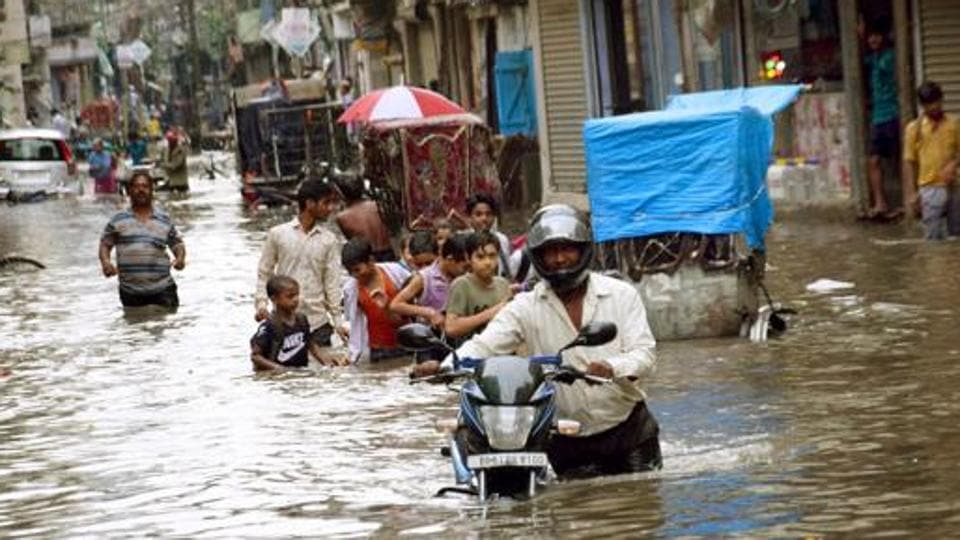
These rain related events may make 2019 one of the most bizarre monsoon seasons in the recent times but I am sure the worse is yet to come considering how weather pattern is changing across the world, all because of climate change and rising fossil fuel emissions.
India Meteorological Department director general M Mohapatra would have been amused when he said on Sunday that the monsoon will officially end on September 30 (Monday) but the retreat may start by second week of October, which in normal times, is end of rainy season from tip of Kerala and Tamil Nadu.
Also read: Monsoon is officially over but likely to withdraw only after Oct 10: IMD
Extreme rain events over central India has tripled between 1950 and 2015, according to a 2017 study led by researchers at the Indian Institute of Tropical Meteorology (IITM), Pune, affecting about 825 million people, leaving 17 million homeless and killing about 69,000.
Different research papers in recent years have claimed that the Indian monsoon was changing in “significant ways”.
On the whole, the monsoon was “weakening in the long-term”, said a January 2019 review of existing studies by IMD scientists. The rainfall over central India since the 1950s has declined, and more recently, it has risen over northwestern Rajasthan and parts of peninsular India.
Going by these trends, the IMD changed the definition of a “normal” monsoon by reducing average rainfall received during rainy season from 89 cms to 88 cms. The normal monsoon is defined on the basis of long period average (LPA) rainfall received between 1950 and 2010. The change is because of dip in average rainfall due to surge in drought and depressed rainfall since 2000; 13 of the last 18 years have been “below normal” rains (where rainfall was less than 90% of the normal).
The decrease may appear to be insignificant in number but in actual it shows that Indian monsoon is slowing down and the spread of rain shadow areas was increasing. Though the country may get normal or near normal (which is 90-95% of normal rain) as per the new definition, there would be vast regions which have received very less rainfall.
Another indication that climate change was impacting monsoon is the IMD considering change in the onset and withdrawal dates of the monsoon fixed in 1941.
According to a study done by IMD, there has been an average of 8 to 10 days of delay in monsoon onset and retreat dates between 1940 and 2010, another indication of how climate change was impacting India’s most amazing weather phenomenon. Since 2014, the monsoon had not started on June 1, the onset date, and has not retreated on September 1, the withdraw date, for Indian monsoon.
A committee of experts has submitted its recommendations to the Earth Sciences ministry suggesting different formulations for new dates. Earth Sciences secretary M V Rajeevan in August 2019 said that the new dates will come into force from 2020 monsoon season, which experts say will have implications for agriculture, as advisories for farmers will have to be changed. At present, advisories on sowing and reaping of crops to farmers are based on the onset and withdrawal dates.
India as a whole received 10% excess rainfall in 2019 and nearly 1,900 people died in rain-related incidents across the country since June 1, according to the data available with home ministry’s disaster management division. Of this, 180 deaths have been reported in the past four days from Uttar Pradesh, Bihar, Jharkhand, West Bengal and Gujarat. Despite news of heavy rains all around, 15% of country’s geographical area received deficient rainfall, indicating the vast contrast in the Indian weather system.
Most of these deaths have been caused by sudden downpour, termed as extreme weather event under climate change terminology. So far, in monsoon season, India has witnessed close to 2,000 extreme weather events, which has been highest for any monsoon season in the past decade.
The probability of similar flooding in the years to come is high, driven by a global rise in temperatures—1 deg C since systematic record keeping began in 1850—according to an October 2018 report by the Intergovernmental Panel on Climate Change (IPCC), the United Nations body formed to assess science on climate change.
The 2019 monsoon data is just yet another example of how global warming was impacting Indian weather and causing an increase in extreme weather events, which have almost doubled since 1950s. While stopping climate change is not possible, controlling it by way of government intervention and citizen participation is possible. The climate talk at the United Nations last week in New York, in which head of 195 countries participated, was a disappointment as ambition was low. But, citizen activism can lead to sustained pressure which can force governments to react.


