Exactly a year ago, to this day, the India-United States (US) initiative on Critical and Emerging Technology (iCET) was formally unveiled. In an oversized yet packed room in the US Chambers of Commerce, national security advisors Ajit Doval and Jake Sullivan consulted leading representatives from industry and government along with other stakeholders. Both countries set on a path to architect a new framework for cooperation. Led by the National Security Council Secretariat (NSCS) in India and the National Security Council
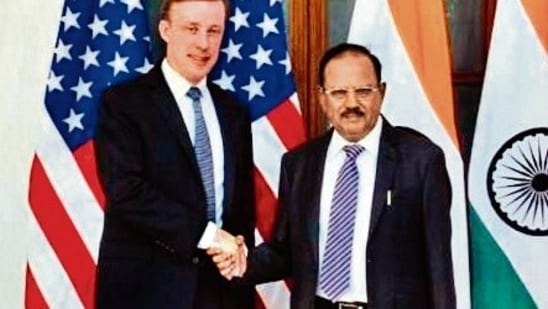
Exactly a year ago, to this day, the India-United States (US) initiative on Critical and Emerging Technology (iCET) was formally unveiled. In an oversized yet packed room in the US Chambers of Commerce, national security advisors Ajit Doval and Jake Sullivan consulted leading representatives from industry and government along with other stakeholders. Both countries set on a path to architect a new framework for cooperation. Led by the National Security Council Secretariat (NSCS) in India and the National Security Council (NSC) in the US, the iCET served as a unique experiment in statecraft. The NSCS had not done anything like this until now.
The enthusiasm in the room was unmistakable. Industry captains pledged their support to deepen ties across a range of strategic technologies from defence and Artificial Intelligence to semiconductors and space. The two governments produced a “fact sheet” on iCET— the first set of formal documents outlining priority areas. An iCET ecosystem grew over the next four months. Deals were negotiated. Longstanding areas of cooperation that predated iCET but lacked strategic focus were placed under the spotlight. NSCS and the NSC were able to identify gaps, readjust priorities, and gently push line ministries in both countries to work toward clearer outcomes. Prime Minister Narendra Modi’s State visit to Washington, DC, in June 2023 served as a forcing function for iCET torchbearers both within and outside of government.
The strategy worked. A range of announcements peppered the long and hard-negotiated joint statement at the end of the visit. The American semiconductor company Micron pledged investments in India. It has subsequently broken ground in Gujarat. General Electric Aerospace and Hindustan Aeronautics Limited announced the coproduction of jet engines in India. The Congressional waivers required in the US to implement this deal have been attained. The US National Science Foundation has signed several agreements with its Indian counterparts to forge and foster collaborations. India became the 27th country to join the Artemis Accords, a set of principles that guide civilian space exploration.
Indus X, a new defence innovation ecosystem, was created. It is led by agencies associated with India’s ministry of defence and the US department of defense. A few large deals are soon expected to materialise between Indian and American companies in niche defence-related technologies — to be co-developed and manufactured in India. There is an ongoing formal process to demask the export controls labyrinth in the US. Equally, there is a serious effort to streamline regulations in India to attract inward investments and cement manufacturing commitments in strategic technologies.
There are many more examples of iCET-led outcomes. In sum, there is little doubt that the NSC-NSCS-led structure is delivering. There will likely be a high-level iCET meeting in New Delhi sometime soon. As senior officials take stock and think through the future of the iCET, I highlight two sets of observations.
First, whilst the NSC-NSCS structure has done more than many might have expected to incubate the iCET and coordinate and shape outcomes, it is time to think more carefully about the institutional future of the initiative. As many of its different verticals have taken root and are being considered at different levels in ministries, industry, and academy, it might be worth creating an iCET council that includes key ministries of both countries that have been invested in this effort. The NSC and the NSCS should be a part of this council. This process will give greater agency to ministries, institutionalising the iCET imperatives into a formal structure.
Moreover, the council could become the collective support base for the iCET initiatives and dealmaking. Such a structure also depersonalises the iCET that is currently, to an extent, dependent on individuals who have more than ably led this process. Yet, these individuals will move on. For the long-term sustainability of the iCET, both governments could consider the question of institutionalisation by the time the next iCET meeting takes place.
Second, it is worth keeping in mind that strategic technology cooperation takes time to mature. The iCET began with big bang announcements, but these are not replicable every quarter or even every year. As one senior official put it to me, “The iCET is as much about constantly preparing the groundwork for outcomes as it is about outcomes themselves.” This is about the long haul. Deregulation in India is a work in progress, as is the case with unbundling different categories of export control regimes in the US.
Similarly, if one or two sets of negotiations on the coproduction of defence-related products fall apart, it is not necessarily a failure of the iCET but rather one of negotiations — sometimes much is lost in translation. Trust takes time to develop. Actors on both sides, in time, will do better to co-learn and co-produce the shared syntax required to deepen cooperation. As the groundwork continues to be laid, even if the quantum of deal announcements reduces over a given period of time, the industry needs to keep an eye on the future. After all, it is both the primary mover of the iCET and potentially its greatest beneficiary.
The iCET has the potential to transform the US-India relationship many times over. Moreover, it promises manufacturing, jobs, and access to critical technologies to India’s burgeoning strategic industrial ecology, made up of both established players and an ever-increasing range of smaller ones. What is immediately required is patience and an active effort to institutionalise iCET 2.0.
Rudra Chaudhuri is director, Carnegie India. The views expressed are personal
One Subscription.
Get 360° coverage—from daily headlines
to 100 year archives.
Archives
HT App & Website