E-Paper



PMLA has more teeth than needed
There is a need to reassess the balance between the State’s powers in enforcing anti-money laundering measures and safeguarding individual liberties

 Prefer HTon Google


The Prevention of Money Laundering Act (PMLA) has been a cornerstone legislation in India’s fight against financial crimes. The law has undergone a sea change since its enforcement in July 2005, progressively tightening the noose around money laundering. An array of legislative amendments in 2009, 2012, 2015, 2018, 2019, and 2023 reflect the country’s hardening stance against illicit wealth. Nonetheless, PMLA’s journey, from its inception to its current form, has raised critical concerns regarding repercussions on individual liberties, privacy rights, and the presumption of innocence.
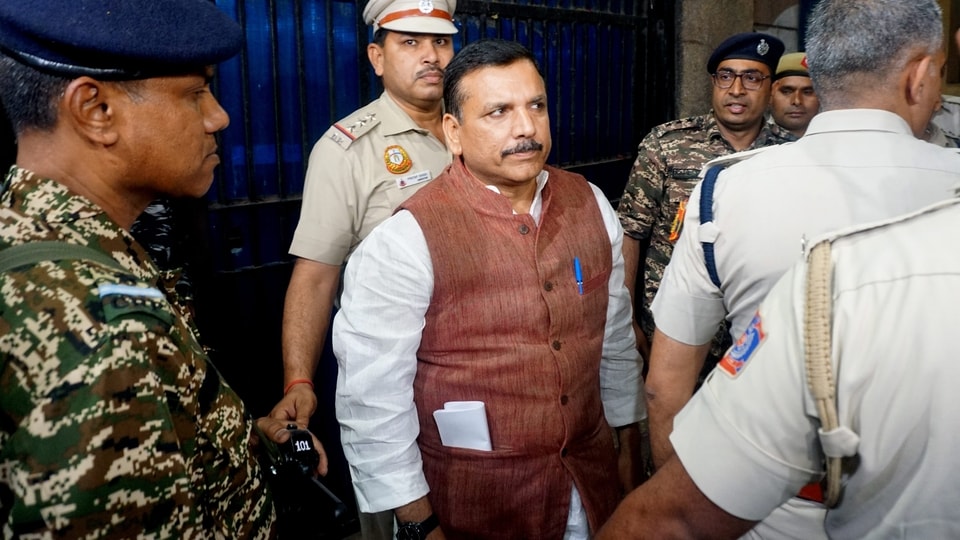
A recent development saw the Supreme Court (SC) granting bail to Aam Aadmi Party (AAP) MP Sanjay Singh, spotlighting the critical need for judicial oversight and accountability in the stringent law’s application. The Enforcement Directorate’s (ED’s) decision not to contest Singh’s bail, after his six-month incarceration without evidence of his involvement in money laundering, underscores the necessity of a balancing act between empowering enforcement agencies to combat money laundering and safeguarding constitutional rights.
Over the past couple of years, the SC has increasingly been asked to align PMLA’s provisions with constitutional principles, particularly after its 2022 Vijay Madanlal Choudhary judgment. The judgment affirmed ED’s vast powers, holding that PMLA provisions were not violative of fundamental rights. The three-judge bench, led by justice AM Khanwilkar (since retired and appointed as the Lokpal chairperson), emphasised the need for stringent measures to tackle money laundering and acknowledged PMLA’s role in fulfilling India’s obligations under the Financial Action Task Force (FATF). While the judgment strengthened ED’s hands, it attracted criticism from various quarters, including legal experts and human rights advocates who argued that it gave undue leeway to the federal agency, potentially at the expense of personal liberties and procedural safeguards. Instead of balancing the interest of justice and individual rights, the judgment gave rise to fears of the potential misuse of power by ED.
Merely a month after this judgment, another three-judge bench admitted a clutch of review petitions against it and agreed to reconsider at least two aspects — denying a copy of the Enforcement Case Information Report (ECIR) to the accused and shifting the onus of proving innocence from the prosecution to the accused. While the review petition against the 2022 judgment remains pending, the SC has had to interpret PMLA provisions in various other cases, clarifying and sometimes limiting the extent of enforcement powers. Importantly, several subsequent judgments have ensured that enforcement doesn’t trample on constitutional liberties. Some of these judgments have even taken a view contrary to the Vijay Madanlal Choudhary verdict.
For instance, in October 2023, a two-judge bench took a divergent view and made it compulsory for ED to provide a copy of the grounds of arrest to the accused in money laundering cases, adding that mere verbal information would be construed as a breach of constitutional right. The 2022 judgment had, however, said that providing an accused person with the reasons for their arrest constitutes “sufficient compliance” with Article 22(1) of the Constitution, which states that no one arrested shall be held in custody without being informed of the reasons for their arrest or denied the right to counsel of their choosing. Last month, a request by the Centre and ED to review the 2023 judgment was also shot down.
Similarly, in the judgment delivered on the medical bail plea of Tamil Nadu minister V Senthil Balaji in August 2023, the SC stressed on cautious exercise of arrest powers under Section 19 of PMLA, demanding substantial evidence before detention. The judgment obligated magistrates to immediately release an arrested person if there were procedural or substantive violations. This approach reinforced the judiciary’s role in preventing misuse of power and ensuring that arrests are not punitive without proper cause.
Another judgment in October 2023, on a bail plea moved by former Delhi deputy chief minister (CM) Manish Sisodia, further highlighted the mandate of speedy trial as a fundamental right while clarifying that Section 45 of PMLA — which places a reverse proof of burden on an accused to prima facie show he/she is not guilty of the charges — is not an absolute bar on the grant of bail because “the constitutional mandate is the higher law”. It said: “When the trial is not proceeding for reasons not attributable to the accused, the court, unless there are good reasons, may well be guided to exercise the power to grant bail. This would be truer where the trial would take years.”
In a November 2023 ruling in Pavana Dibbur, the top court declared that criminal conspiracy, punishable under Section 120B of the Indian Penal Code, cannot be the only offence for the opening of a money laundering probe and that the conspiracy must relate to a crime enlisted as a scheduled offence under the 2002 Act. Based on this judgment, the SC last month quashed a case lodged against Karnataka deputy CM DK Shivakumar.
The SC order in the Sanjay Singh case is yet another example of the evolving jurisprudence surrounding PMLA, indicating a judicial acknowledgment of the challenges posed by the Act’s stringent provisions and the imperative need to prevent the misuse of legal mechanisms for political or personal gain. While this case demonstrates the importance of robust judicial scrutiny, it also serves as a reminder of the need for a comprehensive review of the 2022 judgment by a larger bench to reassess and recalibrate the balance between the State’s powers in enforcing anti-money laundering measures and safeguarding individual liberties.
The judiciary’s evolving stance, exemplified by rulings on the grounds of arrest and the necessity of a scheduled offence for initiating money laundering probes, illustrates the ongoing efforts to refine the balance between combating financial crimes and protecting individual rights.
The Sanjay Singh case, among others, marks a critical point in PMLA’s jurisprudence, reflecting judicial awareness of the law’s stringent aspects and the essential balance between State enforcement powers and personal freedoms. It highlights the imperative for a thorough re-evaluation of PMLA’s implications on fundamental rights, suggesting a potential reassessment by a larger bench to ensure justice does not compromise the freedoms it aims to safeguard. As PMLA continues to challenge fundamental liberties, the judiciary’s vigilant role becomes indispensable in ensuring that enforcement mechanisms do not override the principles of justice and fairness.
The views expressed are personal