On December 16, Union minister of state (Science & Technology), Jitendra Singh, told the Rajya Sabha that natural disasters such as cyclones and floods have increased in the country in the last few years.
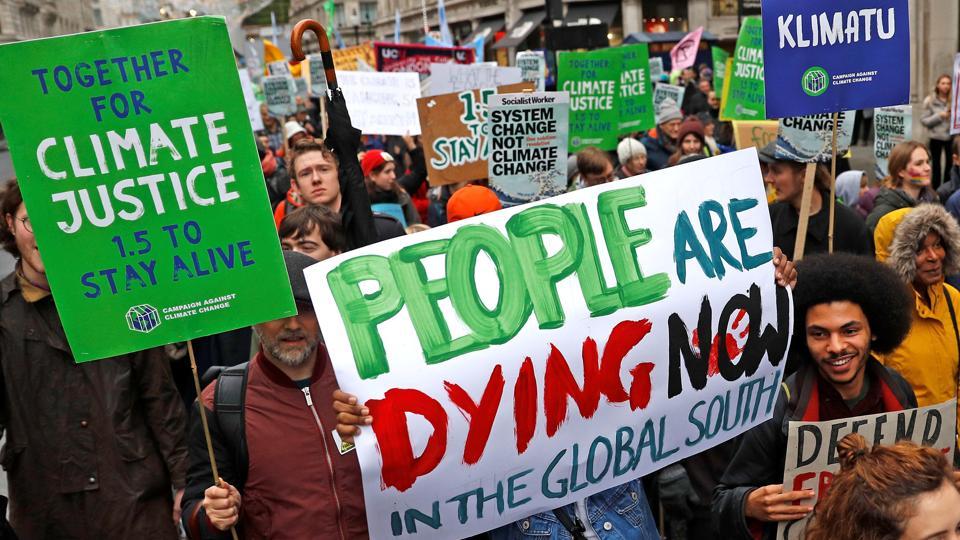
These extreme weather events, as scientists have been saying, are due to the climate crisis.
The United Nations Intergovernmental Panel on Climate Change (IPCC)’s sixth assessment report, which will form the cornerstone of climate science for the years ahead, concluded that it is “unequivocal” that humans
On December 16, Union minister of state (Science & Technology), Jitendra Singh, told the Rajya Sabha that natural disasters such as cyclones and floods have increased in the country in the last few years.
These extreme weather events, as scientists have been saying, are due to the climate crisis.
The United Nations Intergovernmental Panel on Climate Change (IPCC)’s sixth assessment report, which will form the cornerstone of climate science for the years ahead, concluded that it is “unequivocal” that humans have warmed the planet, causing “widespread and rapid” changes to Earth’s oceans, ice and land surface. They warned that the present state of many parts of the climate system is “unprecedented over many centuries to many thousands of years”. Moreover, many of these changes – particularly to the oceans, ice sheets and global sea levels – are “irreversible”, the authors said.
On Monday, Nature published a report that Himalayan glaciers are melting at an extraordinary rate. It added that the rapid ice melt will threaten agriculture and water supply for millions of people in South Asia.
In addition to these mega scientific reports, there is also a regular flow of the smaller sectoral reports, which warn the people that it’s time to change how we live and review our relationship with nature.
Who is reading?
While these reports are important and can spur positive public action, they are not read as widely as they should be. Many people find them jargon-filled, too long or too detailed to read. For others, the topic can seem abstract and intangible.
But that doesn’t mean that they are not interested in this issue.
About 70% of Indian citizens are worried about the state of nature and over 90% feel that they should do more to protect it, says a new international survey, conducted across G20 countries. The survey by IPSOS Mori and the Global Commons Alliance, called The Global Commons Survey: Attitudes to Planetary Stewardship And Transformation Among G20 Countries came shortly after the "code-red" report by the IPCC, which predicted an unprecedented rise in global temperatures in the next few decades.
Bridging the gap
There is a need to exploit and build on this rising interest in the global challenge.
This will increase mass awareness about the need to protect our natural assets, spur behavioural change among citizens, and push them to participate in decision-making on steps to reverse the climate trend.
More efforts need to be put into simplifying these reports for a larger audience and developing instruments for people for the general public to understand.
“Few landmark reports published in recent past — The Hindu Kush Himalaya assessment by ICIMOD and The Economics of Biodiversity: The Dasgupta Review 2021, are remarkably rich and thought-provoking documents,” says Dr Vishal Singh, Senior Fellow, Centre for Ecology Development and Research, Dehradun. “But the findings will be restricted to a select few if not translated and simplified for a layperson who remains confused about the issues such as the climate crisis and environmental degradation.”
Singh suggests that to maximise the impact of these reports, they should be integrated into school curriculums and spread in easy-to-understand format among the general public.
“Let the reports come out of PDF graveyards of the academic and scientific world, and benefit the citizens of the world,” he added.
The climate crisis is a global existential threat that requires collective and coordinated action. And a critical element of building that lasting public support for constructive action will be prioritising and investing in climate communication and infrastructure.
The views expressed are personal
One Subscription.
Get 360° coverage—from daily headlines
to 100 year archives.
Archives
HT App & Website