
Last week, Prime Minister (PM) Narendra Modi delivered a sharp speech to Indian industry. The theme of his remarks at FICCI’s centenary event was India’s weakness in manufacturing and the resulting imbalance in trade. The numbers are stark: Per the World Bank, manufacturing contributes only about 13% of GDP. The concomitant reliance on imports means that, according to the WTO, manufactured imports exceeded exports by nearly $65 billion in 2025. By contrast, in 2007, when China was at India’s current per capita income level, manufacturing made up about a third of its GDP and its exports of manufactured goods exceeded imports by more than $450 billion.
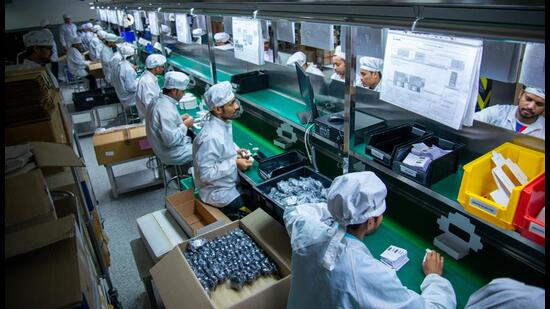
At FICCI, Modi’s response to this dismal picture was to press upon industrialists their responsibility to the nation, urging them to “make India First your foundation” in their long-term investment decisions. The PM’s sentiments are understandable. The question to ponder over, however, is whether moral exhortation is the route to atmanirbharta (self-reliance).
When the idea of swadeshi emerged in the middle of the 19th century, the objective was the same as it is now. There was widespread recognition that industrialisation generates employment, fosters growth, and reduces dependence on other nations. This is why the leading figures of the era — intellectuals, entrepreneurs, and Maharajas and their dewans — became avid proponents of it. There was dismay at the decline of “traditional” industries and the emergence of some dubious “European” tastes. But, with their characteristic acuteness, Indians quickly came to a consensus that their country needed to “catch up” with the West.
The endeavour generated vigorous national discussion. It was widely agreed that capital investment, technical knowledge, and social cooperation were required. But whether these were sufficient for industrialisation was fiercely debated. The worry was that Indian firms were confronted with well-established competitors. Thus emerged, drawing on the example of Germany, Japan, and the US, the notion that “infant industries” should be protected via tariffs.
{{/usCountry}}The endeavour generated vigorous national discussion. It was widely agreed that capital investment, technical knowledge, and social cooperation were required. But whether these were sufficient for industrialisation was fiercely debated. The worry was that Indian firms were confronted with well-established competitors. Thus emerged, drawing on the example of Germany, Japan, and the US, the notion that “infant industries” should be protected via tariffs.
{{/usCountry}}When it became clear that Britain would not institute tariffs, since doing so would endanger its own exports to India, the proponents of swadeshi turned to boycotts and the use of “indigenous articles” as a kind of “voluntary protection”.
The point worth noting is that, even in this heady era, protectionism and boycotts were criticised as impractical because they made consumers bear the cost, expecting them to buy local products even when quality was inferior or the price higher. Would those who liked tweed, P Anandacharlu asked his fellow Congressmen, be happy to switch to wearing “gunny bags”? The practical point, sceptics such as DE Wacha and UP Kukillaya argued, was that appeals to patriotism tended to lose out to self-interest. In Bombay, for instance, “Swadeshi shops” had been created many years before the idea became fashionable in Bengal, but to little avail — imports of Lancashire cloth continued to grow. It may hurt “our national vanity”, Wacha cuttingly wrote, but “facts are hard things”. The true path to swadeshi, these sceptics emphasised, was to invest in skills and machinery, and thereby build genuinely competitive products. This would make patriotism in the marketplace rewarding rather than onerous.
This practical-minded approach to swadeshi — which takes humans as they are, not as we would like them to be — struggled to be heard. Under the influence of Gandhi, swadeshi came to mean village production rather than industrial catch-up. In the mixed economy, it became associated with import substitution and a tolerance for shoddy products. Modi has, in effect, revived the original meaning of swadeshi — it was meant to be the “industrial regeneration” of India through private enterprise. But an idealistic element remains. This time it is producers rather than consumers who are being asked to be patriotic — to place their capital on the line. Will cajoling lead them to do what they are not doing voluntarily?
“What kind of country is it where wheat is exported, and bread is imported?” the PM indignantly asked FICCI. The answer is almost always: a country in which people are unwilling to be bakers. Why does this happen? Industry depends on boldness. An investor makes a calculated gamble that a product will have a market and that the returns on investment will be secure. These calculations are harder to make than they should be.
Some challenges are more recent. A spate of protective tariffs, military conflicts, and economic sanctions has upended global trade. Past policy shocks have set nerves on edge — capital controls, more reservations, draconian laws — any or all seem possible. But other challenges are deep-seated. Domestic politics is a constant source of uncertainty. The relentless cycle of elections and ever-shifting political alliances makes it difficult to know what tomorrow will bring. Then there is the arbitrary power of public servants. A single encounter that goes wrong — at the thana or in a department — can leave a venture in jeopardy. Daily business adds its own friction: Urban infrastructure is pitiful, and criminality and corruption are commonplace, undermining the enforceability of contracts. The general feeling, then, is that of insecurity.
These challenges limit what industrial policy can accomplish. The Asian Tigers offered their industrialists plenty of incentives — and appealed to their patriotism too. But these manoeuvres were backed by tremendous State capacity that delivered public services, such as health and education, stimulated private enterprise by pushing throughbusiness-friendly policies, and then disciplined entrepreneurs by requiring them to be genuinely competitive abroad. In India, meanwhile, reform of the three Ls — land, labour, and law — continues to be controversial decades on. When such State capacity is lacking, industrial policy becomes less about producing what the market wants and more about knowing policymakers and predicting or shaping what they want.
The obstacle to a flourishing industry, then, remains what it has always been — the operating environment. In the colonial era, swadeshi struggled because the State was principally interested in control; in the post-colonial era, it struggles because the State can barely control itself. All this suggests that the PM should double down on reform. A great deal has been accomplished when it comes to improving efficiency: For instance, GST has largely knit India into a single market; UPI has given India a world-class payments system; four-lane highways have grown two-and-a-half times since 2014. Now the same vigour needs to be brought to reforming our political culture and the dysfunctional State it has produced. The tests can be simple: When bahubalis (local strongmen) stop swaggering, when cases are resolved in months rather than decades, and when newspapers stop carrying advertisements celebrating whoever has come first in the civil service exam, that is the day a more competitive industry will emerge.
Rahul Sagar is a Global Network professor at NYU Abu Dhabi. His latest book is The Birth of Indian Liberalism. The views expressed are personal