As India looks toward a predominantly urban future, a quiet but powerful transition is underway in the country’s urbanization landscape. Small towns and villages in peri-urban areas, across metropolitan regions, adjacent to district headquarters, and along transport corridors are experiencing rapid shifts from farm to non-farm sectors. Long overlooked in policymaking, these towns, each home to less than 1 lakh residents, make up 92% of India’s system of cities.
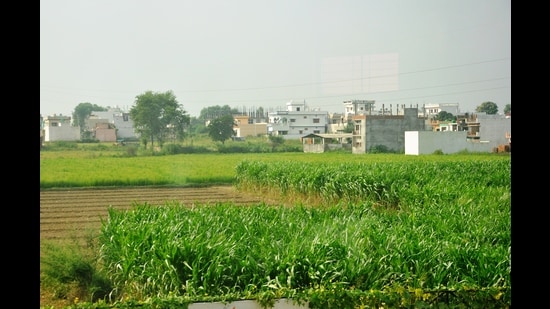
The role of these transitional areas in shaping the country’s urban future is finally getting the recognition it deserves in dialogues on urban policy. But are we asking the right questions to support this transformation? Can we prepare these towns for sustainable growth before they are swallowed by unplanned sprawl? While transitional small towns function like urban areas, they remain administratively rural. Lacking robust spatial planning, environmental protection, and governance mechanisms, they run the risk of repeating the very mistakes that plague our larger cities —just at a wider scale and with fewer resources.
Can spatial planning rise to the challenge of India’s urban transition? Despite India’s vast urban system, planned development remains the exception rather than the norm. Most small towns grapple with outdated development plans – if they exist at all – and fragmented governance structures that fail to coordinate across jurisdictions. Rural spatial planning, too, is often overlooked, despite the rapid urbanization of rural settlements.
However, we need more than token master plans. We need regional planning frameworks that are people-centric, flexible in land use, environmentally grounded, and revisited regularly. Crucially, these must be backed by funding that aligns across urban and rural schemes. A truly transitional planning approach must recognize the continuum between village and town.
{{/usCountry}}However, we need more than token master plans. We need regional planning frameworks that are people-centric, flexible in land use, environmentally grounded, and revisited regularly. Crucially, these must be backed by funding that aligns across urban and rural schemes. A truly transitional planning approach must recognize the continuum between village and town.
{{/usCountry}}Can we urbanise without destroying the environment? Peri-urban areas and small towns typically offer cheaper and larger tracts of land, easier access to natural resources like water and raw materials and less stringent environmental regulations. Forests, wetlands, common lands, and productive farmlands are routinely sacrificed to accommodate new construction while industries move to the outskirts to reduce costs. Ecologically blind urbanization ends up disrupting hydrological systems, worsening flooding, reducing aquifer recharge, and pushing vulnerable communities closer to climate risk.
We still classify ecologically significant grasslands and commons as ‘wastelands’—a colonial hangover that must end. These lands are not ‘vacant’; they are critical environmental assets. There is an urgent need to revise the classification of land to reflect ecological function, and not just economic productivity. Mainstreaming GIS-based land suitability analysis and factoring in carrying capacity to guide urban expansion can help in reducing the impact on sensitive ecosystems. Small towns can be pioneers in this shift, especially if environmental safeguards are built into their early growth phase.
How do we govern transitional areas? Census towns, the largest category of towns created during the last census period through reclassification of over two thousand villages, remain governed by rural institutions, without undergoing any preparation for urbanization. Rural local bodies have neither the mandate nor the means to deliver urban services. This vacuum creates space for haphazard construction, speculative real estate, and service deficits.
One promising approach comes from Odisha’s Rural-Urban Transition Policy, which recognizes that urbanization is not a one-time event but a process. Odisha adopts a phased transition model: areas expected to urbanize receive urban-grade infrastructure and planning support before they are notified as towns. Planning is supported by state-district coordination units and ward-level restructuring. This is not just a policy innovation, it is a model of forward-looking governance that offers lessons on managing urban transitions.
Looking at the road ahead, let us focus on the small and the marginal. India’s urban future won’t be decided only in its megacities. It will unfold in census towns, highway corridors, and peri-urban villages. Small towns and transitional areas are not just statistical categories; they are where much of India’s future population and economic growth will play out.
To unlock their potential, we need to pay attention to three things: plan for the rural-urban continuum, protect ecological assets, and empower institutions with the mandate, resources, and tools needed to plan sustainably. Bringing salience to urbanizing transitional areas, through dialogue and collaboration, can well shape the next generation of India’s urban story.
Sudeshna Chatterjee is director (research, knowledge and engagement) and Jaya Dhindaw is executive director (Sustainable Cities program) at WRI India. The views expressed are personal