Justice Ujjal Bhuyan, a sitting judge of the Supreme Court, recently remarked that it was regrettable that no “distinguished jurist” has ever been appointed as a Supreme Court judge. Article 124 (3) of the Indian Constitution outlines three categories eligible for appointment to the Supreme Court: A high court (HC) judge with five years of experience, an advocate in an HC with ten years of experience, and a distinguished jurist. While the first two categories are self-explanatory, “distinguished jurist” is not defined in the Constitution. There is, though, a consensus that it refers to those who teach law. Debates during the Constituent Assembly, involving eminent members like HV Kamath and MA Ayyengar, influenced by the appointment of Harvard law professor Felix Frankfurter to the US Supreme Court, amply demonstrate the rationale for expanding the pool of candidates for Indian Supreme Court judges. The Constituent Assembly believed that appointing law professors would enhance diversity and intellectual depth on the apex court’s bench.
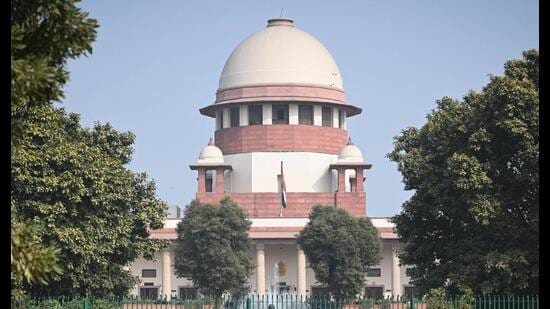
As Justice Bhuyan aptly observed, despite the constitutional mandate, no law professor has ever been appointed a judge of the Supreme Court, reigniting the debate over appointing distinguished members of this cohort to India’s apex court. This is despite India producing some outstanding law academics, such as PK Tripathy, Upendra Baxi, MP Singh, G Mohan Gopal, and B S Chimni (among many others). The works of these renowned scholars have been cited globally. Their scholarship has played a critical role in expanding the frontiers of legal knowledge. As judges at the country’s apex court, they would have surely brought a certain degree of rigour and excellence to Indian jurisprudence.
While most debates on this issue have focused on Article 124(3) and other related issues, what Justice Bhuyan has pointed out is merely a symptom of a much deeper malaise. The malady is that, in India, law academics have rarely been accorded the respect they deserve. Consider some of the structural issues. India has more than two dozen National Law Universities (NLUs), each governed by legislation enacted by the state legislature in whose territorial jurisdiction the NLU is based. Almost all of these pieces of legislation provide that either the Chief Justice of India or the chief justice of the High Court of the state shall be the chancellor of the university, with law professors appointed as vice-chancellors. This is remarkably different from many central universities that have professors as their chancellors, appointed by the President of India, who acts as the Visitor of these universities. This is also different from state universities, that is, universities created by the state legislatures, which routinely have governors as their chancellors. The key signalling can’t be missed. In a system obsessed with hierarchy and protocol, our state legislatures want our lordships at the top, and the law professors report to them as vice-chancellors. It is then not too surprising that the same lordships as members of a collegium would be averse to appointing a law professor as their equal on the apex court’s benches.
The problem, however, is not just with the judiciary; it runs deeper. The executive, too, has treated law professors with lesser consideration than the latter perhaps deserve, believing that their expertise is simply restricted to classroom teaching. Never has a law professor been appointed as the chairperson of the Law Commission of India — a critical body tasked with recommending improvements in the Indian legal system. It has mostly been helmed by retired judges. Rarely does the executive involve law professors in an institutionalised manner to seek their expertise in developing robust laws, including niche areas such as law and technology, international trade, foreign investment, capital markets, arbitration and competition law. Consultation with non-governmental experts means consulting law firms or, at best, a few Delhi-based think tanks, that often end up saying what those in power want to hear.
{{/usCountry}}The problem, however, is not just with the judiciary; it runs deeper. The executive, too, has treated law professors with lesser consideration than the latter perhaps deserve, believing that their expertise is simply restricted to classroom teaching. Never has a law professor been appointed as the chairperson of the Law Commission of India — a critical body tasked with recommending improvements in the Indian legal system. It has mostly been helmed by retired judges. Rarely does the executive involve law professors in an institutionalised manner to seek their expertise in developing robust laws, including niche areas such as law and technology, international trade, foreign investment, capital markets, arbitration and competition law. Consultation with non-governmental experts means consulting law firms or, at best, a few Delhi-based think tanks, that often end up saying what those in power want to hear.
{{/usCountry}}The lukewarm approach towards law professors is not confined to the domestic arena but extends to the international level as well. Take India’s nominations to the International Court of Justice (ICJ), for instance. Four Indians have served on the ICJ — a body that settles international disputes under international law. Two were members of the Indian CivilServices during British rule. The other two are retired Supreme Court judges who seldom dealt with international law during their judicial careers. Nominations of Indian candidates to the International Law Commission — the UN body that codifies customary international law — have been no different. Most appointments have been those of government lawyers working as full-time employees of the ministry of external affairs.
There appears to be a mutual understanding between the judiciary and the executive, forming an unwritten agreement that all key positions, both domestically and internationally, are reserved for them. This gatekeeping, which differs from the practices of many other liberal democracies, effectively prevents law professors from entering these roles despite their expertise. While one should thank Justice Bhuyan for drawing attention to this issue again, given the deep-rooted institutional and structural inertia, change is unlikely.
Prabhash Ranjan is a professor and vice-dean (research), Jindal Global Law School. The views are personal