On September 18, Sahil Wakode, a second-year BTech student, was found dead on the campus of IIT-Bombay (IIT-B). His was the third suicide or unnatural death at IIT-B this year. This year, there have been two suicides at IIT-Delhi and two at IIT-Kharagpur. All IITs have combinedly reported at least 11 student suicides or unnatural deaths. In the last five years, there have been at least 53 suicides/unnatural deaths at the IITs.
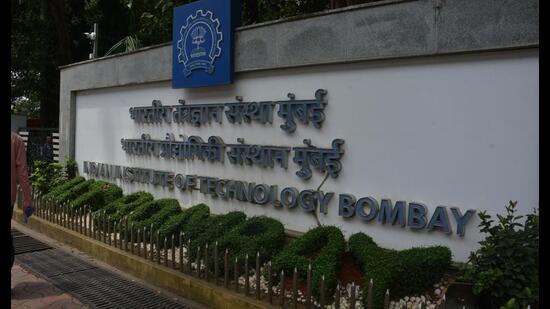
In Wakode’s case, allegations that he was caught cheating in an exam — and committed suicide while awaiting action — have complicated matters. The allegations, however, remain contested. His parents have stated that their son had complained about facing casteist comments. They filed an FIR under the SC/ST (Prevention of Atrocities) Act against professor Suryanarayana Doolla who was the invigilator during the exam and also the dean of administrative affairs.
Eventually, IIT-B retracted its initial statement on Wakode’s death where it had mentioned the alleged cheating incident, saying conclusive statements could not be made till the matter was under investigation. Meanwhile, protests demanding justice for Wakode have been met with solidarity for Doolla from several members of the faculty at IIT-Bombay.
As polarised camps spin narratives and counter-narratives on social media, hardly anyone seems to have put their faith in the investigation. It is important to understand why.
{{/usCountry}}As polarised camps spin narratives and counter-narratives on social media, hardly anyone seems to have put their faith in the investigation. It is important to understand why.
{{/usCountry}}The IITs do not have a good track record on internal investigations. At IIT-B itself, a 12-member committee with no external members was hurriedly constituted to look into Darshan Solanki’s suicide in 2023. Its hastily issued interim report ruled out casteism and blamed dipping academic performance. It is not clear how the committee so quickly determined the two were not correlated. Solanki’s parents rejected the interim report, suggesting it was aimed at giving IIT-B a clean chit.
Across the dozens of deaths at the IITs in recent years, there has hardly been a case where anyone was found accountable or meaningful action was taken. If the conclusion in all cases is that the deceased was struggling mentally or under pressure academically, it is only natural to expect that the IITs urgently rethink pedagogy and institutional culture. Surely an average of one suicide roughly every five weeks is unacceptable.
This has not been the case. A fundamental reason is that many within the IIT system do not believe there is a structural flaw that needs fixing. It is a priori assumed that the excellence of IITs is built upon its unrelenting pressure and demanding system. It is seen as a crucible of forging toughness where the weak cannot survive. By that logic, student deaths become proof of weak students being weeded out and evidence that the ones who survive are really the cream. There is of course no pedagogical validity to such a logic. An educational institution is not a Spartan bootcamp, and a student death or dropout is not an acceptable metric of excellence or the lack thereof.
However, in the polarised discourse around IITs, this logic of toughness and belonging gets tied to the construct of merit, which inevitably leads back to caste. Despite constitutional provisions of caste-based affirmative action, none of the IITs seem to honour it in principle. This is most evident in the SC/ST/OBC faculty recruitments or PhD admissions being well under the quota mandates across IITs. Despite repeated nudges from the Supreme Court andParliament, IITs haven’t satisfactorily fulfilled their obligations. This fundamentally skews the caste balance of the faculty and administrative cohort. And, at moments like this, it amplifies the trust deficit when an institution with overwhelmingly general category faculty and administrative core has to investigate charges of casteism in the suicide of a Dalit student.
The processes at the IITs, like at all Indian academic institutions, are compliance-oriented. Procedures are frequently rooted in excessive paperwork, quorum, and oversight to the point everything becomes impractical in day-to-day contexts. Hence, much of the processes get substituted by the so-called informal understandings and adjustments. This administrative reality also magnifies the trust deficit because, in an impartial investigation, such processes will often fall short. This pivots even well-meaning administrators to focus away from justice and instead be attentive to ensuring institutional procedures do not get exposed.
The loss of a student’s life at one of India’s premier campuses is a national shame. The lack of accountability and erosion of trust in processes should be a collective concern. Such tragedies need to be seen as a broad pattern; as a nation, we need to urgently protect our students.
Ravikant Kisana is an academic and the author of Meet the Savarnas. The views expressed are personal