Now that a little time has passed and passions have, hopefully, cooled, I want to reflect on the furore surrounding Israeli screenwriter Nadav Lapid’s critique of The Kashmir Files. I believe it reveals some disturbing, even, distressing facets of our society.
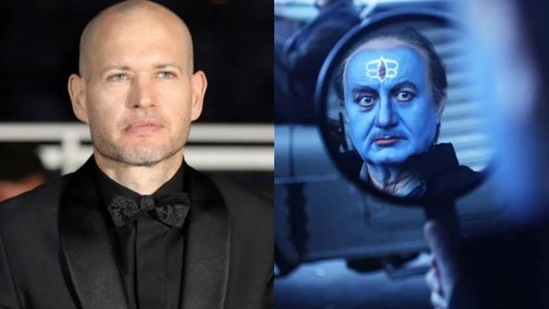
For a start, we invited one of the world’s most eminent filmmakers, a winner of the Special Jury Prize at Locarno and the Golden Bear at Berlin, to preside over the jury of our International Film Festival, but
Now that a little time has passed and passions have, hopefully, cooled, I want to reflect on the furore surrounding Israeli screenwriter Nadav Lapid’s critique of The Kashmir Files. I believe it reveals some disturbing, even, distressing facets of our society.
For a start, we invited one of the world’s most eminent filmmakers, a winner of the Special Jury Prize at Locarno and the Golden Bear at Berlin, to preside over the jury of our International Film Festival, but couldn’t accept his honest criticism of an Indian film. As Lapid put it, “In a way, it was my duty, my obligation. I was invited to be frank, not to speak vanities.” That candour may have surprised and hurt us, but we lacked the strength and moral fibre to cheerfully tolerate it. Worse, we deliberately chose to misconstrue what Lapid said.
He criticised a badly made film. Having deliberately chosen not to see it in March when it was released, I made a point of doing so after the controversy. I found it a crude portrayal of a tragic event that needed thoughtful and sensitive handling. The narrative lacks subtlety and depth, the acting is one-dimensional, and there’s not a single character you empathise with. That’s what Lapid was saying, but we misinterpreted his comments as a denial of what happened to the Kashmiri Pandits and an insult to the memory of the dead.
If we had paused to think for even a moment, we’d have known how wrong we were. But we didn’t. Once Lapid’s criticism hurt our pride, we resorted to deliberately distorting his critique and view it as an attack on our nationalism, indeed on ourselves. But as Lapid explained, “Criticising a movie is not criticising India or criticising what happened in Kashmir.”
Let me, however, go one step further. We want the International Film Festival of India to be recognised as one of the world’s best. If that is to happen, we know we must scrupulously ensure the highest artistic and aesthetic quality of the films it features. So why was The Kashmir Files chosen? For its merit? Or because it appealed to the ideological bent of our ruling party? Ensuring a window to the world for a tragedy that’s been ignored obliterated all consideration of the fact that this movie does not show our film industry at its best.
This is how Lapid put it, “Movies like The Kashmir Files shouldn’t be part of the competition section at film festivals. I have been part of the jury at dozens of festivals, including the international ones held in Berlin, Cannes, Locarno, and Venice. Never ever have I watched a movie like The Kashmir Files. When you show a movie like this to the jury, you force them to behave differently.” This is not an unconvincing argument.
Finally, let me come to sections of the media. They claim to speak for us. They believe it’s the voice of the people. But their attempts to defend the film were unintelligent and ineffectual. When Lapid said “All the jury members shared exactly the same impression about the film”, television anchors challenged him to prove it. This was a silly attempt to suggest that he was lying. Instead, it provoked the other jurors to publicly confirm their support. On the other hand, one newspaper got its facts totally wrong. It reported Lapid had changed his mind and called the film “brilliant”. He had not and it was foolish to claim he had.
I’ll end with a simple thought. Whether or not Lapid was right to criticise a specific film at the award ceremony is a legitimate question. But it is also a small matter. A far bigger concern was our behaviour. Both the film we chose and our response to the criticism it received have left us embarrassed. This was, therefore, a sad and sorry story.
Karan Thapar is the author of Devil’s Advocate: The Untold Story
The views expressed are personal
One Subscription.
Get 360° coverage—from daily headlines
to 100 year archives.
Archives
HT App & Website