The Communist Party of China (CPC) is set to hold its 20th Congress in mid-October. The meeting is widely expected to appoint Xi Jinping to an unprecedented third term as CPC general secretary. The official readout from the Politburo meeting in late August that confirmed the dates for the Congress hinted at this, stating that the Congress would “thoroughly implement Xi Jinping Thought on Socialism with Chinese Characteristics for a New Era.” Excepting any last-minute surprises, the politics around Xi’s
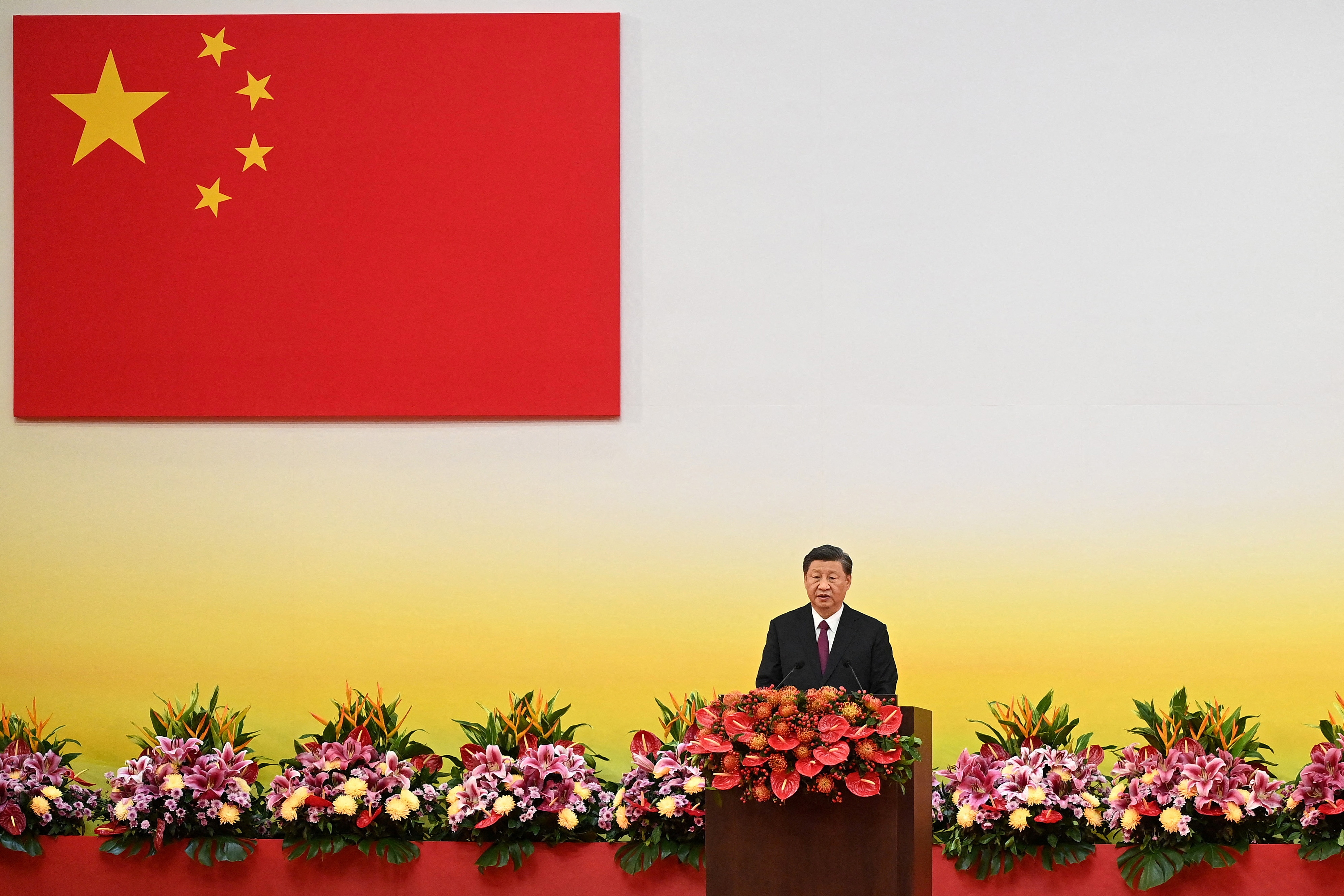
The Communist Party of China (CPC) is set to hold its 20th Congress in mid-October. The meeting is widely expected to appoint Xi Jinping to an unprecedented third term as CPC general secretary. The official readout from the Politburo meeting in late August that confirmed the dates for the Congress hinted at this, stating that the Congress would “thoroughly implement Xi Jinping Thought on Socialism with Chinese Characteristics for a New Era.” Excepting any last-minute surprises, the politics around Xi’s continued reign appears to be settled. However, that’s not the case concerning the debate over the future of the Chinese economy, which is only likely to get sharper in the weeks and months ahead.
Despite the Chinese leadership, analysts, and State media’s efforts to paint a positive picture, the Chinese economy continues to face serious headwinds.
First, the persistence of the dynamic zero-Covid policy has not only hurt Gross Domestic Product (GDP) growth, but also infused tremendous uncertainty among enterprises and foreign investors. The past few weeks have seen cities such as Chengdu, Shenzhen, and Dilian impose lockdowns of varying strictness. While some are hopeful that the lockdown policy will abate after the 20th Party Congress, nothing indicates that this will be the case.
The zero-Covid policy appears to have become a legacy issue for Xi Jinping, who touts it as the embodiment of the people-centred nature and successful practice of China’s governance model as opposed to the western model of democracy. In other words, unless the party is reasonably assured that the health impacts of easing the zero-Covid policy can be effectively contained, it is not likely to change track. What could, however, be tinkered with is the definition of what zero-Covid implies. This might lead to more narrowly targeted and shorter durations of lockdowns and quarantines. But the economic uncertainty that all this engenders will persist for the foreseeable future.
Second, China’s real estate market appears to be in structural decline. Over the past few months, there have been repeated reports of protests from home buyers calling for mortgage boycotts. In July, more than 320 projects in around 100 cities reportedly faced payment boycotts. In some instances, protesters also sought to block property sales. In early August, reports suggested that around 2.1 billion yuan in mortgages was affected by the protests. According to central bank data, property loans accounted for 25.7% of total banking sector credit in China as of end-June. Estimates of the worst-case scenario indicate that if boycotts persist, they could affect anywhere between 6.4% to 7% of all home loans. The China Banking and Insurance Regulatory Commission is reportedly scrutinising property loan portfolios of select local and foreign banks to assess potential systemic risks.
At the same time, property prices have continued to fall for 11 straight months, and sales remain extremely weak. August data showed that home sales dipped for the 14th straight month, with sales for China’s top 100 property developers falling more than 30% year-on-year in August. S&P Global Ratings predicts that the sector will witness a 30% drop in sales this year, which is far worse than the drop during the 2008 global financial crisis. This is critical from the perspective of the health of the broader economy. The real estate sector contributes nearly one-third of China’s economy and accounts for around 70% of household wealth.
Third, a combination of these two factors has led to further worsening of local government finances. For instance, the zero-Covid policy not only adversely affected businesses, but also drained local government budgets. During the first seven months of the year, China’s fiscal revenue dropped by 9.2% year-on-year. Local governments’ fiscal revenue fell 7.6%. Overall, the country’s tax revenue declined 13.8% year-on-year. The worsening situation has led to instances of delays in wage payments for civil servants, suspension of some public services, and misappropriation of special purpose bonds designated for specific infrastructure projects. The decline in the real estate market has added to the pain. The sale of land-use rights is the largest source of non-tax revenue for local governments. But this figure declined to $211.8 billion, down 55% year-on-year, at the end of the first half of 2022.
None of these three structural challenges will likely be addressed anytime soon. The CCP Politburo’s assessment of the economy in late-July doubled down on the zero-Covid policy, and the supply-side stimulus responses that have been adopted to support infrastructure investments and keep enterprises afloat and employment from tumbling. This is along the lines of the 2020 playbook, although government spending in 2022 has been far greater than two years ago.
For the real estate sector, the Politburo called for local officials to be made accountable for ensuring timely delivery of pre-sale housing, while pledging support for “people’s essential housing needs as well as their needs for better housing.” To that effect, Beijing has been extremely cautious in easing the money supply to troubled lenders. But in late-August, the housing ministry and finance ministry, along with the People’s Bank of China, committed to offering $29.3 billion in special loans for the completion of stalled housing projects. It appears that the objective is to support buyers without easing the financial spigots for real estate firms. This is likely to be a difficult needle to thread. The challenge for the central leadership is that by committing greater support, it would perpetuate the long-standing moral hazard that ails the sector.
Doing so also disincentivises a shift away from the debt-fuelled infrastructure growth towards a consumption- and innovation-driven growth model, which has been a long-standing objective. The question going into the 20th Party Congress, therefore, is whether the start of a new political cycle will allow for bolder economic decisions.
Manoj Kewalramani is fellow, China Studies, The Takshashila Institution
The views expressed are personal
One Subscription.
Get 360° coverage—from daily headlines
to 100 year archives.
Archives
HT App & Website