
 E-Paper



Photos: 100 days and raging, Baghjan oil well blowout singes livelihoods
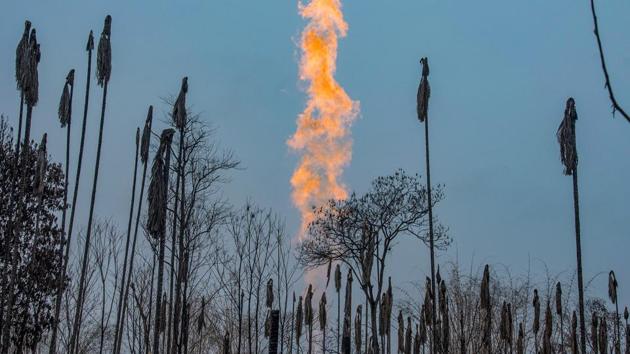
For more than 100 days, the fire has raged, killing fish in ponds and streams, destroying homes and turning green farmlands into ash around the Baghjan oil field in Assam's Tinsukia district. The accident at an Oil India Ltd (OIL) well began on May 27 and was brought under control on September 13. However, local residents feel the trauma from the loss will take much longer to subside.
Updated on: Sept 15, 2020 5:57 PM IST


Share via


Copy link

1/8
 View Photos in a new improved layout
Updated on Sept 15, 2020 5:57 PM
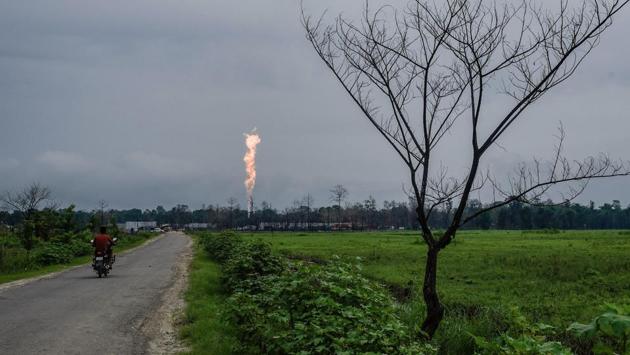
Burnt betel-nut trees are seen while a flame from well no. 5 rises in the background near Oil India Limited (OIL)’s gas well blowout site at Baghjan in Tinsukia on September 11. It’s been more than three months since a natural gas well in Baghjan had a blowout and the fire was brought under control on September 13. (Manish Sharma / PTI)
2/8
 View Photos in a new improved layout
Updated on Sept 15, 2020 5:57 PM
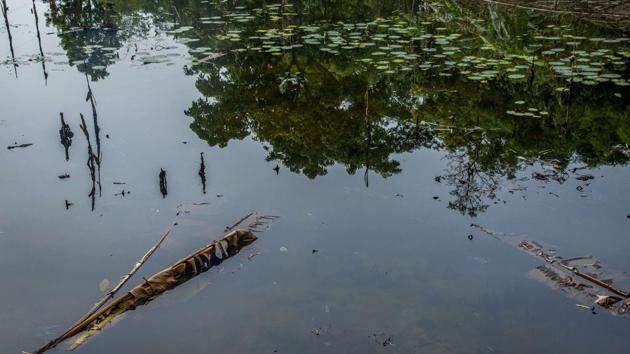
A view of a contaminated pond near OIL’s gas well blowout site in Baghjan on September 11. The fire at an Oil India Ltd well started with oil and natural gas gushing out uncontrollably on May 27 this year and it went up in flames on June 9. (Manish Sharma / PTI)
3/8
 View Photos in a new improved layout
Updated on Sept 15, 2020 5:57 PM
Prakash Saikia, a resident of Baghjan, poses for a portrait in the backdrop of the Dibru Saikhowa National Park near OIL’s gas well blowout site in Baghjan on September 11. “Even after compensation what will I do anywhere else. Here I have two ponds and other business to sustain my family. Anywhere else, I am unemployed,” Saikia told PTI. (Manish Sharma / PTI)
4/8
 View Photos in a new improved layout
Updated on Sept 15, 2020 5:57 PM
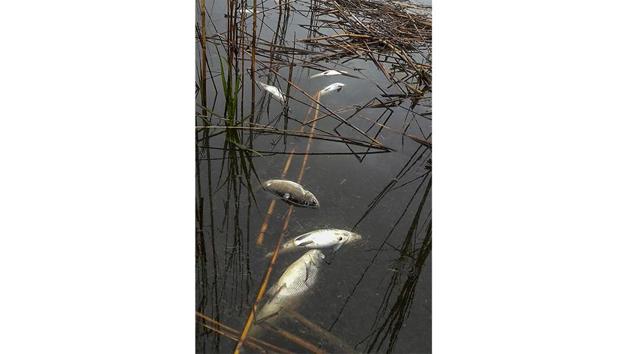
In this undated photo made by Prakash Saikia, dead fish lie near the Maguri wetland in Tinsukia district. Saikia said he has seen cows and goats giving birth to dead calves and kids, fish dying and birds struggling to take flight in the area, PTI reported. (PTI)
5/8
 View Photos in a new improved layout
Updated on Sept 15, 2020 5:57 PM
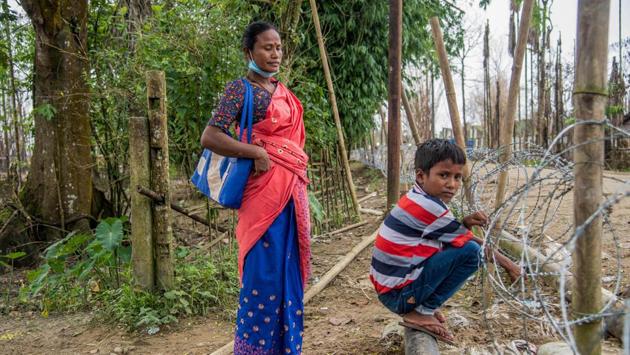
Anju Bora and her son look on at their abandoned house from a barricade near the gas well blowout site in Baghjan on September 11. In the village of nearly 500 residents, many earned their living by fishing, tilling their fields, some with betel nut trees, and working in the tea gardens close by. Now the village is ruined, said locals, estimating that several homes have been completely burnt and about 500 hectares of land destroyed. (Manish Sharma / PTI)
6/8
 View Photos in a new improved layout
Updated on Sept 15, 2020 5:57 PM
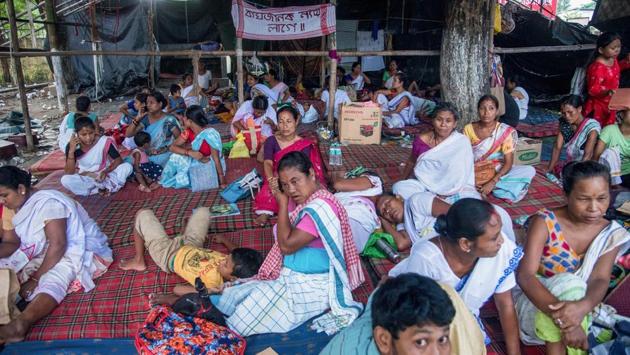
Residents of Baghjan demonstrate outside the Deputy Commissioner’s office during a meeting with officials in Tinsukia on September 11. Kajoli Hazarika, whose house is just about 200 metres from well no. 5 that caught fire, told PTI that the area has also been experiencing frequent tremors since the blowout in June. (Manish Sharma / PTI)
7/8
 View Photos in a new improved layout
Updated on Sept 15, 2020 5:57 PM
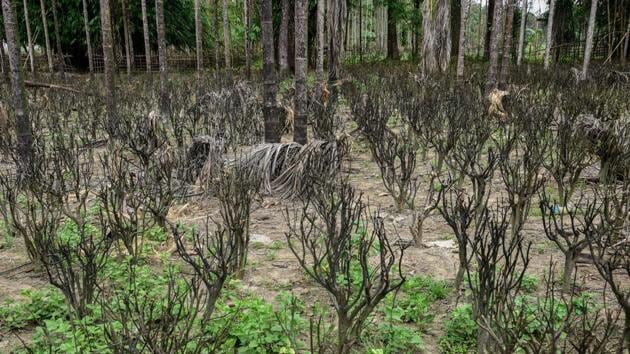
A view of a burnt tea garden near the gas well blowout site in Baghjan on September 11. The picturesque village, with tea gardens all around and the oil field in its vicinity, lies in the Maguri Motapung wetland area which is home to numerous species of birds, including migratory birds, and animals and a critical fisheries resource for the area. (Manish Sharma / PTI)
8/8
 View Photos in a new improved layout
Updated on Sept 15, 2020 5:57 PM


