
 E-Paper



Photos | India’s ‘Miami’: Putting Mumbai’s Art Deco on the map
While its Victorian edifices are landmarks, Mumbai’s Art Deco structures with their curved corners, stylish balconies and exotic motifs bear a close resemblance to Miami’s famous Art Deco district but are far lesser known. Art Deco Mumbai, a documentary project now aims to plot every single of them raising awareness along the way.
Updated on: Nov 28, 2017 2:21 PM IST

Share via


Copy link

1/7
 View Photos in a new improved layout
Updated on Nov 28, 2017 2:21 PM
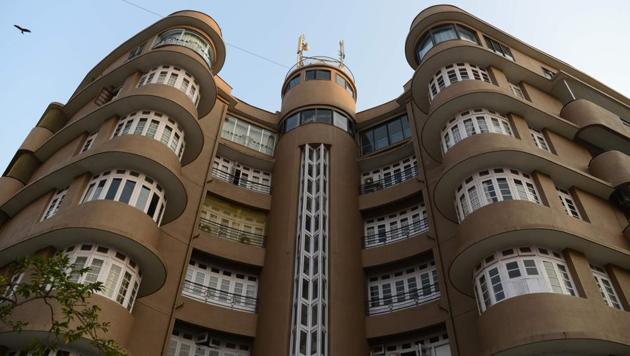
A view of Ram Mahal located near Churchgate which was built around 1935 by the Maharaja of Bilkha. Mumbai’s seafront lined with brightly coloured buildings with curved corners, stylish balconies and exotic motifs bears a close resemblance to Miami’s famous Art Deco district. While its Victorian Gothic edifices are landmarks, the city is also a trove of the sleeker Art Deco designs that swept Europe and America during the 1920s and ‘30s. (Punit Paranjpe / AFP)
2/7
 View Photos in a new improved layout
Updated on Nov 28, 2017 2:21 PM
Now, a group of enthusiasts are trying to make Mumbai’s Art Deco structures --which include residential properties, commercial offices, cinemas and even hospitals-- as famous as their 19th century counterparts. Art Deco Mumbai aims to document every single structure and educate residents about the buildings’ origins to ensure the “style moderne” architectural legacy of India’s financial capital is preserved. (Punit Paranjpe / AFP)
3/7
 View Photos in a new improved layout
Updated on Nov 28, 2017 2:21 PM
The areas make up the heart of Mumbai’s Art Deco precinct which in 2012 was submitted to UNESCO for world heritage recognition. “Bombay has one of the largest collections of Art Deco buildings in the world. It’s an incredible heritage,” Atul Kumar, keen conservationist and founder of Art Deco Mumbai, told AFP. (Punit Paranjpe / AFP)
4/7
 View Photos in a new improved layout
Updated on Nov 28, 2017 2:21 PM
Pedestrians walk past the Eros Theatre in south Mumbai. The buildings were constructed between the early 1930s and early 1950s after wealthy Indians sent their architects to Europe to come up with modern designs different to those of their colonial rulers. “Mumbai’s Deco buildings have always lived in the shadow of the Victorian Gothic structures built by the British,” such as the main railway station, museum and High Court, says Kumar. (Punit Paranjpe / AFP)
5/7
 View Photos in a new improved layout
Updated on Nov 28, 2017 2:21 PM
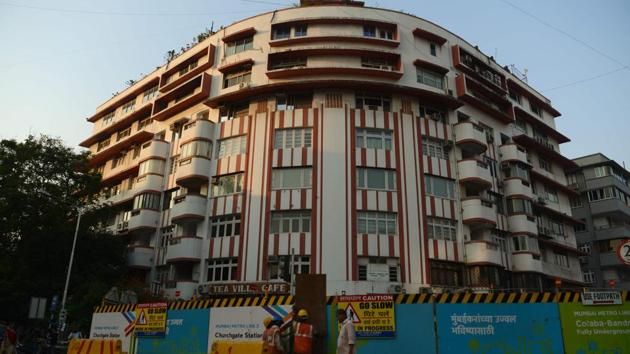
Sonna Mahal, built around 1937 by Late Kawasji Fakirji Sidhwa reflects the deviation from British aspirations in its name as former buildings built along Oval maidan bore names like Belvedere Court, Oval View, Court View. The sophisticated style represented the aspirations of a whole new class. India was then under colonial rule and this was a very unique statement through its architecture. (Punit Paranjpe / AFP)
6/7
 View Photos in a new improved layout
Updated on Nov 28, 2017 2:21 PM
However, a lack of awareness has led to many Deco buildings being demolished or compromised by alterations. The buildings are an interesting amalgamation of classical European Art Deco and Bombay Deco with ziggurats, rounded locomotive balconies, tropical images, streamlining and Egyptian motifs as well as Indian designs (Punit Paranjpe / AFP)
7/7
 View Photos in a new improved layout
Updated on Nov 28, 2017 2:21 PM


