
 E-Paper



Photos: Making gulal, the colours of celebration in Gurugram
Holi, the festival of colours, is all set to greet India next week. The festival marks the onset of spring. Among the rituals of the festival, the tradition of playing with colours is probably the most popular one. With a week to go, shops in the city are stocking coloured powders of myriad hues. HT photographer Parveen Kumar captures how the colours, emblematic of the celebrations ahead make their way into the hands of revellers.
Updated on: Mar 16, 2019 1:30 PM IST

Share via


Copy link

1/8
 View Photos in a new improved layout
Updated on Mar 16, 2019 1:30 PM
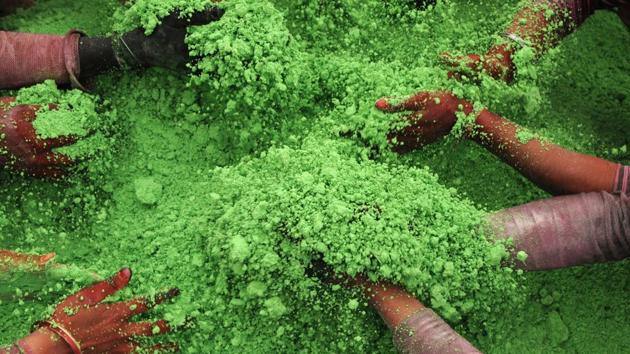
Hands manually sift through a batch of gulal, mixing in the pigment and aerating the product in the process, near Sheetla Mata Mandir, in Gurugram, Haryana. There are two manufacturing units in the city which operate from the Sheetla Mata Colony area. These units supply colours to local shops in Gurugram, Sohna, and Mewat. (Parveen Kumar / HT Photo)
2/8
 View Photos in a new improved layout
Updated on Mar 16, 2019 1:30 PM
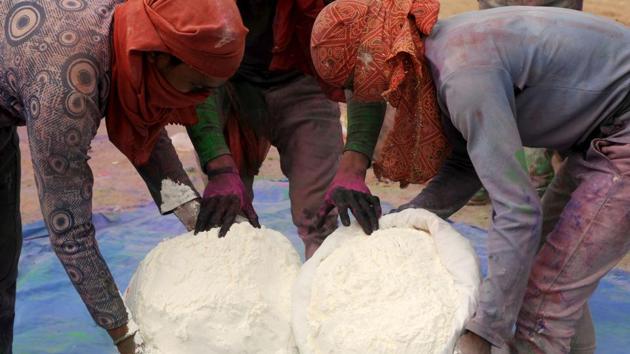
The process of making coloured powders involves multiple steps. Arrowroot powder serves as the basic ingredient and is used as a base. Arrowroot is a starch obtained from the roots of several tropical plants, primary among which is the Arrowroot plant, also called Maranta arundinacea. (Parveen Kumar / HT Photo)
3/8
 View Photos in a new improved layout
Updated on Mar 16, 2019 1:30 PM
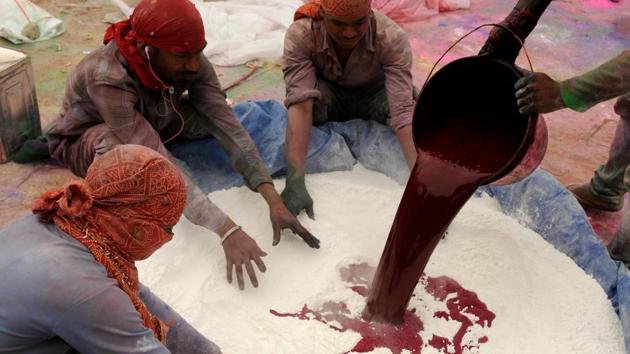
A pigment is then added to the arrowroot powder and mixed in thoroughly. Once the colour is absorbed by the powder it is left to dry. It is then sifted and packed into sacks. (Parveen Kumar / HT Photo)
4/8
 View Photos in a new improved layout
Updated on Mar 16, 2019 1:30 PM
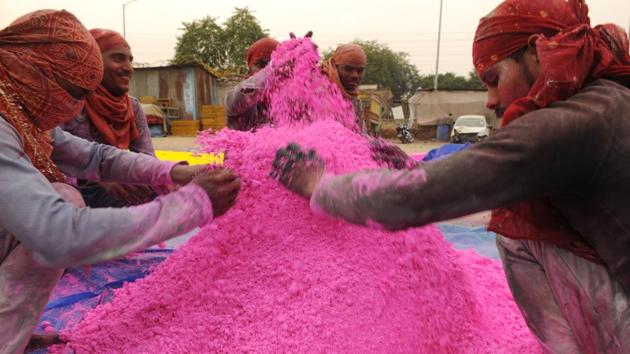
Over the past few years, there has been a growing consciousness among consumers regarding the harmful effects of using chemical-based powders. The colours are now produced using a variety of natural ingredients and some of these are sourced from food products. The use of Arrowroot has also emerged from this shift towards natural processes. (Parveen Kumar / HT Photo)
5/8
 View Photos in a new improved layout
Updated on Mar 16, 2019 1:30 PM
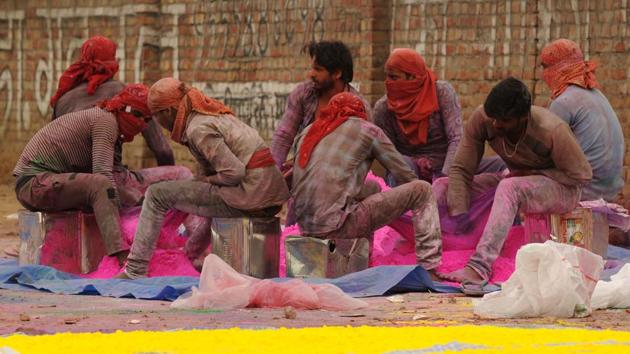
The process of creating these colours starts roughly 10 days before Holi. Every year, workers from Moradabad come to Gurugram and assist in the making of these colours. (Parveen Kumar / HT Photo)
6/8
 View Photos in a new improved layout
Updated on Mar 16, 2019 1:30 PM
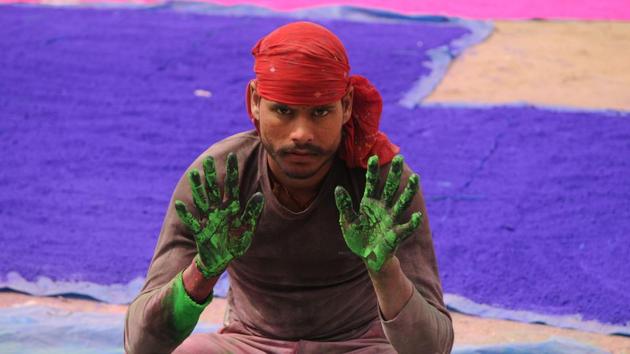
Owners of the manufacturing units say that the colours are produced largely using natural ingredients, are of good quality and have hardly any side effects as a consequence. Their earnings, they said, had not reduced over the years as such colours are in high demand. (Parveen Kumar / HT Photo)
7/8
 View Photos in a new improved layout
Updated on Mar 16, 2019 1:30 PM
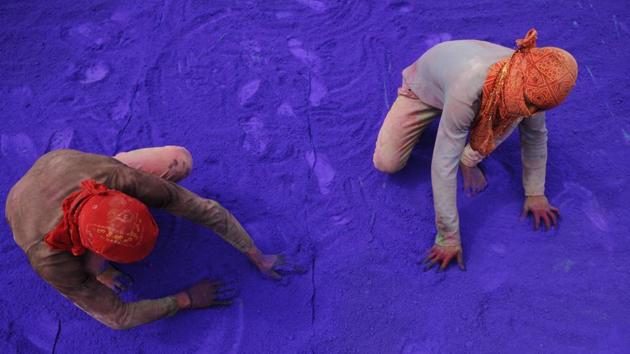
For Holi this year, the units have produced 110 sacks of colour. Each sack contains 50kgs of powder. Roughly 60-70 sacks have already been sold to shopkeepers while the rest will be sold in the coming week, manufacturers optimistically said. (Parveen Kumar / HT Photo)
8/8
 View Photos in a new improved layout
Updated on Mar 16, 2019 1:30 PM


