
 E-Paper



Photos: Tracking a man-eating tigress in Maharashtra’s villages
The villages around Maharashtra’s Pandharkawada town have seen nine deaths because of tigers since June 2016. Tracking an elusive tigress that is behind these attacks, the forest department has resorted to various means such as baits, camera traps and cages while villagers innovate with tactics of their own. The tigress meanwhile, remains at large.
Updated on: Jan 02, 2018 3:24 PM IST

Share via


Copy link

1/10
 View Photos in a new improved layout
Updated on Jan 02, 2018 3:24 PM
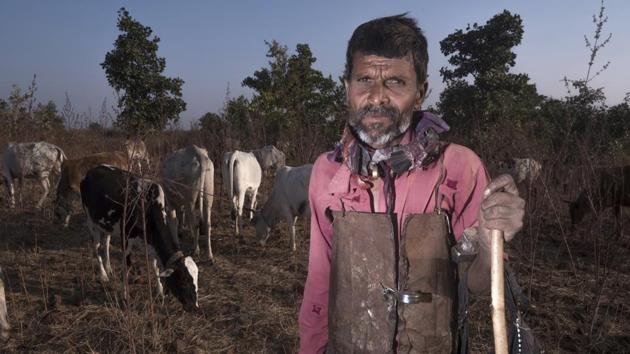
Shankar Atram, a cowherd, has made armour out of waste metal as a precautionary measure when venturing into the forest. In 13 villages near Pandharkawada, Maharashtra tiger attacks were never a concern before June 2016, when 60-year old Sonabai Bhosale of Borati was mauled and killed. Since then there have been nine tiger caused deaths, the latest on December 9 in Vihirgaon. (Pratik Chorge / HT Photo)
2/10
 View Photos in a new improved layout
Updated on Jan 02, 2018 3:24 PM
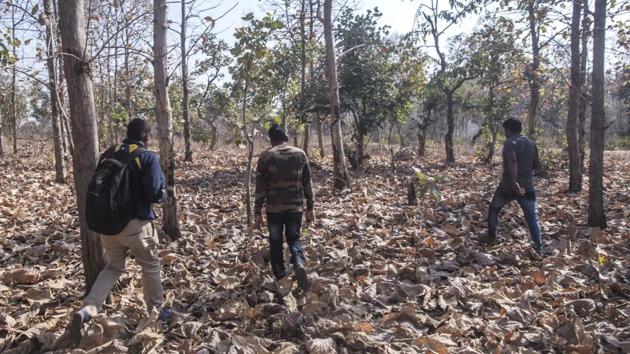
Forest officials track a man-eating tigress inside a forest in Pandharkawada region. 70 people from a forest department team which includes veterinary and range officers, and members of the NGO Wildlife Conservation Trust are struggling to track the animal considered behinf the attacks. (Pratik Chorge / HT Photo)
3/10
 View Photos in a new improved layout
Updated on Jan 02, 2018 3:24 PM
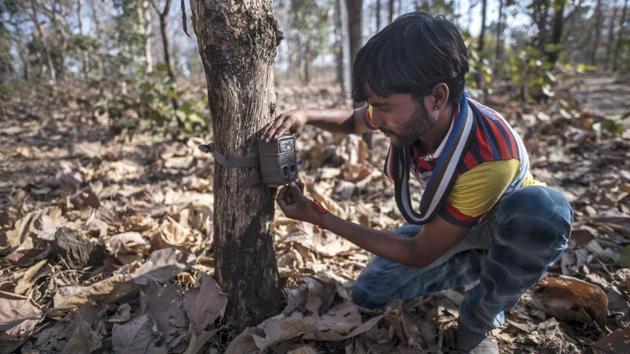
A member of the forest department team checks a camera trap inside the forest. More than 60 such traps have been laid out and a Hyderabad-based hunter was also called in to assist the department with his tranquilliser darts. But the tigress has constantly adapted and never revisits a kill zone, hiding out in gorges covered in bracken so thick that even trackers cannot follow. (Pratik Chorge / HT Photo)
4/10
 View Photos in a new improved layout
Updated on Jan 02, 2018 3:24 PM
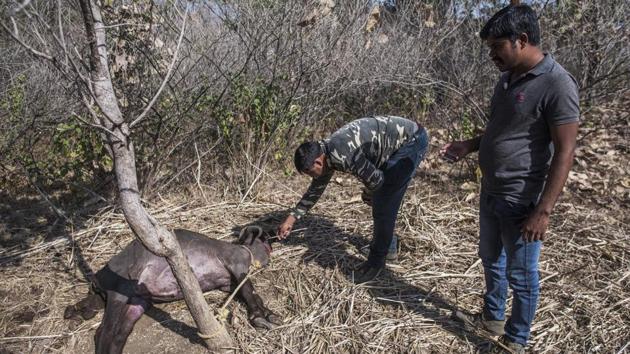
Team members of veterinary officer check one of two buffaloes which were left as bait while they waited in tree machans. They have had some success in luring tigers with newer techniques such as an innovative cage that blends into the vegetation but the tigress remains elusive. (Pratik Chorge / HT Photo)
5/10
 View Photos in a new improved layout
Updated on Jan 02, 2018 3:24 PM
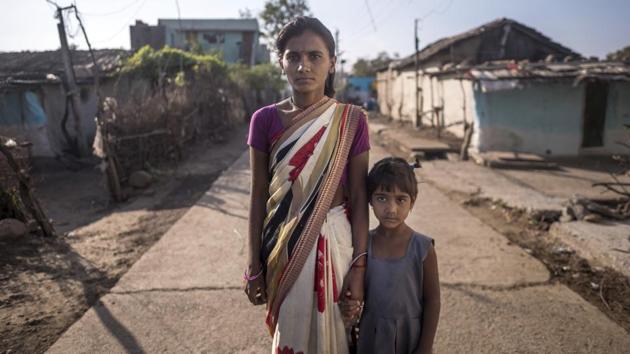
Mangala Pawar, 28, here with her daughter, lost her husband Gajanan to a tigress attack in August. The Hyderabad-based government-authorised shooter Nawab Shafath Ali Khan raises concern about the potential for further loss of life and man-animal conflict, the longer the tigress roams free.“Having such an animal on the prowl effectively turns about 25,000 villagers into enemies of all tigers in the area,” he says. (Pratik Chorge / HT Photo)
6/10
 View Photos in a new improved layout
Updated on Jan 02, 2018 3:24 PM
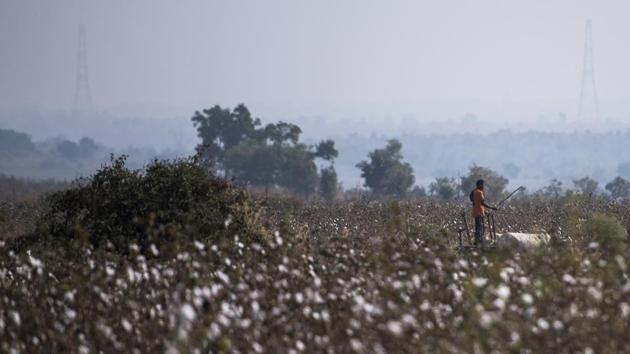
Savitabai Ambadas Thekamb works in a cotton farm at Jothindara village. When 20-year-old Satish Kove of Sakhi village was mauled to death in September, villagers from Sakhi and Banda got together in an angry mob and blocked the forest department’s access to the site as frustration over continued killings grew. (Pratik Chorge / HT Photo)
7/10
 View Photos in a new improved layout
Updated on Jan 02, 2018 3:24 PM
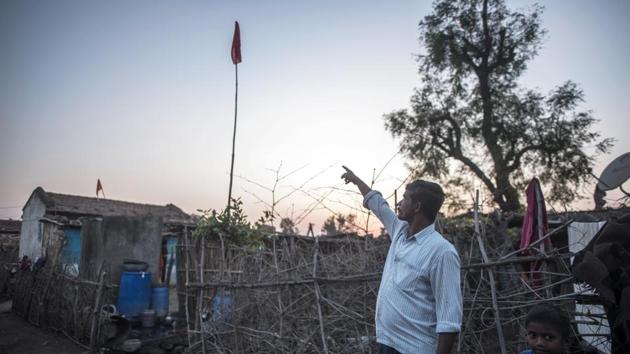
But now both sides are working together to prevent attacks. A man points towards a red flag placed by the forest department as a sign of tiger presence in the area and need for caution. Villagers are paying heed to such warnings and taking measures of their own. (Pratik Chorge / HT Photo)
8/10
 View Photos in a new improved layout
Updated on Jan 02, 2018 3:24 PM
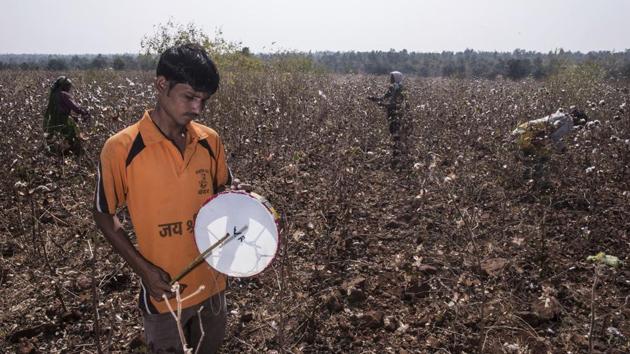
Pramod Rathod plays a drum as one such measure. Before the women enter the fields to pluck cotton, villagers now burst crackers and play drums to scare away potential tigers. They also ensure that everyone works in groups of four or more and not beyond 5 p.m. (Pratik Chorge / HT Photo)
9/10
 View Photos in a new improved layout
Updated on Jan 02, 2018 3:24 PM
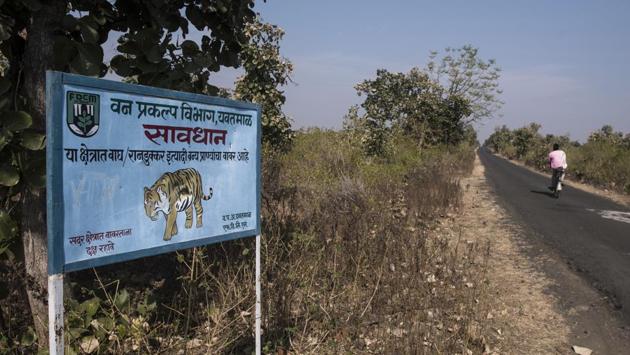
The forest department has put up signs on roads that they consider danger zones. As the clock continues to tick, the villagers still have doubts about how the forest department is going about things. They don’t understand why the tigress can’t just be shot and the delay is making them jittery. (Pratik Chorge / HT Photo)
10/10
 View Photos in a new improved layout
Updated on Jan 02, 2018 3:24 PM


