
 E-Paper



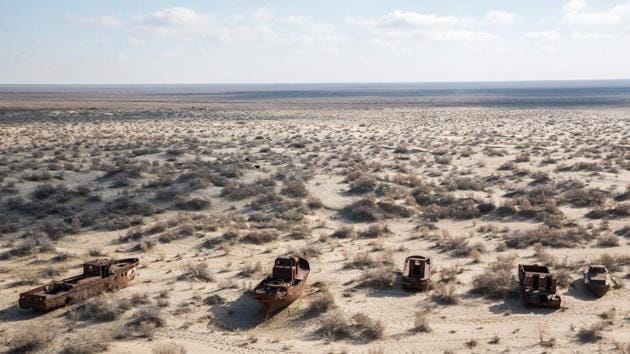
Photos: A graveyard of ships in Moynaq, a Soviet-era port on the Aral Sea
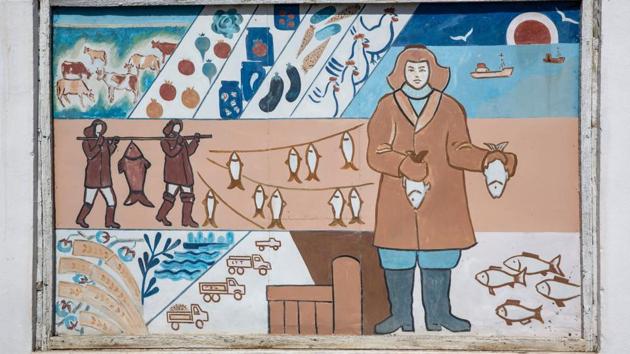
Once a thriving port city on the Aral Sea, irrigation projects for cotton farming in the former Soviet Union turned Moynaq into a ghost town where murals and signs across the city depict what was once a thriving commercial fishing port. The city in Uzbekistan has witnessed firsthand the shrinking of the Aral Sea and the impact of one of the worst man-made ecological disasters, presenting a bizarre and surreal post-apocalyptic landscape to the few residents and tourists that walk its streets.
Updated on: May 08, 2018 12:22 PM IST

Share via


Copy link

1/10
 View Photos in a new improved layout
Updated on May 08, 2018 12:22 PM
Rusting fishing trawlers sit abandoned in Moynaq, Uzbekistan. Once a thriving sea port city on the Aral Sea, Moynaq is now home to only a few thousand residents. Its population has been declining since the 1980s due to the recession of the Aral Sea which has turned the harbour into a graveyard for ships and the area’s fishing industry. (Taylor Weidman / Bloomberg)
2/10
 View Photos in a new improved layout
Updated on May 08, 2018 12:22 PM
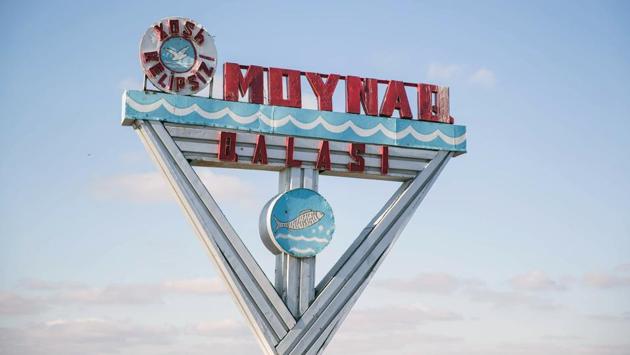
A sign for Moynaq stands at the entrance of the city. The Aral Sea is situated in Central Asia, between the Southern part of Kazakhstan and Northern Uzbekistan. Up until the third quarter of the 20th century it was the world’s fourth largest saline lake. (Taylor Weidman / Bloomberg)
3/10
 View Photos in a new improved layout
Updated on May 08, 2018 12:22 PM
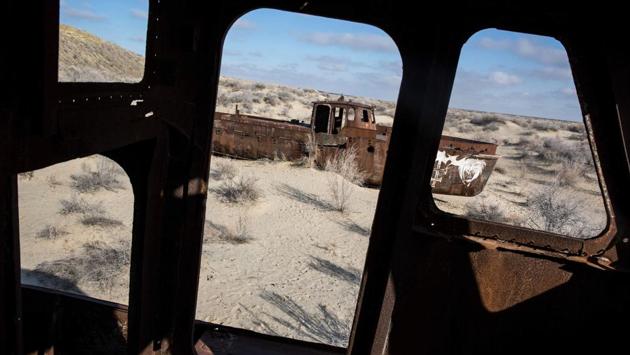
Rusting fishing trawlers sit abandoned in Moynaq. The ecological disaster of the Aral Sea turned the fishing port into a sunbaked town that has been taken over by the desert. Fishing and canning had always been part of the region’s economy with the industry dealing in up to 60,000 tons of fish during its heydey in the 1960s. (Taylor Weidman / Bloomberg)
4/10
 View Photos in a new improved layout
Updated on May 08, 2018 12:22 PM
But as irrigation projects for cotton farming in the Soviet Union diverted the rivers that fed the Aral Sea, the area started desiccating steadily. Today, Moynaq is a ghost town with murals and signs across the city depicting a past in stark contrast with its arid landscape. (Taylor Weidman / Bloomberg)
5/10
 View Photos in a new improved layout
Updated on May 08, 2018 12:22 PM
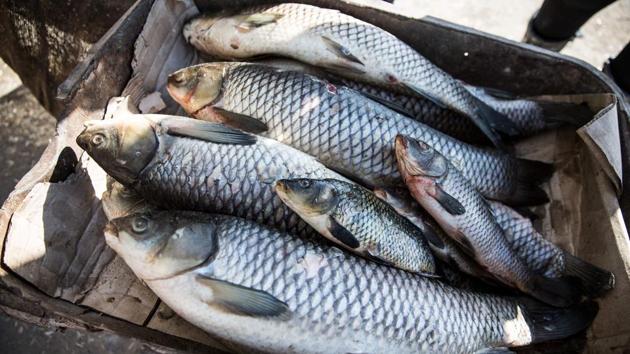
Fish in a wheelbarrow sit for sale in a city street. As water started drying up fishermen in the city followed the shrinking shores. But increased levels of salinity in the sea started killing all the fish and with it the commercial fishing industry. (Taylor Weidman / Bloomberg)
6/10
 View Photos in a new improved layout
Updated on May 08, 2018 12:22 PM
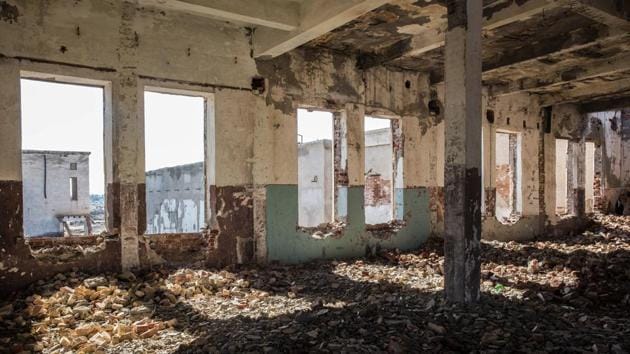
Debris lies on the ground at an abandoned fish canning factory in Moynaq. The local canning industry, employing thousands, went as far as to import fish from elsewhere in the USSR to stay afloat. But as hotels, airports and other business ran dry, so did Moynaq’s canning factory, closing down in 2000. (Taylor Weidman / Bloomberg)
7/10
 View Photos in a new improved layout
Updated on May 08, 2018 12:22 PM
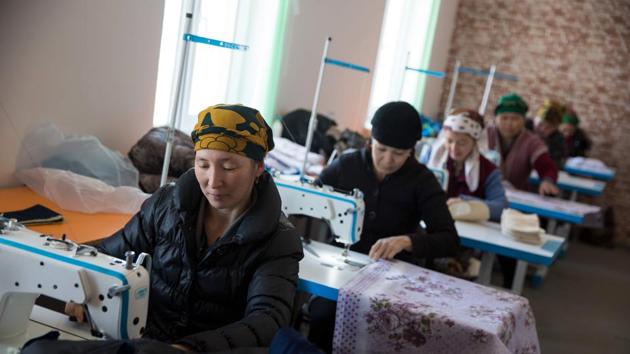
Workers operate sewing machines at Platinum Moynaq Cotton Cleaning Factory. Dust storms and the river bed poisoned due to agricultural chemical leaks for cotton production gave rise to a host of chronic and acute illness driving most residents away from Moynaq. (Taylor Weidman / Bloomberg)
8/10
 View Photos in a new improved layout
Updated on May 08, 2018 12:22 PM
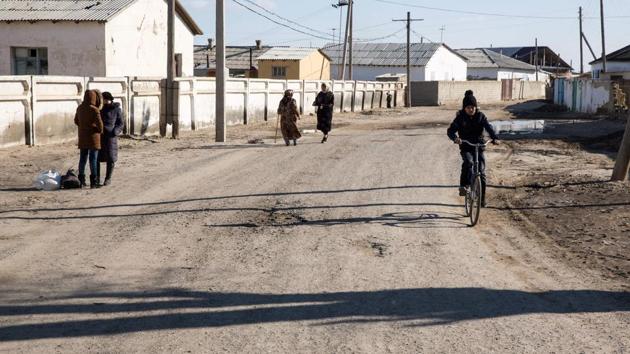
No other city was affected more severely by the shrinking of the Aral Sea than Moynaq. The nearest shore is now more than 150kms away from the city and camels walk slowly past abandoned ships presenting a bizarre yet surreal post-apocalyptic view. (Bloomberg)
9/10
 View Photos in a new improved layout
Updated on May 08, 2018 12:22 PM
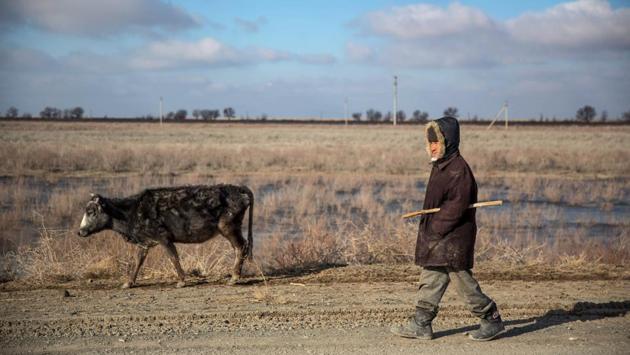
A man herds a cow along a road in Uzbekistan. The city’s suffering is not just limited to the collapse of its fishing industry. With no water body to moderate the weather, residents have to battle ecological changes with the climate swinging severely between extreme heat and Siberian cold. (Taylor Weidman / Bloomberg)
10/10
 View Photos in a new improved layout
Updated on May 08, 2018 12:22 PM


