
 E-Paper



Photos: Azerbaijan’s separatist Nagorno-Karabakh region aims to end solitude
Since a six-year separatist war ended in 1994, the mountainous region of Nagorno-Karabakh has been controlled by local ethnic Armenian forces backed by Armenia, yet the territory continues to be claimed by neighboring Azerbaijan which has fought all attempts by the self-proclaimed Republic of Artsakh for international recognition. For the fiercely proud people of Nagorno-Karabakh, life in political limbo has meant restrictions on travel, trade, economic development and education opportunities for its youth.
Updated on: May 25, 2018 9:56 AM IST

Share via


Copy link

1/9

 View Photos in a new improved layout
Updated on May 25, 2018 9:56 AM
Most of the world is off-limits to students here in Stepanakert, in the Azerbaijani separatist region of Nagorno-Karabakh. The rows of gleaming computers feed hopes that they have a place in it. The privately funded TUMO Center for Creative Technologies, which teaches subjects such as robotics and 3-D modeling, epitomizes the aspirations in the region to emerge from the isolation that has cloaked it for more than two decades. (Thanassis Stavrakis / AP)
2/9
 View Photos in a new improved layout
Updated on May 25, 2018 9:56 AM
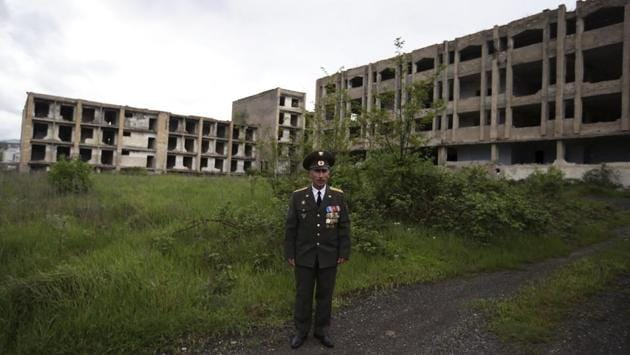
Armenian Garnik Avanesyan, veteran Lieutenant Colonel poses in front of buildings destroyed during the war in Shusha town. Nagorno-Karabakh has been under the control of ethnic Armenian forces backed by Armenia since the end of a 1994 war. Armenia’s new government has raised hopes here that a breakthrough could come, or at least bring more investment. (Thanassis Stavrakis / AP)
3/9
 View Photos in a new improved layout
Updated on May 25, 2018 9:56 AM
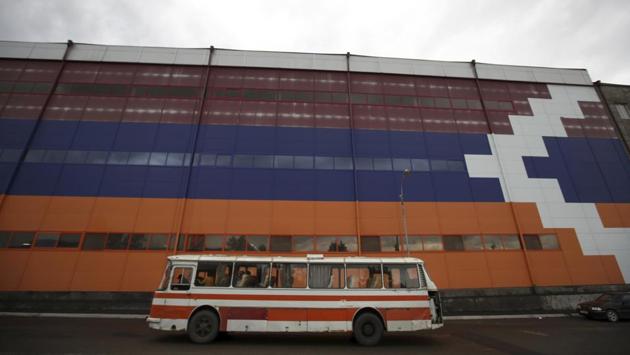
A bus passes in front of a factory painted with the colors of the self-proclaimed Republic of Artsakh (formerly Nagorno-Karabakh) flag in the capital Stepanakert. Nagorno-Karabakh’s 150,000 people don’t hold Azerbaijan passports and can travel only to Armenia, unless they apply for Armenian passports. The mountainous region’s self-declared sovereignty isn’t recognized by any country. (Thanassis Stavrakis / AP)
4/9
 View Photos in a new improved layout
Updated on May 25, 2018 9:56 AM
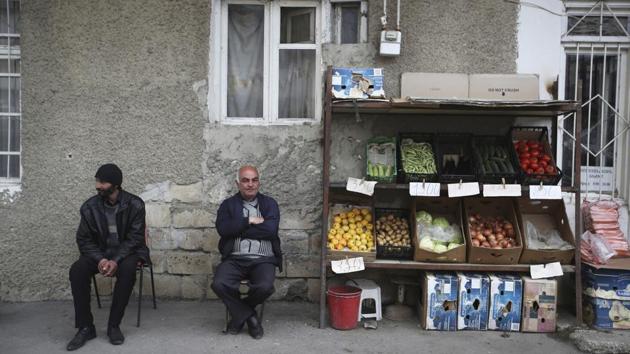
With trade, travel and educational opportunities limited, the region’s youth risk falling behind. Contributions from the Armenian diaspora are vital. The non-profit TUMO for instance, was founded by an American of Armenian descent. But widespread corruption allegations in Armenia have discouraged investment, said Arayik Harutyunyan, the minister of state in the separatist government. (Thanassis Stavrakis / AP)
5/9
 View Photos in a new improved layout
Updated on May 25, 2018 9:56 AM
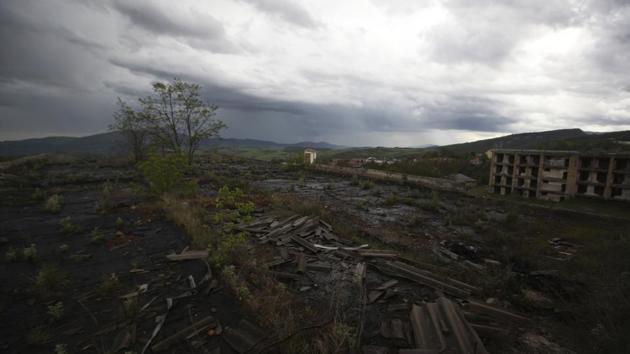
Buildings destroyed during the war in Shusha town. Harutyunyan and others hope that will change now that Nikol Pashinian, who rose to power on a wave of mass protests against corruption, is Armenia’s Prime Minister. Noubar Afeyan, an American entrepreneur and prominent diaspora figure, said he hoped the government change would encourage Armenians abroad to “finally engage in the sustained development of Armenia” and Nagorno-Karabakh. (Thanassis Stavrakis / AP)
6/9
 View Photos in a new improved layout
Updated on May 25, 2018 9:56 AM
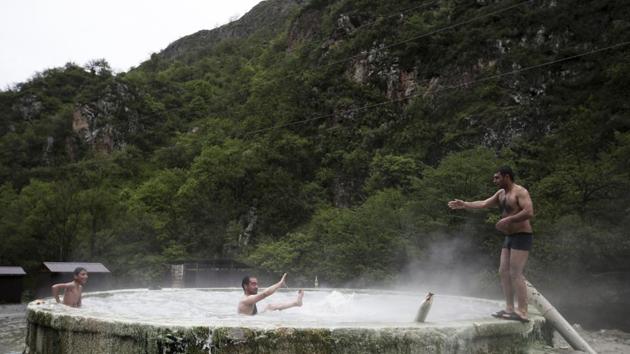
Local residents enjoy thermal springs in Karvachar. Nagorno-Karabakh has reported solid gross domestic product growth over the past decade. Once heavily reliant on imported electricity, Nagorno-Karabakh now has a self-sufficient grid. (Thanassis Stavrakis / AP)
7/9
 View Photos in a new improved layout
Updated on May 25, 2018 9:56 AM
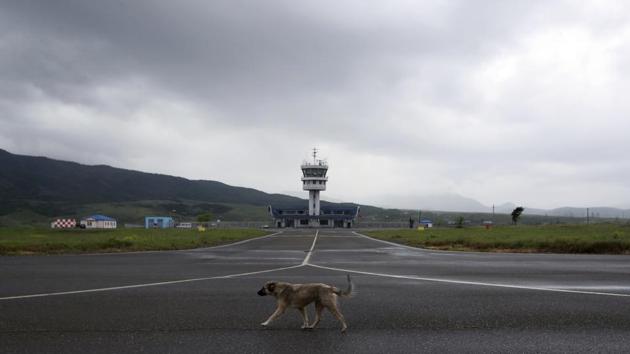
A dog walks on the empty runway of Stepanakert airport. It also has an international airport, built in 2011, but the one thing missing are the planes. Azerbaijan has warned it can’t guarantee the safety of flights to Nagorno-Karabakh. So, neatly stacked luggage trolleys, check-in desks and an air traffic control tower remain unused. (Thanassis Stavrakis / AP)
8/9
 View Photos in a new improved layout
Updated on May 25, 2018 9:56 AM
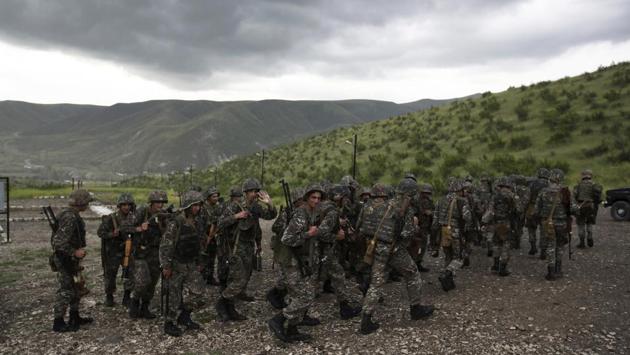
Yet there is also concern that Pashinian could aggravate already volatile conditions, where Azerbaijani and Armenian forces face off on either side of a demilitarized zone and full-scale fighting sometimes breaks out. (Thanassis Stavrakis / AP)
9/9
 View Photos in a new improved layout
Updated on May 25, 2018 9:56 AM


