
 E-Paper



Partitioning a party’s legacy
The Supreme Court of India may clarify rules on political party defections, aiming to establish criteria for determining majority claims amid ongoing disputes.

 Prefer HTon Google


At the heart of the many dubious political manoeuvrings that have blighted India’s democracy in recent years is the question — what is the real political party in case of a defection or a split, and who gets to lay claim to the original name and symbol? Unfortunately, a lack of clearly defined parameters has encouraged multiple controversial ad-hoc decisions affecting the futures of major parties such as the Shiv Sena (more than once), the Nationalist Congress Party and, possibly, the Trinamool Congress. Now, the Supreme Court appears poised to intervene and clarify this confusion. A bench comprising Chief Justice of India Surya Kant and justices Joymalya Bagchi and V Mohana observed that there must be clearly defined criteria to determine the majority in a political party when rival factions stake claim to its name and election symbol, indicating that such disputes cannot be resolved solely on the basis of the numerical strength of legislators.
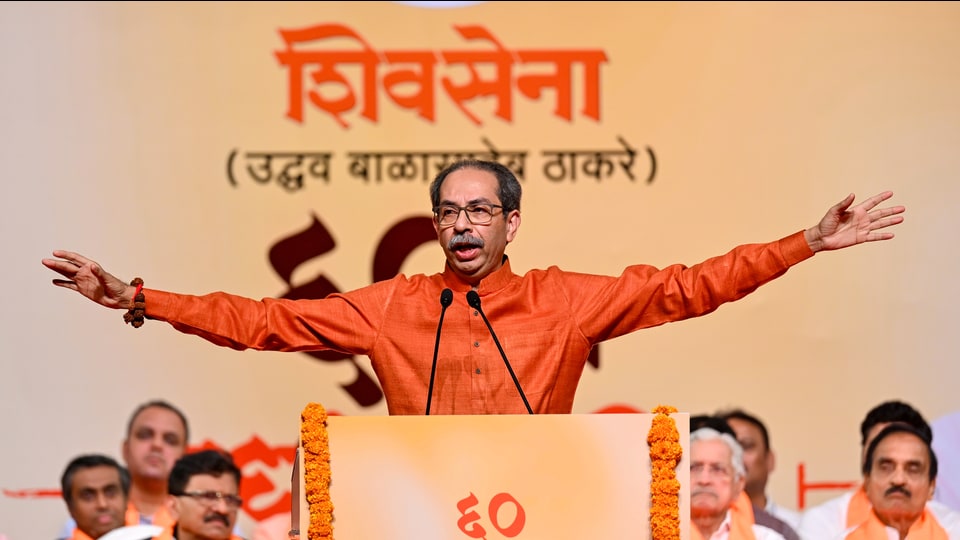
This is welcome. The court is correct in noting that there should be defined criteria to determine the concept of “majority”, needing a more nuanced and thorough examination than merely counting legislators. Such guidelines can come either from a political party’s constitution itself, or evolve through wide consultations held by the ECI. After all, despite multiple defections and splits, the concept of a majority has not been adequately clarified, leading to a situation where respective speakers or chairpersons of Houses have massive discretionary powers. As a result, adjudication on splits and defections is now a politicised affair, leading to Opposition allegations that the ruling dispensation always has an upper hand.
HT has noted repeatedly that a toothless anti-defection law has done little to stem the tide of political defections. At the same time, many political parties — run as personal fiefs and tightly controlled by families or personalities — have throttled internal democracy and ensured that party committees and constitutions are mere rubber-stamps that exist to further the agenda of the party supremo. Unfortunately, India’s sharply polarised polity doesn’t hold out much hope of a consultative process where parties can collectively come up with such guidelines. The Supreme Court should consider stepping in at the earliest and catalyse the formation of uniform and transparent rules to govern defections, the determination of a majority, and the adjudication of the recipient of party names and symbols. Such a step can dispel some of the chaos engulfing India’s political system today.


