
 E-Paper



Photos: Fad for ‘lucky’ tail hair threatens Vietnam elephants
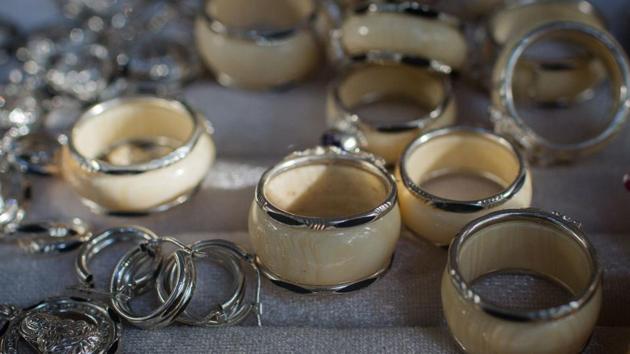
With just 80 elephants left in captivity and about 100 in the wild -- down from as many as 2,000 in 1990 -- a fondness for rings and bracelets embedded with elephant hairs is fuelling a worrying fashion fad in a country notorious for its illicit wildlife trade, from rhino horns to pangolin scales, tiger teeth and bear bile. The trend is putting a strain on the few surviving elephants in Vietnam whose hairs are plucked or tails cut off by poachers, leaving the animals without the crucial appendage used to swat flies and keep their backsides clean.
Updated on: Sep 28, 2018 9:39 AM IST

Share via


Copy link

1/10
 View Photos in a new improved layout
Updated on Sep 28, 2018 9:39 AM
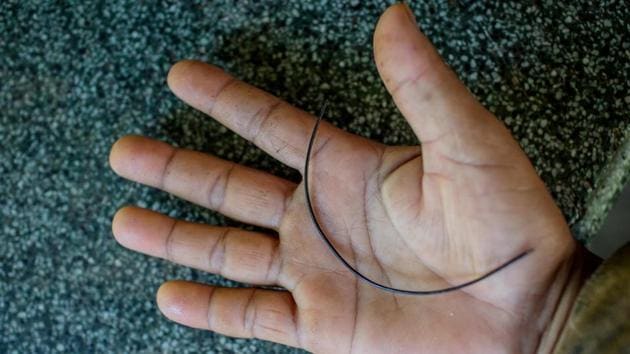
A woman displays a piece of elephant hair in Buon Don district, Dak Lak province, Vietnam. In a village in Vietnam’s “elephant kingdom”, a vendor holds up a severed, dried tail dotted with coarse hairs she promises will bring good luck -- a grim new trade that is endangering the country’s few remaining elephants. (Thanh Nguyen / AFP)
2/10
 View Photos in a new improved layout
Updated on Sep 28, 2018 9:39 AM
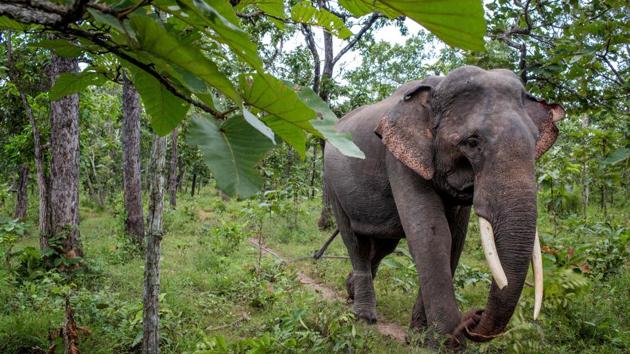
Thong Ngan, a rescued elephant with a broken tusk, walks in Yok Don National Park. “I’ll cut a hair off right in front of you here, so you can be sure it’s not fake,” said the saleswoman in Tri A village in the country’s forested central highlands. (Thanh Nguyen / AFP)
3/10
 View Photos in a new improved layout
Updated on Sep 28, 2018 9:39 AM
A fondness for rings and bracelets embedded with elephant hairs is fuelling a worrying fashion fad in a country notorious for its illicit wildlife trade, from rhino horns to pangolin scales, tiger teeth and bear bile. (Thanh Nguyen / AFP)
4/10
 View Photos in a new improved layout
Updated on Sep 28, 2018 9:39 AM
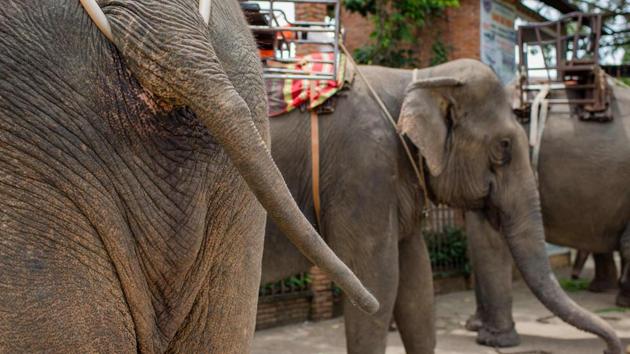
An elephant with a chopped tail stands outside a trekking tour shop at a tourist resort in Lien Son town. The trend is putting a strain on the few surviving elephants in Vietnam whose hairs are plucked or tails cut off by poachers, leaving the animals without the crucial appendage used to swat flies and keep their backsides clean. (Thanh Nguyen / AFP)
5/10
 View Photos in a new improved layout
Updated on Sep 28, 2018 9:39 AM
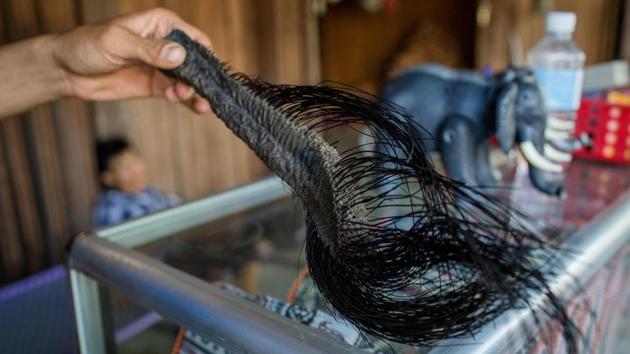
A vendor holds a chopped elephant tail with hair for sale in Lien Son town. “The tail is very much a part of body hygiene, so by plucking the hairs out... or cutting the entire lower tail off, you’re putting a handicap on your elephant,” Dionne Slagter, Animal Welfare Manager at Animals Asia, told AFP. (Thanh Nguyen / AFP)
6/10
 View Photos in a new improved layout
Updated on Sep 28, 2018 9:39 AM
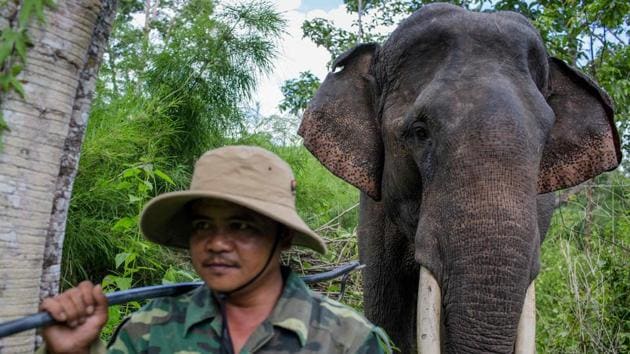
Mahout Vi Xien walks Thong Ngan, a rescued elephant. With just 80 elephants left in captivity and about 100 in the wild -- down from as many as 2,000 in 1990 -- Slagter suspects most of the tails are being smuggled in from neighbouring countries or as far afield as Africa. (Thanh Nguyen / AFP)
7/10
 View Photos in a new improved layout
Updated on Sep 28, 2018 9:39 AM
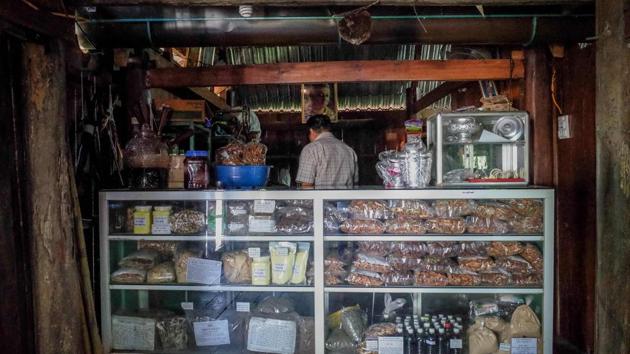
A shop at the traditional home of the late Ama Kong, a legendary elephant tamer from the M'nong tribe, selling ivory and elephant hairs to visitors in Buon Don district. The appetite for elephant parts is a cruel trend familiar to much of the region. In nearby Myanmar elephants are killed to feed a growing demand at home and in China for their skin, believed to cure eczema or acne. (Thanh Nguyen / AFP)
8/10
 View Photos in a new improved layout
Updated on Sep 28, 2018 9:39 AM
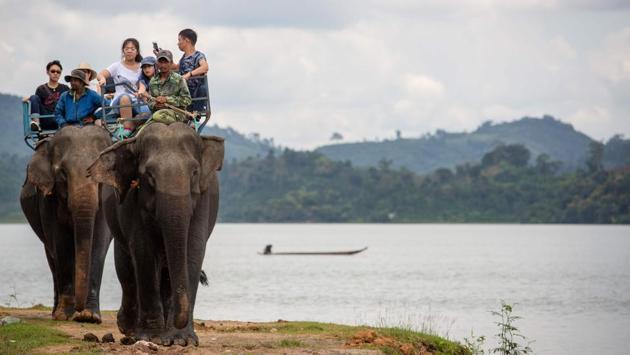
Tourists ride on elephants during a trek around Lak district, Dak Lak province. Loss of habitat and poaching has also badly dented elephant numbers in Thailand, Cambodia and Laos, where they were worshipped for centuries. In Vietnam too, the M’nong and Ede ethnic minorities in Dak Lak province -- dubbed the “elephant kingdom” for the large herds that once roamed its forests -- hold a deep spiritual reverence for the animals. (Thanh Nguyen / AFP)
9/10
 View Photos in a new improved layout
Updated on Sep 28, 2018 9:39 AM
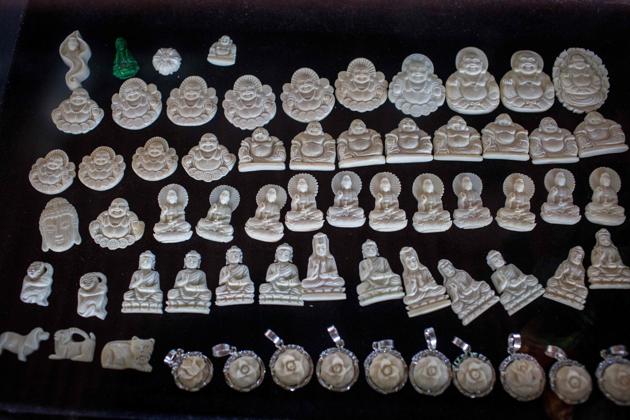
As legend goes, finding a tail hair by chance on the forest floor was considered good luck -- local lore that has been peddled in recent years by shop owners selling the strands, along with ivory jewellery and Buddha statues that can fetch up to $900. (Thanh Nguyen / AFP)
10/10
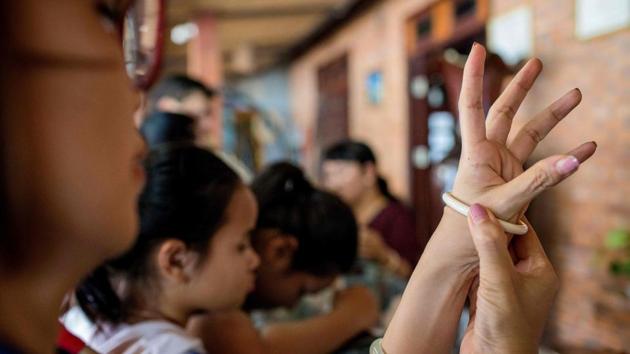 View Photos in a new improved layout
Updated on Sep 28, 2018 9:39 AM


