
 E-Paper



Photos: Fires burn part of world’s largest wetland in Pantanal, Brazil
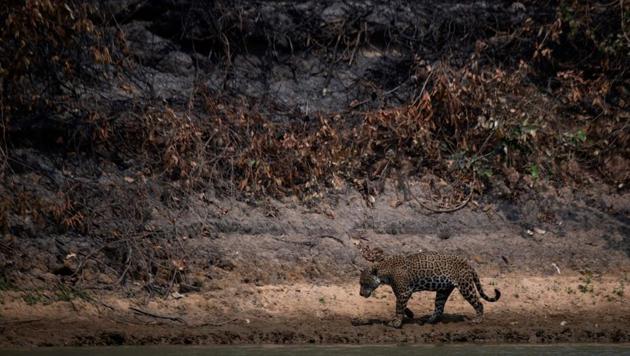
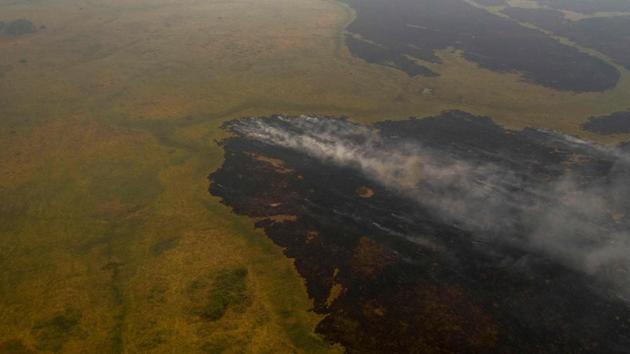
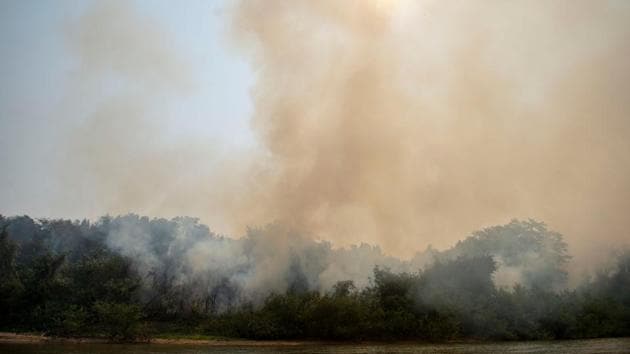
Since mid-July, a fire has been raging in the wetlands of west-central Brazil, leaving in its aftermath a huge charred desolation bigger than New York City. The fires have wrecked nearly 12% of the world’s largest tropical wetland, partially reducing to ashes one of the most biologically diverse ecosystems on the planet. The Pantanal, which also covers areas of Bolivia and Paraguay, is home to roughly 1,200 vertebrate animal species, including 36 that are threatened with extinction. The region is home to rare birds and the world's densest population of jaguars. A team of veterinarians, biologists and local guides arrived in late August, trying to save whatever injured animals they could.
Updated on: Sept 16, 2020 5:56 PM IST


Share via


Copy link

1/12
 View Photos in a new improved layout
Updated on Sept 16, 2020 5:56 PM
An injured adult male jaguar walks along the bank of a river at the Encontros das Aguas Park in the Porto Jofre region of the Pantanal, near the Transpantaneira park road which crosses the world's largest tropical wetland in Mato Grosso State, Brazil, on September 15. The Pantanal, famous for its wildlife, is suffering its worst fires in more than 47 years, destroying vast areas of vegetation and causing death of animals caught in the fire or smoke. (Mauro Pimentel / AFP)
2/12
 View Photos in a new improved layout
Updated on Sept 16, 2020 5:56 PM
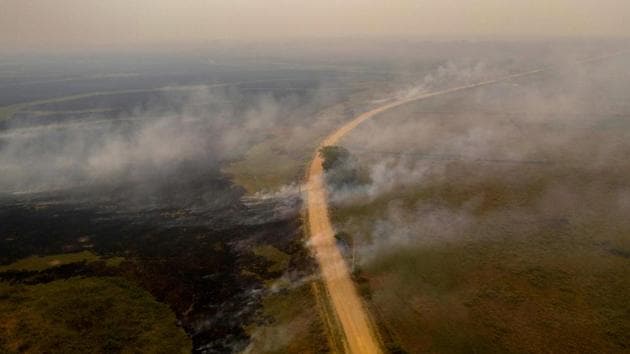
An aerial view showing a fire at the Transpantaneira park road in the Pantanal wetlands, Mato Grosso state, Brazil, on September 14. (Mauro Pimentel / AFP)
3/12
 View Photos in a new improved layout
Updated on Sept 16, 2020 5:56 PM
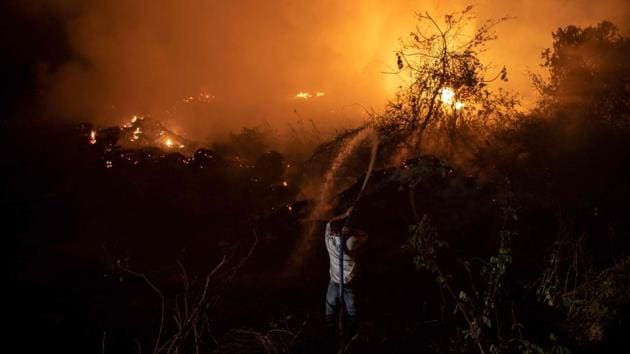
A volunteer throws water to control a fire using a water tank truck to protect a wooden bridge - one of 119 bridges of the Transpantaneira Park Road, on September 13. This massive fire is one of thousands of blazes sweeping the Brazilian Pantanal this year in what climate scientists fear could become a new normal. (Mauro Pimentel / AFP)
4/12
 View Photos in a new improved layout
Updated on Sept 16, 2020 5:56 PM
The Pantanal is smaller and less-known than the Amazon jungle. According to a Reuters report, the biggest fires in the Pantanal this year are quadruple the size of the largest fire in Brazil’s Amazon rainforest, as per data and images from NASA satellites. (Mauro Pimentel / AFP)
5/12
 View Photos in a new improved layout
Updated on Sept 16, 2020 5:56 PM
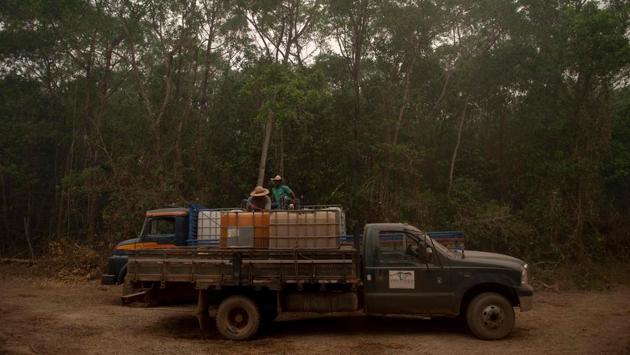
Volunteers and Panthera NGO workers stand in a water truck as they help firefighters from the Mato Grosso State Department combatting a nearby wildfire, in the Porto Jofre region in the wetlands of the Pantanal near the Transpantaneira park road in Mato Grosso state, Brazil, on September 14. (Mauro Pimentel / AFP)
6/12
 View Photos in a new improved layout
Updated on Sept 16, 2020 5:56 PM
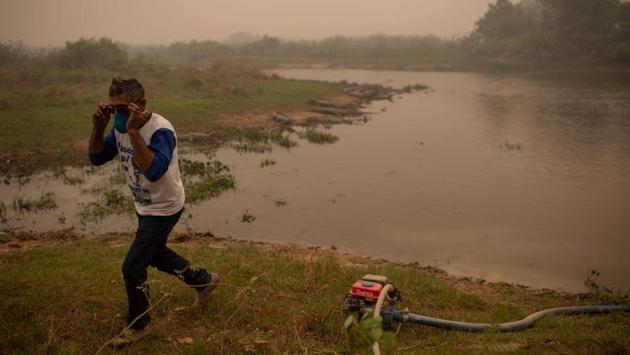
Volunteer Antonio Jose da Silva, 50, collects water from a river beside alligators to combat a wildfire as he and other volunteers try to protect a wooden bridge in the wetlands of the Pantanal at the Transpantaneira park road in Mato Grosso state, Brazil, on September 14. A record 23,490 square kilometers have burned through Sept. 6 - nearly 16% of the Brazilian Pantanal, according to a Federal University of Rio de Janeiro analysis, reported Reuters. (Mauro Pimentel / AFP)
7/12
 View Photos in a new improved layout
Updated on Sept 16, 2020 5:56 PM
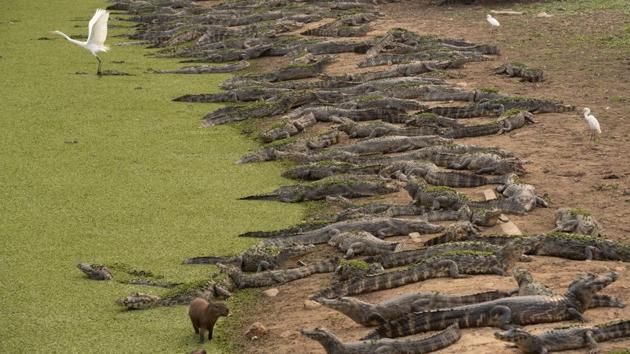
Alligators, capybaras and egrets stand on the banks of the Bento Gomes river whose waters are drying out. A vast swath of the vital wetlands is burning in Brazil, sweeping across several national parks and obscuring the sun behind dense smoke. (Andre Penner / AP)
8/12
 View Photos in a new improved layout
Updated on Sept 16, 2020 5:56 PM
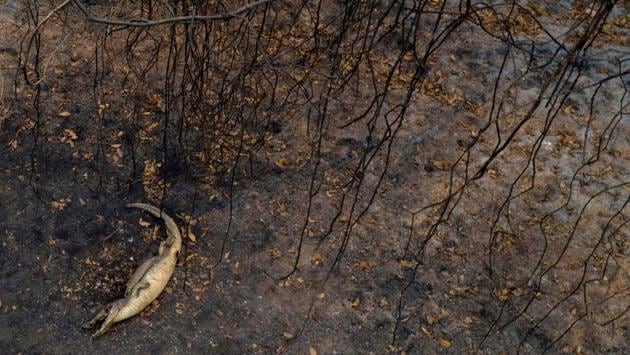
A dead alligator lies beside the Transpantaneira park road in the Pantanal wetlands in Mato Grosso state, on September 14. Brazil’s environment minister Ricardo Salles visited the Pantanal in August, saying that federal environmental agencies had sent five aircraft and additional workers to assist the more than 100 state firefighters battling the blazes, Reuters reported. (Mauro Pimentel / AFP)
9/12
 View Photos in a new improved layout
Updated on Sept 16, 2020 5:56 PM
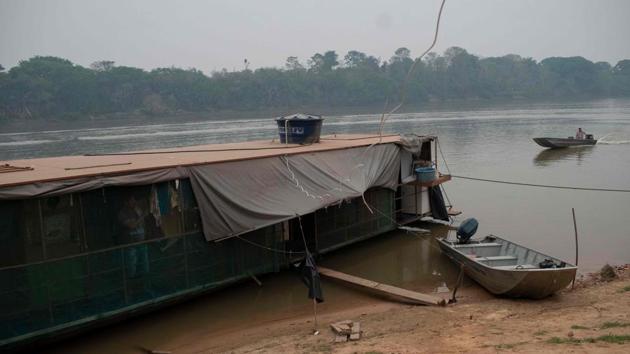
A man is seen inside his boat house in the Porto do Jofre community in the Pantanal, near the Transpantaneira park road which crosses the world's largest tropical wetland, in Mato Grosso State, Brazil, on September 13. “The fires are causing great damage to fauna, flora and to the Pantanal region,” Salles told Reuters. (Mauro Pimentel / AFP)
10/12
 View Photos in a new improved layout
Updated on Sept 16, 2020 5:56 PM
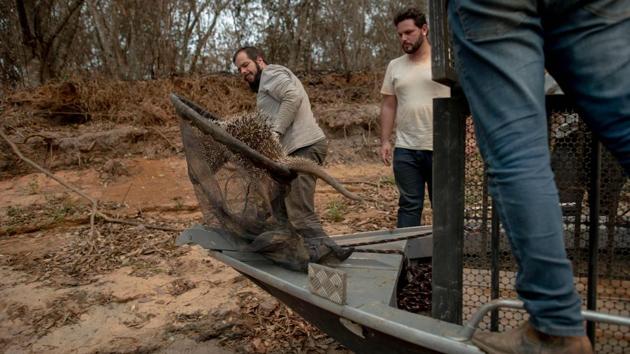
Volunteers of an animal rescue group return a Brazilian porcupine (Coendou prehensilis) back into the wild in the Pantanal, near the Transpantaneira park road which crosses the world's largest tropical wetland, in Mato Grosso State, Brazil, on September 13. (Mauro Pimentel / AFP)
11/12
 View Photos in a new improved layout
Updated on Sept 16, 2020 5:56 PM
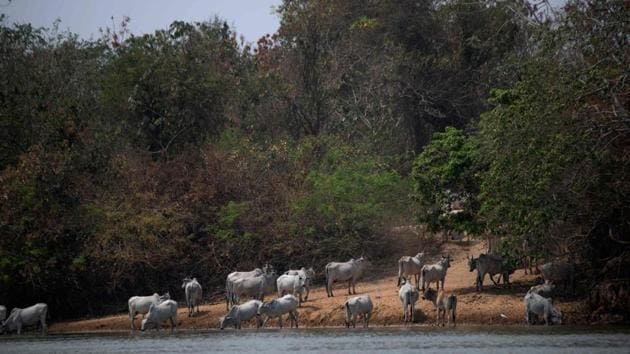
Cattle is seen drinking water metres away from an injured adult male jaguar at the Encontros das Aguas Park, near the Transpantaneira park road which crosses the world's largest tropical wetland, in Mato Grosso State, Brazil, on September 15. An Animal Rescue Team is monitoring the jaguar to evaluate if they will need to transport and treat him outside the park. (Mauro Pimentel / AFP)
12/12
 View Photos in a new improved layout
Updated on Sept 16, 2020 5:56 PM


