
 E-Paper



Photos: Lesotho, Africa’s medical cannabis pioneer
Lesotho has become the first country in Africa to allow the cultivation of cannabis for medicinal purposes. As the global market for medical cannabis is currently estimated at $150 billion (135 billion euros) and could reach $272 billion in 2028, there are companies that are investing a significant amount in cannabis-growing facilities around the country's capital.
Updated on: Sep 06, 2019 9:36 AM IST

Share via


Copy link

1/10
 View Photos in a new improved layout
Updated on Sep 06, 2019 9:36 AM
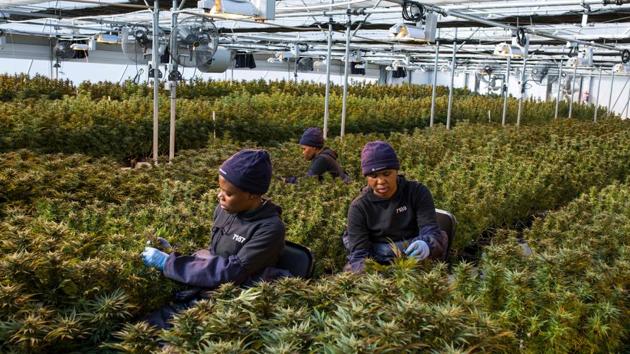
Women workers pick up leaves from cannabis plants inside a greenhouse of Medigrow, a Lesotho-Canadian company that grows legal cannabis, located near Marakabei,Lesotho. In 2017, the tiny landlocked kingdom of 2.1 million people decided to tap into the booming medical marijuana industry, becoming the first country in Africa to allow the cultivation of cannabis for medicinal purposes. (Guillem Sartorio / AFP)
2/10
 View Photos in a new improved layout
Updated on Sep 06, 2019 9:36 AM
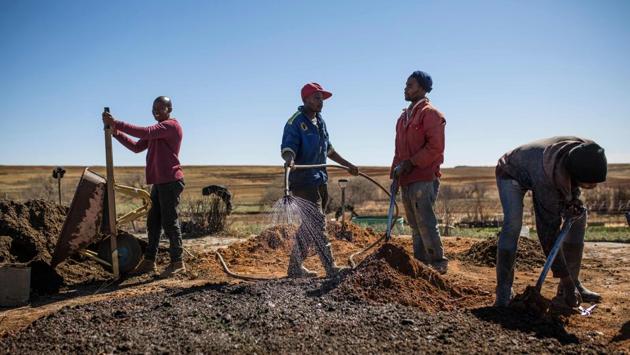
Mothiba Thamae (L) works with his employees in a farm near Maseru. He has been growing apples, peaches and raisins on 7.5 hectares (18.5 acres) of land for over two decades. He can not afford the “green gold” licence. “We hoped the government would give small Basotho farmers the opportunity to cultivate (cannabis) legally,” said the 38-year old, referring to Lesotho’s main ethnic group. “Unfortunately they did not.” (Guillem Sartorio / AFP)
3/10
 View Photos in a new improved layout
Updated on Sep 06, 2019 9:36 AM
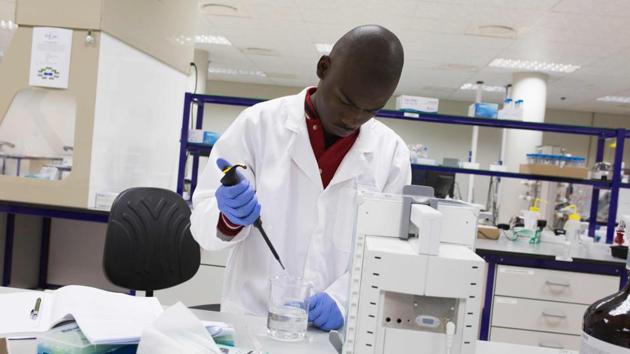
A scientist from Lucan Labs, a lab specialised in analysing cannabis, works on samples. “We have three rows that contain 1,200 plants each. That’s 3,600 plants across the whole structure,” said Medigrow’s head of production Albert Theron. In 2017, the tiny landlocked kingdom of 2.1 million people decided to tap into the booming medical marijuana industry, becoming the first country in Africa to allow the cultivation of cannabis for medicinal purposes. (Guillem Sartorio / AFP)
4/10
 View Photos in a new improved layout
Updated on Sep 06, 2019 9:36 AM
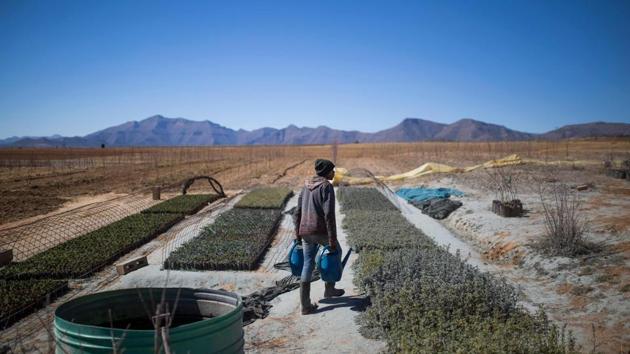
Entirely surrounded by South Africa, Lesotho is also one of the poorest countries in the world, ranking 159 out of 189 in the latest UN Human Development Index. Unemployment is high, public services are scant and almost a quarter of the population is infected with HIV. The government charges 30,000 euros for a one-year renewable licence to grow cannabis. But the cost is too steep for most locals, and the market is dominated by foreign companies, mainly from Canada and the United States. (Guillem Sartorio / AFP)
5/10
 View Photos in a new improved layout
Updated on Sep 06, 2019 9:36 AM
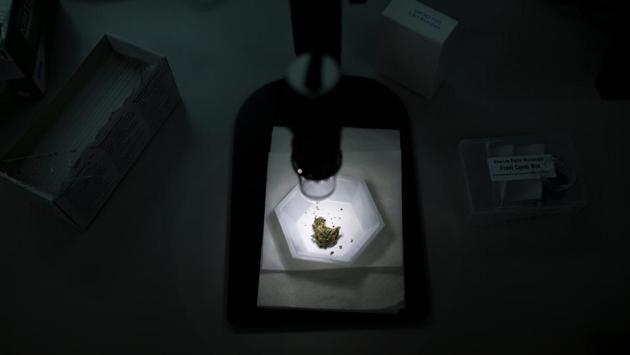
A cannabis sample being studied is seen in a lab. In order to meet legal standards, most traces of tetrahydrocannabinol (THC) -- the main psychoactive constituent responsible for marijuana’s intoxicating effects -- are removed from the seeds. The remaining medical version is primarily made of the non-psychoactive substance, cannabidiol (CBD), and can only be 0.03 percent THC. (Guillem Sartorio / AFP)
6/10
 View Photos in a new improved layout
Updated on Sep 06, 2019 9:36 AM
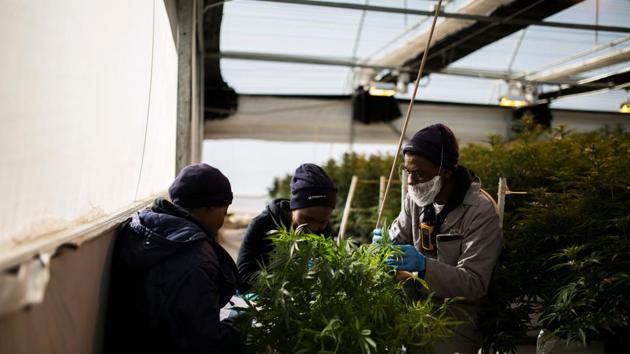
Three workers from Medigrow look for infections in a cannabis plant inside a greenhouse located near Marakabei.The United Nations Office on Drugs and Crime estimates that 70 percent of marijuana consumed in South Africa is grown in Lesotho, making cannabis the country’s third source of revenue. “The first historical trace of matekoane dates back to the 16th century,” said Laurent Laniel, a researcher at the European Monitoring Centre for Drugs and Drug Addiction. (Guillem Sartorio / AFP)
7/10
 View Photos in a new improved layout
Updated on Sep 06, 2019 9:36 AM
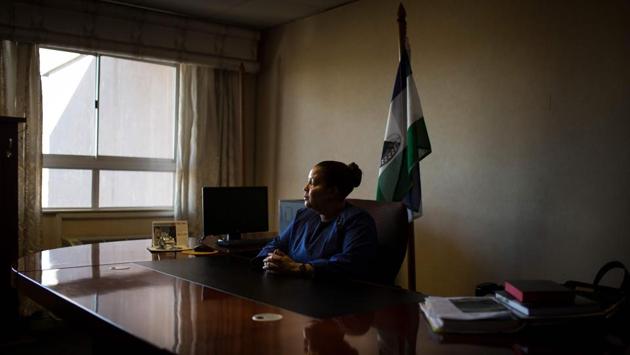
Lesotho's deputy health minister Manthabiseng Phohleli seen in her office. Phohleli said that the legalisation of cannabis presented “a huge opportunity for the country”, which boasts 300 days of sunshine per year. “It attracts investors,” she said. “So far we have around 10 businesses operating on the territory.” (Guillem Sartorio / AFP)
8/10
 View Photos in a new improved layout
Updated on Sep 06, 2019 9:36 AM
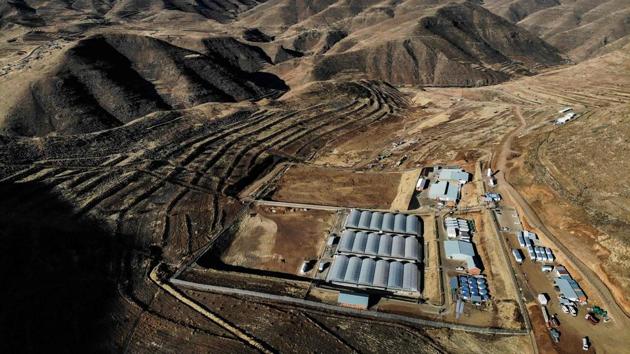
An aerial photograph shows facilities owned by Medigrow. A heliport is also being built to ensure the cannabis -- commonly referred to as “green gold” -- is shipped safely and swiftly, said head of operations Relebohile Liphoto. The investment is spurred by the industry’s positive outlook. The global market for medical cannabis is currently estimated at $150 billion (135 billion euros) and could reach $272 billion in 2028, according to Barclays Bank. (Guillem Sartorio / AFP)
9/10
 View Photos in a new improved layout
Updated on Sep 06, 2019 9:36 AM
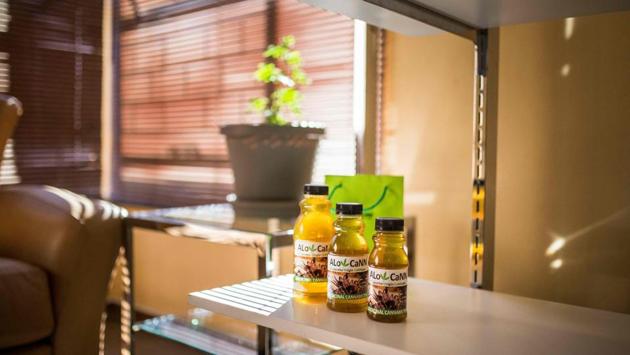
A cannabis plant can be seen next to cannabis-based drinks at the ALoCaNN showroom, a company that sells a variety of legal medicinal products in Maseru. The Koena (people) are believed to have settled in Lesotho around 1550 by buying land from San groups in exchange for marijuana. (Guillem Sartorio / AFP)
10/10
 View Photos in a new improved layout
Updated on Sep 06, 2019 9:36 AM


