
 E-Paper



Photos: US Supreme Court upholds Trump’s travel ban, faces protests
Rejecting the claim of anti-Muslim bias, US Supreme Court upheld the President Donald Trump’s travel ban. The 5-4 ruling will prevent nationals from five countries by entering in the US with overwhelmingly Muslim populations --Iran, Libya, Somalia, Syria and Yemen, also affecting two non-Muslim countries, from North Korea and some Venezuelan government officials and their families. Civil rights groups and Democrats denounced the ruling.
Updated on: Jun 28, 2018 3:01 PM IST

Share via


Copy link

1/11

 View Photos in a new improved layout
Updated on Jun 28, 2018 3:01 PM
People protest against the US Supreme Court ruling upholding President Donald Trump’s controversial order, which prevents nationals of several Muslim-majority nations from entering the country. (Jacquelyn Martin / AP)
2/11
 View Photos in a new improved layout
Updated on Jun 28, 2018 3:01 PM
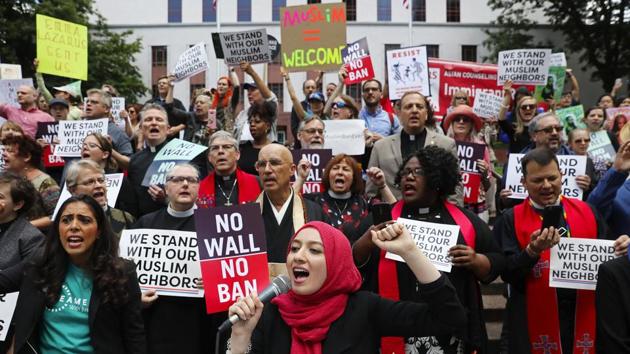
Varisha Khan (front, centre), director of the Muslim committee at OneAmerica in Seattle, leads a chant during a protest & news conference by CAIR-Washington and other organizations upset by the Supreme Court's decision in downtown Seattle. The 5-4 ruling, with the court’s five conservatives in the majority, ended a fierce fight in the courts over whether the policy amounted to an unlawful Muslim ban. (Ken Lambert / The Seattle Times via AP)
3/11
 View Photos in a new improved layout
Updated on Jun 28, 2018 3:01 PM
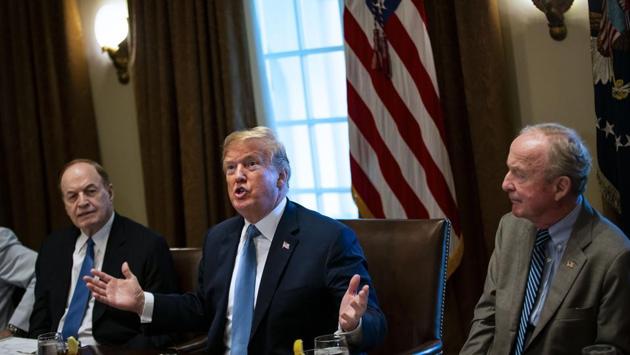
US President Donald Trump speaks during a lunch meeting with Republican lawmakers in the White House’s Cabinet Room in Washington. Trump called the ruling “a tremendous victory for the American people and the Constitution”, saying in a statement that the court had “upheld the clear authority of the President to defend the national security” of the US. (Al Drago / Bloomberg)
4/11
 View Photos in a new improved layout
Updated on Jun 28, 2018 3:01 PM
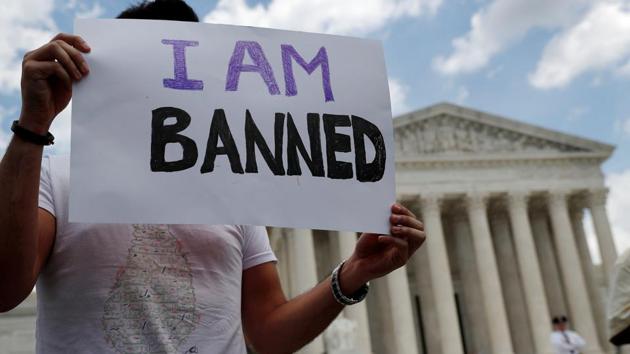
Mehrad Ansari of Iran holds a placard outside the Supreme Court. He and his sister both attend university in the US and now may not go home to see their family in Iran if they want to be able to return to the US. The court held that the challengers had failed to show that the ban violates either US immigration law or the US Constitution’s First Amendment prohibition on the government favouring one religion over another. (Leah Millis / REUTERS)
5/11
 View Photos in a new improved layout
Updated on Jun 28, 2018 3:01 PM
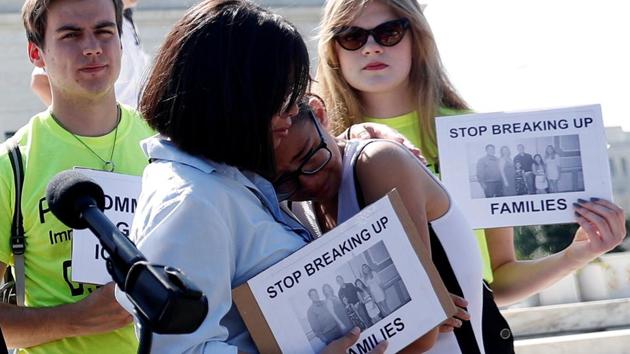
Michelle Edralin, 12, is comforted as immigration rights proponents react outside the Supreme Court. The ruling affirmed broad presidential discretion over who is allowed to enter the US. It means that the current ban can remain in effect and that Trump could potentially add more countries to it. (Leah Millis / REUTERS)
6/11
 View Photos in a new improved layout
Updated on Jun 28, 2018 3:01 PM
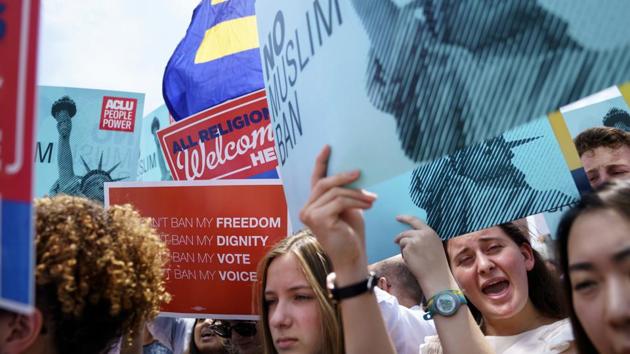
Protesters hold placards as they call out against the Supreme Court ruling. The Trump policy applies to travellers from five countries with a large Muslim population --Iran, Libya, Somalia, Syria and Yemen. It also affects two non-Muslim countries, blocking travellers from North Korea and some Venezuelan government officials and their families. (Carolyn Kaster / AP)
7/11
 View Photos in a new improved layout
Updated on Jun 28, 2018 3:01 PM
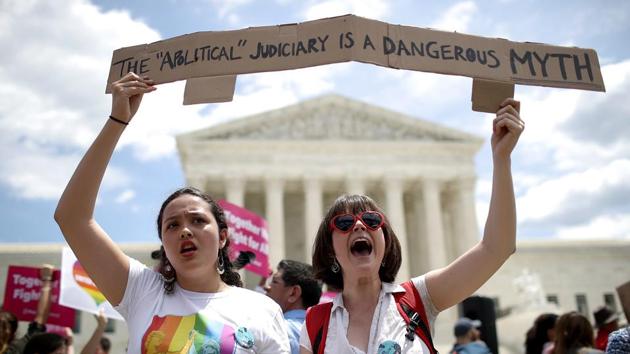
Protesters Celina Scott-Buechler (R) and Lisset Pino (L) demonstrate against Trump's travel ban. The ban was one of Trump’s signature hardline immigration policies that have been a central part of his presidency and “America First” approach. Trump issued his first version just a week after taking office, though it was quickly halted by the courts. (Win McNamee / Getty Images / AFP)
8/11
 View Photos in a new improved layout
Updated on Jun 28, 2018 3:01 PM
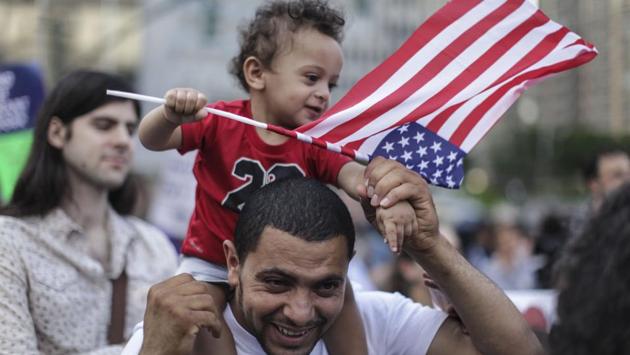
Saad Almontaser, 1, of Brooklyn, waves an American flag over his father Ali, from Yemen, as protesters hold a rally outside of Manhattan Federal Court in New York City. (Byron Smith / Getty Images / AFP)
9/11
 View Photos in a new improved layout
Updated on Jun 28, 2018 3:01 PM
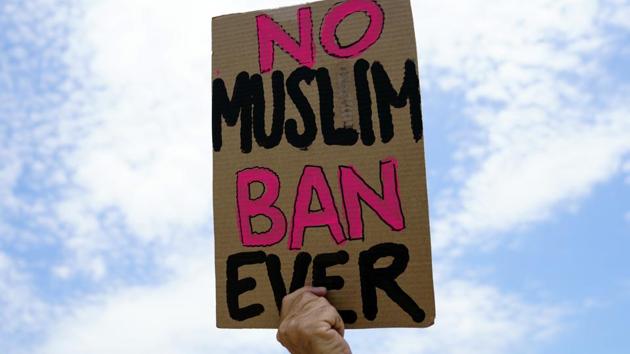
A protester holds a sign that reads "No Muslim Ban Ever." Critics of Trump’s ban had urged the justices to affirm decisions in lower courts that generally concluded that the changes made to the travel policy didn’t erase the ban’s legal problems. (Carolyn Kaster / AP)
10/11
 View Photos in a new improved layout
Updated on Jun 28, 2018 3:01 PM
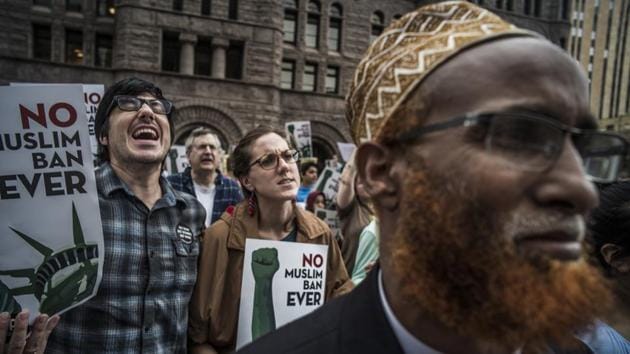
Dave Smallen (L) and his fiancee Caitlin Mahoney (C), who started at the Federal Courthouse attend a rally to oppose the Supreme Court's decision in Minneapolis. Somali Abuturab Hashi stands to the front right. Muslim individuals and groups, as well as other religious and civil rights organizations, expressed outrage and disappointment as the policy claimed discriminated against Muslims and exceeded the president's authority. (Richard Tsong-Taatarii / Star Tribune via AP)
11/11
 View Photos in a new improved layout
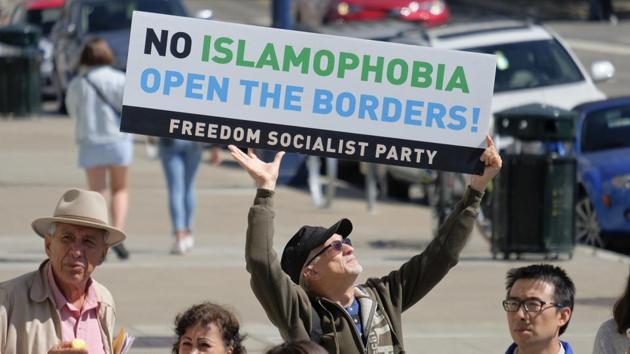
Updated on Jun 28, 2018 3:01 PM


