
 E-Paper



Work well, live well: Japanese office goers limber up with monkey bars, radio drills
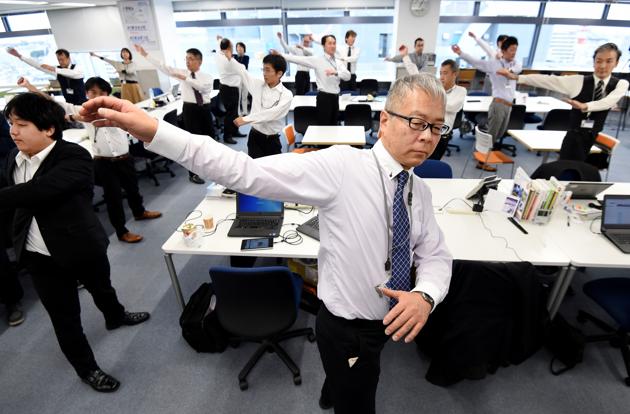
At the stroke of 1:00pm, a group of Tokyo IT workers spring from their desks for a few minutes of rigorous bending, stretching and thrusting as a voice on the radio instructs them — ‘ichi, ni, san (one, two, three)’. A growing number of Japanese companies are encouraging exercise breaks, in the hope of keeping employees limber and productive for longer, as the nation contends with a shrinking labour pool and one of the world’s fastest ageing populations. (TORU YAMANAKA / AFP)
Updated on: Jun 16, 2017 12:30 PM IST

Share via


Copy link

1/8
 View Photos in a new improved layout
Updated on Jun 16, 2017 12:30 PM
At the stroke of 1:00pm, a group of Tokyo IT workers spring from their desks for a few minutes of rigorous bending, stretching and thrusting as a voice on the radio instructs them — ‘ichi, ni, san (one, two, three)’. A growing number of Japanese companies are encouraging exercise breaks, in the hope of keeping employees limber and productive for longer, as the nation contends with a shrinking labour pool and one of the world’s fastest ageing populations. (TORU YAMANAKA / AFP)
2/8
 View Photos in a new improved layout
Updated on Jun 16, 2017 12:30 PM
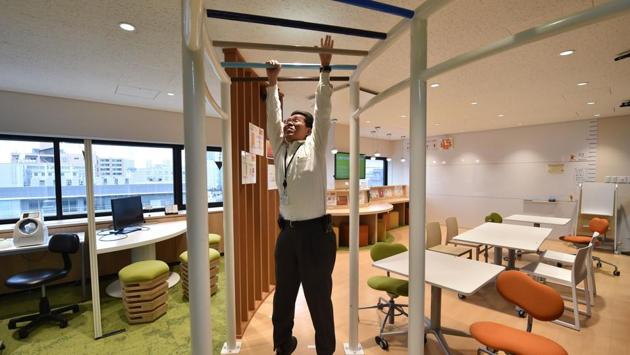
The suited staff are taking part in a regular calisthenics drill implemented by Adoc International, while over at electrical equipment firm Fujikura, the staff can be seen dangling from multi-coloured monkey bars. (KAZUHIRO NOGI / AFP)
3/8
 View Photos in a new improved layout
Updated on Jun 16, 2017 12:30 PM
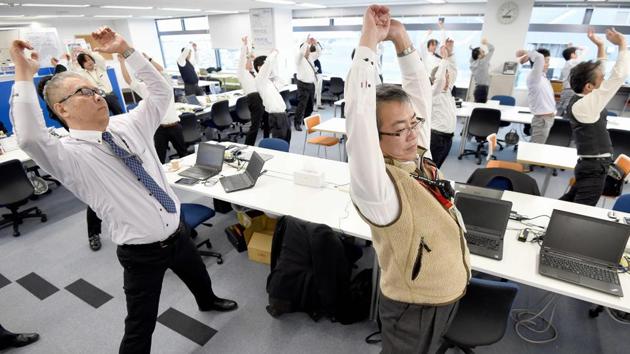
Instructions for the three-minute exercise are also played daily on public broadcaster NHK, with different sets tailored for building strength or for the elderly and disabled. (TORU YAMANAKA / AFP)
4/8
 View Photos in a new improved layout
Updated on Jun 16, 2017 12:30 PM
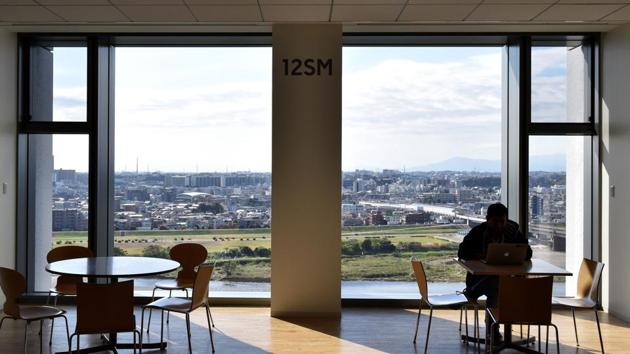
Automaker Toyota has its own in-house version, while Sony employees — ranging from blue collar assemblers to top executives — are supposed to join in a group stretch at 3:00pm daily, although it’s not mandatory. (KAZUHIRO NOGI / AFP)
5/8
 View Photos in a new improved layout
Updated on Jun 16, 2017 12:30 PM
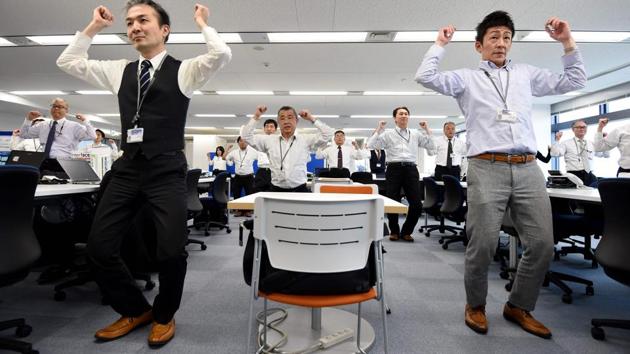
The rajio taiso routine is considered by many as a Japanese tradition, although the idea was actually borrowed from a similar programme sponsored by an insurance company in the United States.It spread quickly throughout Japan, as workplaces, schools and local communities got into the routine. (TORU YAMANAKA / AFP)
6/8
 View Photos in a new improved layout
Updated on Jun 16, 2017 12:30 PM
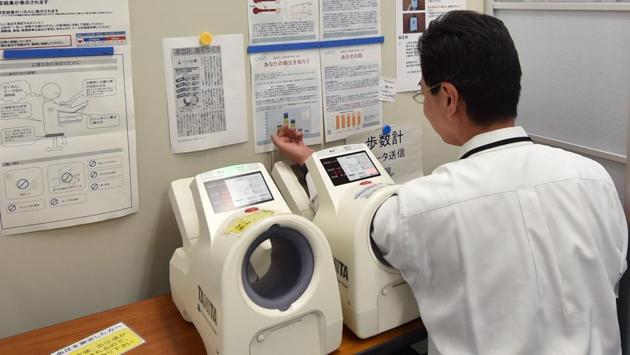
An employee of the Tokyo-based electrical equipment manufacturing company checking his blood pressure at the company's health care room. Today, as many as 28 million Japanese are believed to take part daily. (KAZUHIRO NOGI / AFP)
7/8
 View Photos in a new improved layout
Updated on Jun 16, 2017 12:30 PM
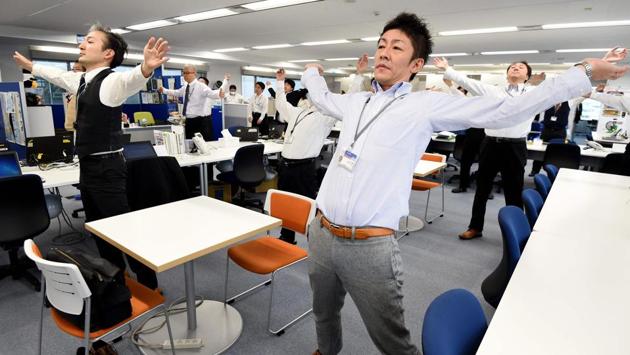
Japan’s population is quickly getting older and there are fewer and fewer kids — this is very big risk for companies. With almost zero formal immigration, companies need to keep staff fit in the hope they’ll work past the usual retirement age. (TORU YAMANAKA / AFP)
8/8
 View Photos in a new improved layout
Updated on Jun 16, 2017 12:30 PM


