Pune Municipal Corporation authorities have said that notwithstanding the poor response from slum dwellers to shifting to the nearly 70 temporary shelters created in civic schools, numerous steps have been taken to contain the spread of Covid-19 in the city’s slums.
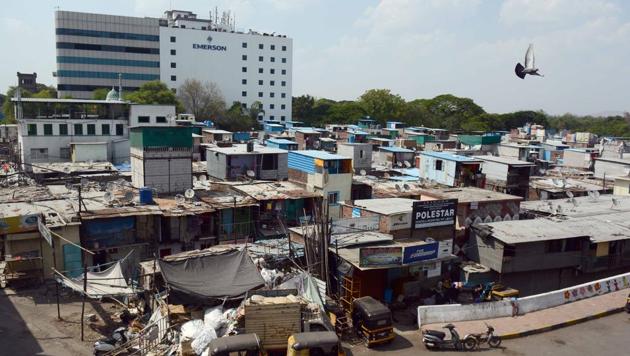
However, political activists from the affected slum areas said the PMC needs to change its approach in slums given the high population density, tiny houses and enormous difficulty in maintaining social distancing.
Nearly seven weeks after the first case in Maharashtra was reported in Pune on March 9, eight slums in Pune from five wards, namely Bhavani Peth, Kasba-Vishrambaug, Dhole Patil Road, Yerawada-Kalas-Dhanori and Shivajingar have emerged as the major hot spots of the disease in Pune.
As of April 29, 81 people have died of this disease in Pune—one of the highest death tolls in the country—and more than 1,400 have tested positive.
Former deputy mayor of Pune, Dr Siddharth Dhende, a doctor with a regular practice in the Nagpur Chawl and Yerawada slum said, “PMC needs to change its approach and needs to provide basic food kits with the help of self-help groups instead of allowing slum dwellers to go to fair price shops. The PMC needs to take care of community toilets. These people also need a source of income.”
Congress leader Avinash Bagwe said, “People in the slums are not observing social distance in their interactions. The civic body should provide them with two weeks’ food supply and enforce the lockdown strictly in the slum areas. The idea of creating shelter homes has flopped and a practical solution would be to provide food and vegetables at their doorsteps.”
{{/usCountry}}Congress leader Avinash Bagwe said, “People in the slums are not observing social distance in their interactions. The civic body should provide them with two weeks’ food supply and enforce the lockdown strictly in the slum areas. The idea of creating shelter homes has flopped and a practical solution would be to provide food and vegetables at their doorsteps.”
{{/usCountry}}As reported on Wednesday, Bagwe had said that people were not ready to move to the shelter homes for various reasons such as no food facility and the fear of things getting stolen from their small tenements. They were also worried that may not be allowed to go home for errands by the police if they moved to the temporary shelters.
Pune municipal commissioner Shekhar Gaikwad and additional municipal commissioner Rubal Agarwal said a number of steps were being taken by the civic body to control the spread of Covid-19 in the slums. These included rigorous contact tracing with an emphasis on High Risk and Low risk contacts; stepping up swab testing; opening of dedicated Covid Care booth in hotspot areas; allocation of 10 mobile clinics/ambulances per ward and deployment of 75 teams per ward for the 5 hotspot wards.
Also, patients who had tested negative were being discharged with a packet of five masks, sanitiser and soap and comprehensive medical, nutritional and psycho-social care was being provided for those with Covid-19.
Agarwal said the civic body was doing extensive sanitisation in the affected areas regularly and had increased the civic water supply in these areas for proper hygiene and sanitation.
She said that schools had been opened in these areas to enable slum dwellers to use them as night shelters.