However, in the midst of increasing e-learning centres in the city, many have raised concerns about the challenges posed to the traditional methods of learning.
“The education sector is changing everyday and in a few years, it is bound to experience a drastic change when students can literally shop online for the courses they want to study. That can pose a threat to traditional forms, but the paradigm shift in the scenario needs to be adapted to,” said Swati Mujumdar, director, Symbiosis Centre for Distance Learning and principal director of Symbiosis Open Education Society.
Ravindrasinh G. Pardeshi, principal, Fergusson College (FC) said, “ E-learning is a dynamic technology which can make education more affordable, democratic and easy to access, but everything has its downsides when in excess. So, e-learning should be complementing the conventional education methods and should not be treated as a replacement.”
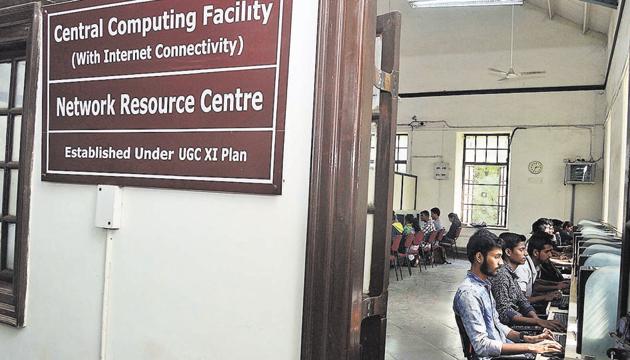
In collaboration with the government of India in 2000, Fergusson College acquired Rs 70 lakh under the fund for improvement of Science and Technology (FIST). This fund allows the college to open e-learning classrooms and an e-library, network resource centre.
Educationists added that e-learning comes with its own share of demerits as it is devoid of ‘personal touch’.
“Recorded sessions cannot be compared with face-to-face classroom sessions, which are real-time, organic and motivating to students,” said Mujumdar.
Students, on the other hand, feel that there is personal touch in e-learning. “Today I study in a classroom of 220 students and in such scenario, despite the physical presence of a teacher, one cannot expect personal attention. Doubts often remain unsolved. In a recorded session, I can always go back to it again and again to clear the doubts,” said Baliram Ghunawat, first year student of B A, Political Science.
{{/usCountry}}Students, on the other hand, feel that there is personal touch in e-learning. “Today I study in a classroom of 220 students and in such scenario, despite the physical presence of a teacher, one cannot expect personal attention. Doubts often remain unsolved. In a recorded session, I can always go back to it again and again to clear the doubts,” said Baliram Ghunawat, first year student of B A, Political Science.
{{/usCountry}}Rural students who have been devoid of quality education have access to it now, thanks to the online resource, he added.
Gauri Devare, another first year student of B A, Political Science, said that the lack of human touch is compensated by real-time classes via video chats.
“Students do not get personal attention, even in coaching centres, but through online classes, this issue is solved. It is considerably cheaper too. In the live online classes, teachers address doubts of individual students, just like a face-to-face session. I get to learn from good teachers from faraway places, either from a college e-library or from my home,” she said.