
 E-Paper



State of education among Muslims is distressing,says Qamar Siddiqui
This view was expressed by Qamar Siddiqui, associate professor of Mumbai University, while speaking on the sidelines of a national seminar on the occasion of the bi-centenary celebrations of the Muslim pragmatist and reformist Syed Ahmad Khan, popularly known as Sir Syed.


The state of education in the Indian Muslim community is not only unfortunate, but, also distressing as half of the Muslim women population is uneducated.
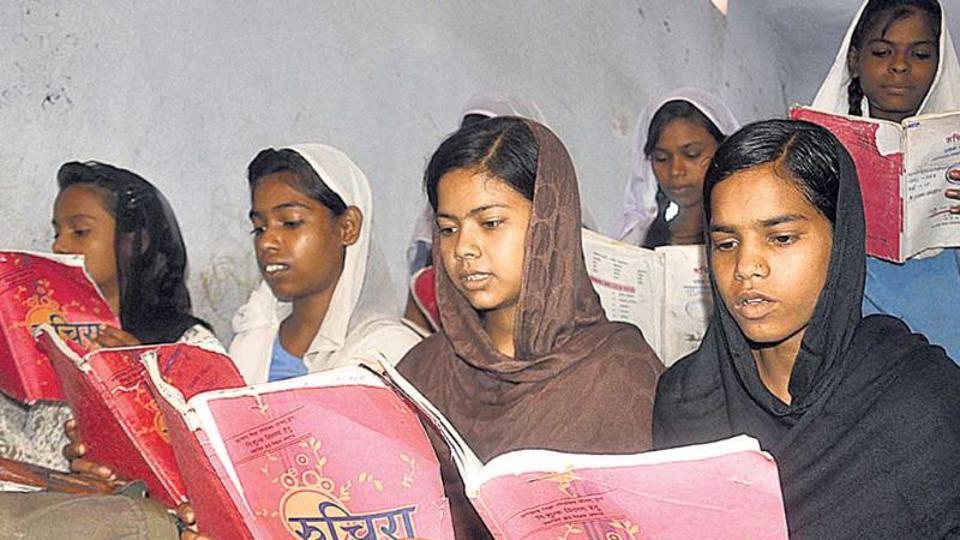
This view was expressed by Qamar Siddiqui, associate professor of Mumbai University, while speaking on the sidelines of a national seminar on the occasion of the bi-centenary celebrations of the Muslim pragmatist and reformist Syed Ahmad Khan, popularly known as Sir Syed.
The seminar was jointly organised by The Deccan Muslim Institute (DMI) and National Council for Promotion of Urdu Language (NCPUL) New Delhi at the Azam Campus Pune.
Siddiqui said the government needs to pay greater attention to the needs of education in the minority community. This will also reduce the unemployment problems in the community, he said.
Pointing out that a majority of Muslims lived in the rural areas, he said, there is a need for greater thrust of education in rural areas. It is a sorrow state that the resources we have are not being utilised to its maximum capacity, he added.
“There are many Madrasas where, along with the moral education, scientific and technical knowledge are also taught. But, unfortunately, even now there are many Madrasas which continue to rely only on moral education. It is necessary to learn science and technology to be able to compete with the technologically evolving world. Not adapting the change would only let the gap widen between the world and our largely uneducated community,” he said.
Dr Abdul Bari, professor in Pune College, said, Muslims have a long way to go as far as the current state of education is concerned. “We have entangled ourselves in the fight of religion,” he said.
He regretted that the community leaders have kept themselves busy in pin-pointing their differences with other communities. “Instead, we should have kept ourselves busy in educating our communities. Compare the Muslim community at large with other communities and we stand nowhere in regards to education. Other communities have gone far ahead as far as education is concerned. We will have to educate our community and work towards creating awareness about education,” he said.
Dr Bari said it is only this that would help the community walk on the ideals laid by Sir Syed.
Dr Samina Pathan noted that if just one woman is educated, it amounts to educating the entire family. “We have stooped so low that we have not given importance to this subject at all and have repeatedly trivialised it. It is a fact established beyond doubt that for the overall development of the community, there is no substitute to education,” he said.
He stressed that moral education in Madrasas was not enough. “We will have to look beyond the conventional patterns and introduce our Muslim community to science and technological education as well.”


