Garbage dumping and burning at Hinjewadi has become a serious environmental issue affecting one lakh residents who stay in the villages at Hinjewadi, Maan and Marunji which hosts the Hinjewadi IT Park where over three lakh IT professionals work daily.
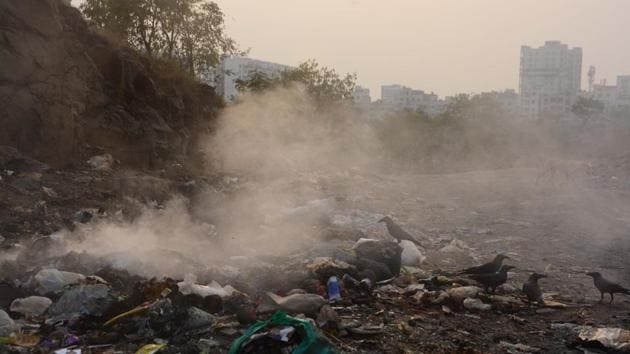
The Hinjewadi IT Park Residents Welfare Association which represents the societies of the area has officially complained about the same to the Maharashtra Pollution Control Board and urged them to take action.
The authorities need to take remedial measures and we expect Pune Metropolitan Region Development Authority (PMRDA) to take the lead in ensuring waste management as per solid waste management (SWM) rules and other provisions of all applicable laws are complied with.
This includes: Organising door-to-door collection of segregated waste by authorised collection agencies; ensuring composting of wet waste at decentralised levels; either in the housing societies or at the community level or biogas plants at appropriate scales; facilitate recovery of recyclable materials; allow only inert and non-recyclable materials to be deposited in a scientific landfill site; inform the public about the SWM system being put in place by the relevant local body; strict action taken against those responsible for dumping garbage and burning garbage; setup briquette (white coal) manufacturing plant which will recycle crop residue, dry biomass and dry leaves; setup dry bio mass based biogas plant; formation of Swacch Hinjewadi committee where members of government authorities, gram panchayat, residents and industry will work closely to make Swacch Hinjewadi a reality.
Ravindra Sinha
{{/usCountry}}Ravindra Sinha
{{/usCountry}}PMC, residents must work together to solve problem
What is it that makes the residents and street sweepers burn waste? It may be noted that in many parts of the city, especially newly-built suburbs, absence of trash cans or trash collecting system forces people to dump garbage at nearby spots. If the pile becomes bigger, they put it on fire. No matter how aware we residents are, many do burn dry leaves. Either conditions may not be favourable for them to compost them nearby, or they just want to get rid of it by burning, despite conditions being favourable.
Coming to street sweepers, let’s salute those who do their jobs honestly and with pride to maintain our streets clean. However, there are many who set alight the collected street waste. Although, the Pune Municipal Corporation (PMC), many years ago, had imposed heavier fines for violating rules and norms, it has been unable to tackle the burning issue.
Equally, we residents have to stop wrong and harmful practices happening in and around our neighbourhoods and find alternative solutions to ensure proper disposal of street waste. We can even ask the civic administration to resolve the issue on their part at the earliest. Health is the biggest wealth which cannot be at stake.
Omkar Revadkar
Smoke from burnt garbage is hazardous
Garbage burnt late night settles down during the early hours with low temperatures and can pose a huge health risk to residents who are out for their morning fitness rituals.
The solution? An integrated garbage disposal system needs to be in place for Maan, Mhalunge, Marunji and other villages in the vicinity. Searching for individual solutions might not be beneficial to all and would also take considerable amount of time to materialise.
Avishkar Nikale
Hinjewadi suffers from this nuisance
Fire is synonymous with purity, but when the same fire is set to garbage strewn on the Sahyadri hills and the roadside, spreads a stench that overpowers everything else. The health risk it poses is catastrophic. There is an urgent need for the authorities to set up proper waste disposal/recycling system that takes the residents of Hinjewadi out of this mess.
GR Kartikey
Hazardous chemicals released while burning garbage
Garbage burning releases hazardous chemicals in the air which pollutes the environment around us, and destroys the life-cycle of nature. It also results into many respiratory diseases and makes it difficult for people to reside in such a pollutant atmosphere. Over the longer period of time, the toxic chemicals released due to burning waste can also cause life-threatening diseases, like cancer, thereby causing a threat to all the living organisms on our planet. One of the solutions is to deep compose the garbage. The local municipal body can think of creating some open space far from residential area and plan a compose plant. There are so many ways to convert garbage into fertiliser, municipal corporation can join hands with the NGO working on such projects already.
Swati Nayak
Health of school children at risk
Garbage is burnt daily near Blue Ridge Public School, thus threatening the health of school children. Hinjewadi, being situated to the west of Pune, is a major cause of pollution in the city because all the polluted air from burning garbage is pushed towards Pune by the westerly winds.
Rohit
Segeration of waste can help
Hinjewadi is a place where information technology meets agriculture. The recent surge of new residential complexes have brought their own share of development and woes to these foothills. While we are seeing better infrastructure and development on the few fronts, the rampant garbage burning right next to 10,000 plus residents, including infants, children, pregnant ladies and senior citizens, requires immediate attention.
With the presence of agriculture activities and the green belt in the vicinity, it seems prudent that garbage collected can be put to better use. With a little bit of segregation at both ends, the bio degradable stuff can be converted to compost which can be sold/used by panchayat.
The remaining garbage can be used during new projects for landfills around the hills to raise height instead of scrapping sides of the hills. We turn what is today hazardous to us into something environment-friendly with better economics for the panchayat.
Bhaskar Pandey
Lack of waste treatment plant
There are many stories on Hinjewadi pollution, but I feel that just the fact that there is no waste treatment plant (WTP) in Maharashtra’s number 1 IT industry, speaks for itself. Hinjewadi is also the richest gram panchayat in the state, but has no proper facilities for more than 50,000 residents living there and some one lakh people who commute and work at the multinational companies. Where is all the tax money going?
Lack of waste treatment plant means garbage is dumped at various locations and burnt every single day, including areas near schools. We all know that India has most number of polluted cities in the world and I will not be surprised if Pune is one of them. In fact, as per World Health Organisation (WHO), Pune was in the top-150 polluted cities in 2014. I am sure that the rank has gone up. We can get more facts from WHO.
Hinjewadi is one of the strong contributors to Pune’s pollution because of its location. Being situated to the west, all polluted air from burning garbage, is pushed towards Pune by the westerly winds. Due to Pune’s cooler climate, dangerous toxic smoke settles down and contributes to the PM 2.5 levels. Every day, we smell smoke and it threatens the health of thousands. Children and seniors have high risk of asthma and other respiratory disorders. India now has most number of deaths caused by pollution.
As a resident, it should not be my responsibility to ensure clean air. How can Maharashtra government set up a multi-crore IT hub but not set up a waste treatment plant? They have enough land for multinational companies but no space for a WTP?
Rohit Halbe