For someone conveniently perceived to be a voracious reader with a literary bent of mind — just because he is a journalist, pets a bushy beard, writes about eight hundred words on random topics every few days, and mostly talks like he knows stuff — the Khushwant Singh Literature Festival in Kasauli is a golden opportunity to watch and learn.
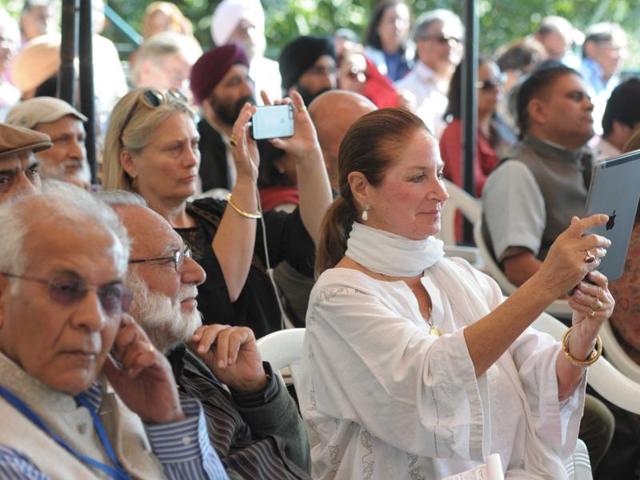
It’s here that the credible, the incredible and the not-so-credible all share laughs and blow kisses to each other. It’s here that opinions, ideas and fluff share a stage, with no malice towards anyone at all. Remember to remain cheerful and curious, and you’d catch much in snippets.
For instance, irreverence gets a new meaning when a renowned painter mistakes you for a volunteer and makes a complaint about the changes in schedule; then briefly befriends you and boasts of his hand-fan collection out of thin air; goes on to berate some young researcher for rejecting his assistantship offer in favour of a call centre job; and finally insists on taking your female friend’s picture while, all this while, telling you to fight the good fight against media barons.
The circle is randomly joined by a former editor known for his seminal pieces on national security and economy; he finds out that you write some kind of a column; patiently picks your brain on the AAP-in-Punjab scenario; and then, suddenly, launches into a list of reasons why he interrupted his own weekly column for a few months some years ago because he “refused to compromise his ideas”. The revelry is halted by a historian’s loud hello to no one in particular. He moves on to finding leftover noodles, the talk moves on to other things, and a humble question remains unasked: “Mr Former Editor, sir, how do you look so much younger in that photo you use with your byline?”
{{/usCountry}}The circle is randomly joined by a former editor known for his seminal pieces on national security and economy; he finds out that you write some kind of a column; patiently picks your brain on the AAP-in-Punjab scenario; and then, suddenly, launches into a list of reasons why he interrupted his own weekly column for a few months some years ago because he “refused to compromise his ideas”. The revelry is halted by a historian’s loud hello to no one in particular. He moves on to finding leftover noodles, the talk moves on to other things, and a humble question remains unasked: “Mr Former Editor, sir, how do you look so much younger in that photo you use with your byline?”
{{/usCountry}}In the big bad world of intellectualism, fans and philistines have to suffer their share of silence too.
But, it is not as taxing as I make it sound, what with my long sentences and habitually cynical tone. The booze keeps a good vibe going throughout, particularly for journalists who revel in the club-coupon culture that comes with some charming rules about proper shoes and collared shirts, tucked in. At the drinks counter, you catch a veteran actor enacting a fake slap with as much conviction as he can muster. There are also some out-of-job Congress leaders being as warm and articulate as they can be, free from the heavy necklace of political power. Among the regulars is a KS namesake who also writes in these columns, allegedly wishing to host a session about the merits and demerits of being a namesake of the Sardar in the Lightbulb. And then there’s that Twitter-famous woman from Pakistan, talking animatedly about her make-up technique even as those interviewing her want to talk about her new book.
The democratic nature of the fest, however, shines bright only after the sun makes its way back home. A much-shamed TV editor, who heads a quasi-mouthpiece of the saffron party, emerges under yellow lights to moderate a session on the moral and legal aspects of the Emergency. He is catty, profound and eloquent in equal doses while on stage. Later, responding to some questions about his unqualified love for the colour saffron, he justifies off the record how he, too, has to run his household like everyone else.
The best moment, however, happens in a corridor somewhere in the middle of all this. You meet a young archaeologist as passionate as a poet would be about her work. Interspersed with Harry Potter references, a spirited conversation about material history and lost legends follows. Inspiration has odd ways of running into you. And that’s what you take home.
aarish.chhabra@hindustantimes.com