The old factory of Jalandhar and the new gutters of Bathinda are widow makers each. Until the structure fell in Jalandhar, concern wasn't built about industrial safety, and now even twin tragedies in the state sewers of Bathinda have failed to raise much stink.
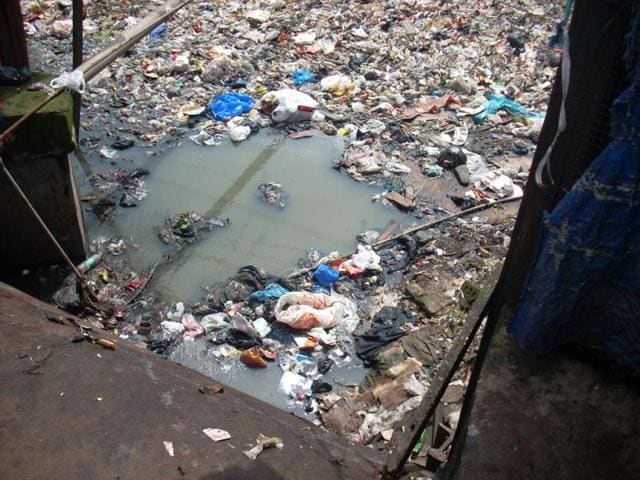
On Saturday evening, labourers Varun (30) of Bihar and Mukesh (35) drowned in the new sewer of Lal Singh Basti in Bathinda. The National Disaster Response Force (NDRF) recovered the bodies at 2am on Sunday after hours of work.
"The men had no oxygen mask, torch, safety belt, backup, and rescue," said Satpal Bharti, state vice-president of the Centre of Indian Trade Unions (CITU). "To save money, the private contractors wasted human lives."
On May 22, at the municipal corporation sewerage project near the city's television tower, labourers Muraru and Bablu died trying to rescue contractor Sushil Mittal and co-worker Atma Ram, who had fallen into a septic tank by accident.
In Saturday's incident, Varun fell into the gutter after its toxic gases had knocked him out. The absence of safety is standard work environment in the gutters. In that dark world, labour laws are easy to lose and employers smell no danger.
"Improper inspection is to blame for the four deaths and contractors' die-hard obsession with risk," said CITU leader Satpal Bharti. Municipal councillor Uma Shankar has sought suspension order for the subdivisional officer and junior engineer concerned, and Rs 2 lakh as compensation for the families of the four men.
{{/usCountry}}"Improper inspection is to blame for the four deaths and contractors' die-hard obsession with risk," said CITU leader Satpal Bharti. Municipal councillor Uma Shankar has sought suspension order for the subdivisional officer and junior engineer concerned, and Rs 2 lakh as compensation for the families of the four men.
{{/usCountry}}"The contractor's negligence is the prime reason for the sewerage accidents," said Shankar. "The MC should suspend all contracts awarded to private company Gaga Associates and make a safety plan."
General hazards
Exposure of sewer workers to injury from street traffic, falls, heavy lifting, falling objects, foriegn bodies in the eyes, and other common industrial hazards, is high to an abnormal amount. This is because the work is in confined space and on slippery surfaces, and involves climbing in and out of deep, underground structures through small openings.
Protection against street lights can be arranged by positioning vehicles, diverting traffic, and placing traffic cones and other warning devices.
Eye injuries from falls on wet, slippery surfaces, and from falling objects can be prevented by providing workers with approved safety hats, shoes, glasses, belts, ropes, and other protective equipment.
Whenever possible, manhole steps should not be used to gain access to sewers. These are coated with grease or slippery biological growth, and with age, are weakened by corrosion until the rungs will not support a man's weight.
Portable ladders should be used to enter shallow sewers. Large, deep manholes can be entered safely and conveniently using a caged platform, a frame, and hoist.
Source: Safety Aspects of Sewer Maintenance by Elmer E Ross