PRIYA’S SWACHH BHARAT
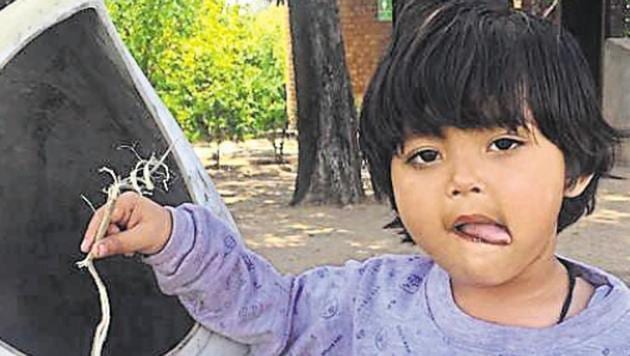
All along the Sukhna Lake’s promenade and, increasingly, at the ‘bird walk’ branching from the regulator-end, unused dustbins and a trail of yuppie litter tells a sorry tale of a smart city’s not so smart folks. Romping boys and girls on the jungle’s edge discard bottles, plastic plates, cake boxes and newspaper wrappings in water and bird habitats as callously as if they were chucking pebbles into a stream. Add to this mess, stray dogs who overturn dustbins. Not to forget the shrill voices, whistles and other sundry acoustics of a noisy humanity. The day is not too far when Chandigarh’s Sukhna pride mutates to a veritable shanty town marsh pockmarked with garbage and litter. Amid this gloom of youthful vandalism, springs a little bloom of hope and light at the Sukhna. Meet Priya, a girl not yet three and the granddaughter of resident cleaners maintaining the public toilet on the Sukhna promenade opposite the observatory tower.
Priya’s mother died recently following a bout of chikungunya and she is being groomed by a visionary, though illiterate granny, Seema Devi. Priya possesses a natural charm and she has endeared herself to many regular walkers, who gift her candy, chocolates, pastries, etc. True to her granny’s upbringing and civic counsel, Priya will dump wrappers in the dustbin. And, when not sulking after a tiff with granny, this headstrong kid picks litter strewn by others and deposits it in dustbins. Taking cues from bits and pieces of adult conversation she had overheard, Priya grandly declared before this writer when asked why she was so particular about dustbins: “Sukhna must be kept clean as it belongs to all of us.”
MY MARIGOLD THIEVES
The garden in our Chandigarh house has not bloomed this March as gloriously as in previous years. The Marigolds have offset that disappointment with their reliable, rich, robust blossoms, but a gang of robbers has got my wife, Hemani, irked to the point of distraction. The squirrels have taken a fancy to sweet Marigolds and savage the blooms relentlessly. Some eat petals and stems, while others relish green pods.They will often carry a nipped bloom up a tall shrub to save it from a bigger squirrel, like a leopard ferrets the kill to a high tree to avoid pirating by larger cats, hyenas or wild dogs. Domineering squirrels will not retreat, and make a mess of the blooms by nipping them and gobbling them just behind in an aisle that runs between the Marigold bed and the flower pots in our garden. While I do not grudge the squirrels their due in our garden of abundance (in part, because I have put no effort into gardening), my wife bellows for vengeance and extols the virtues of Hitlerian extermination. But the squirrels lead a charmed life and are doubly blessed: they are oblivious to acerbic human tongues, and their lives are shielded by the indulgence of freeloaders like myself.
{{/usCountry}}The garden in our Chandigarh house has not bloomed this March as gloriously as in previous years. The Marigolds have offset that disappointment with their reliable, rich, robust blossoms, but a gang of robbers has got my wife, Hemani, irked to the point of distraction. The squirrels have taken a fancy to sweet Marigolds and savage the blooms relentlessly. Some eat petals and stems, while others relish green pods.They will often carry a nipped bloom up a tall shrub to save it from a bigger squirrel, like a leopard ferrets the kill to a high tree to avoid pirating by larger cats, hyenas or wild dogs. Domineering squirrels will not retreat, and make a mess of the blooms by nipping them and gobbling them just behind in an aisle that runs between the Marigold bed and the flower pots in our garden. While I do not grudge the squirrels their due in our garden of abundance (in part, because I have put no effort into gardening), my wife bellows for vengeance and extols the virtues of Hitlerian extermination. But the squirrels lead a charmed life and are doubly blessed: they are oblivious to acerbic human tongues, and their lives are shielded by the indulgence of freeloaders like myself.
{{/usCountry}}HAPPY AS CHILDREN
Were a group of children accorded access to a free chocolate store, you can well imagine the excited chatter and squeals of joy that would attend the proceedings. Something similar is to be witnessed in the exuberance of flocks of Black bulbuls sipping nectar from silk cotton (Semul) blooms. Rabbles of bulbuls can be found wherever there are Semul blooms: from trees towering above the jungles of the Shivaliks to the tricity’s gardens and avenues, and among the Chandigarh Golf Club’s stately colonnades. Many bird species visit the Semul for nectar, to sip dew/rain retained in its open cup-like blooms, and to hawk insects attracted by nectar.
The bulbuls’ chatter is distinctive and travels afar and sweetly like a classical concert of violins, oboes and flutes staged in a public garden. Or, as if nature’s loudspeakers were blaring a pleasant marketing jingle: the Semul is blooming, the bulbuls are just loving it, so come hither and savour the splendour of birds and bees drunk on spring’s sugars.
Their red bill, legs and feet sit rather pretty on the scarlet blooms, and their calls have been described by ornithologists as “a continuous, shrill, nasal, chattering babble” or as “an assortment of loud, sharp, squeaky whistles: chirp, chee-chee-chee or whew-whe, etc.” Bulbuls regale the eye by launching “short, twisting sallies from treetops to capture insects in the air.” Bird photographer Munish Jauhar had this to say after capturing a mesmerising image near Parwanoo: “The bulbuls were digging deep into the flower, pushing their heads in completely. The red bill when pushed down, looked identical to the red filaments of the Semul flower.”
vjswild1@gmail.com