E-Paper



Cardinal and Salt: The bold color and sustainable material shaping India's design landscape in 2025
Design experts at India Design 2025 said that while the colour of the year is Cardinal, salt, once overlooked, is emerging as a sustainable design element

 Prefer HTon Google


Cardinal is the new colour of 2025, a bold, evocative shade that embodies warmth, nostalgia, and a sense of inner harmony. More than just a colour, it is an invitation to embrace emotions without judgment, a celebration of raw, unfiltered beauty, say interior design experts.
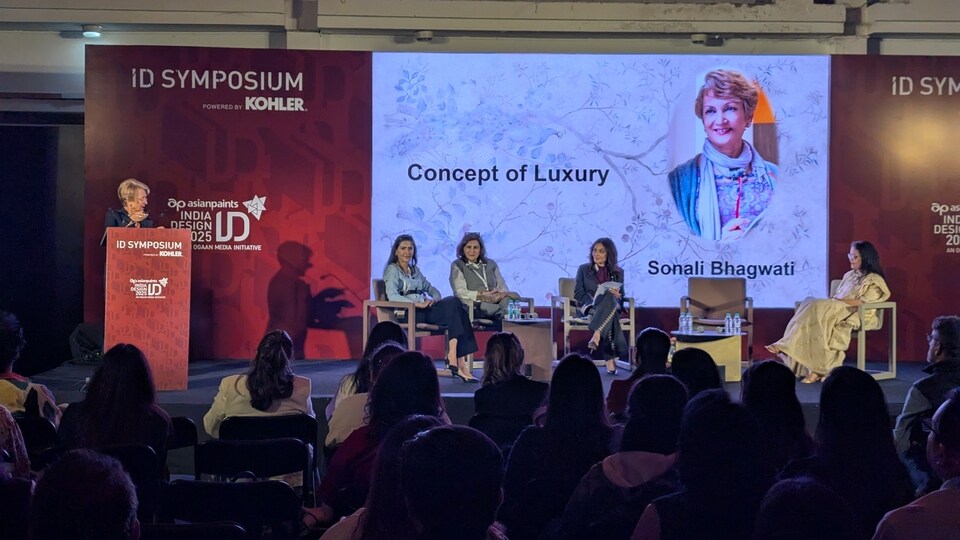
Alongside colour trends, material innovation is redefining aesthetics. Salt, once overlooked, is emerging as a sustainable design element, influencing everything from architecture to interior décor. Its organic texture and versatility make it a futuristic material shaping eco-conscious design trends, said interior design experts at the India Design ID 2025 being held in Delhi.
Set against bold, emotional colour palettes, timeless neutral tones like off-white and beige dominate luxury interior design. While Cardinal represents an embrace of emotions, neutrals maintain their status as the epitome of sophisticated minimalism in high-end real estate and home décor, they said.
What was once dismissed as ‘bad taste’ has emerged as a rebellious counterpoint to traditional old-money elegance. The shift reflects a growing appreciation for imperfections, textures, and lived-in beauty, said interior design experts.
Also Read: India Design 2025: Can luxury real estate embrace sustainability? Experts weigh in
Cardinal is the colour of 2025
At the 13th edition of India Design ID 2025 in Delhi, Asian Paints unveiled the colour of the year, Cardinal. Since its inception, the ColourNext team has presented its forecast of colours, materials, textures, and finishes that will shape design trends across the Indian subcontinent every year.
"Colours make us feel a spectrum of emotions from joy to vitality to stillness. Cardinal has a dusky colour with violet and dark undertones. It provokes imaginations and helps us to decipher the beauty of human emotions," Asian Paints CEO and MD Amit Syngle told HT.com at the sidelines of the event.
Whether evoking warmth or nostalgia, Cardinal embodies a deep sense of inner harmony. Designers describe it as a reminder to embrace emotions without judgment, sit with feelings, and find beauty in raw, unfiltered authenticity.
Speaking on the colour Cardinal’s impact on luxury real estate, Syngle noted that luxury today extends beyond traditional wealth. He emphasized that modern luxury is about finding balance in personal choices, even in the design and colour palettes.
Salt is the material of the future
Syngle said that salt is the material of the future, closely tied to a distinct design language. "Salt is a source of energy. Today, you can create artefacts by crystallising salt, and several designers are already exploring its potential as a strong biomaterial for construction," he said.
Design experts say several designers have already started experimenting with tiles made of crystalline salt. At a time when global sustainable goals shift towards national resources, salt emerges as an emblem of possibilities.
'Bad taste' and luxury real estate
Designers at the event said that luxury today no longer speaks—it roars. What was once dismissed as ‘bad taste’ has sparked a rebellion against the restrained elegance of traditional old-money luxury.
This new aesthetic thrives on bold contrasts, deliberate intensity, and theatrical mid-to-dark tones, creating a striking visual narrative.
Luxury is no longer defined by expensive items alone; instead, it is about redefining opulence as a statement of individuality and self-expression.
White, off-white and neutral colours dominate luxury real estate
Designers said that off-white and neutral tones exude clean sophistication, making them highly desirable in luxury real estate. "These shades provide a versatile canvas, allowing easy layering with rugs and artwork to reflect personal preferences. Bold, contrasting colours have never been a preferred choice for luxury spaces," said architect Akshat Bhatt.
Immersive experiences
Syngle emphasized the growing importance of immersive experiences in shaping modern design. Citing examples, he highlighted the Las Vegas Sphere, the world’s largest spherical structure, featuring an exterior wrapped in a high-resolution LED screen, transforming architecture into a dynamic visual spectacle.
He also referred to Balloon Museum architecture, known for its immersive and interactive design, where inflatable art is used to create spaces that challenge visitors' perceptions.