NASA said on Friday its Cassini spacecraft burned up in the skies over Saturn as planned, ending a 20-year mission.
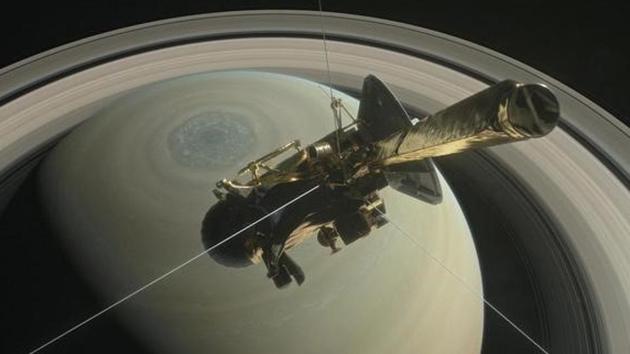
“Earth received @CassiniSaturn’s final signal at 7:55am ET. Cassini is now part of the planet it studied. Thanks for the science,” Nasa tweeted.
Cassini was put on a course to plunge through Saturn’s atmosphere and vaporise like a meteor at the end of its 20-year journey exploring the planet.
Flight controllers at California’s Jet Propulsion Laboratory got one last burst of scientific data from Cassini, before the radio waves went flat — and the spacecraft fell silent.
The only spacecraft to ever orbit Saturn, Cassini showed us the planet, its rings and moons up close in all their glory. Perhaps most tantalising, ocean worlds were unveiled by Cassini and its hitchhiking companion, the Huygens lander, on the moons Enceladus and Titan, which could possibly harbour life.
{{/usCountry}}The only spacecraft to ever orbit Saturn, Cassini showed us the planet, its rings and moons up close in all their glory. Perhaps most tantalising, ocean worlds were unveiled by Cassini and its hitchhiking companion, the Huygens lander, on the moons Enceladus and Titan, which could possibly harbour life.
{{/usCountry}}“Every time we see Saturn in the night sky, we’ll remember. We’ll smile. And we’ll want to go back,” the Cassini mission’s official Twitter handle post.
“Cassini showed us the beauty of Saturn. It revealed the best in us. Now it’s up to us to keep exploring,” it added.
With inputs from agencies