The steamship SS Makambo was grounded on Lord Howe Island, an isolated volcanic formation off the eastern Australian coast, in 1918, allowing black rats to establish on the island. Over the following century, rats were linked to the extinction of five endemic bird taxa and the decline of several invertebrate species and populations. But the full extent of those losses remained difficult to determine because robust biodiversity surveys were conducted only decades after the rodents arrived. A 2026 study in Biological Invasions examines how the island's invertebrate community changed after the rodents were eradicated.
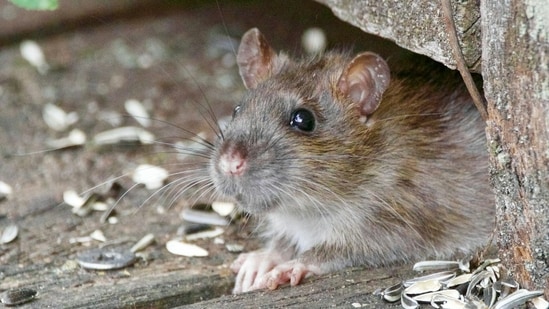
Their approach was straightforward in concept, if not in execution. Scientists from the University of Sydney and the Lord Howe Island Board compared invertebrate life across 20 sites on the island, once before a major 2019 rodent eradication effort and again several years after it. That 2019 program, described in the paper as the largest rodent eradication ever attempted on an inhabited island, targeted both black rats and house mice, and a follow-up survey in 2023 confirmed neither species remained. Using cardboard tree wraps and small wooden blocks to sample arboreal and terrestrial invertebrates, the researchers identified a total of 33 orders across all collections. They counted 9,380 individual invertebrates before the eradication and 14,829 afterward, an increase that was statistically significant. Cockroaches, isopods and other larger-bodied creatures, which can be important prey for rodents, showed some of the strongest gains.
What the numbers show
The findings add to evidence that rodent eradication can affect parts of an island ecosystem that have received less attention than birds and other vertebrates. The researchers note that studies of post-eradication recovery have typically focused on birds, mammals or reptiles, while the response of invertebrates has been less well understood. Importantly, the increase in invertebrate abundance did not necessarily translate into greater diversity. Although the researchers recorded significantly more individual invertebrates after eradication, the number of orders represented changed little overall, and some groups showed declines, particularly among smaller-bodied invertebrates. At the same time, larger-bodied groups increased in abundance.
{{/usCountry}}The findings add to evidence that rodent eradication can affect parts of an island ecosystem that have received less attention than birds and other vertebrates. The researchers note that studies of post-eradication recovery have typically focused on birds, mammals or reptiles, while the response of invertebrates has been less well understood. Importantly, the increase in invertebrate abundance did not necessarily translate into greater diversity. Although the researchers recorded significantly more individual invertebrates after eradication, the number of orders represented changed little overall, and some groups showed declines, particularly among smaller-bodied invertebrates. At the same time, larger-bodied groups increased in abundance.
{{/usCountry}}Just how severe the original toll was becomes clearer through a second, earlier piece of research. A 2003 study published in Biodiversity and Conservation documented the fate of the Lord Howe Island stick insect, a large, flightless species nicknamed the "land lobster." Rats eliminated it from the main island entirely by the 1920s, and for decades scientists assumed it was gone. That assumption held until a small surviving population turned up in the early 2000s on Ball's Pyramid, a jagged, uninhabited sea stack roughly 12 miles offshore, where researchers found a handful of individuals clinging to a single shrub on a narrow ledge. The discovery became an important turning point in the species' conservation history and contributed to the broader case for removing invasive rodents from Lord Howe Island nearly two decades later.
Recovery, not the end of the story
However, the study's authors also emphasize several limitations to interpreting the recovery. Reestablishing invertebrate communities after a major ecological disturbance may take many years, even decades. Seasonal variation in the researchers' data was sometimes as pronounced as the differences associated with rodent removal. The researchers also could not rule out the influence of other factors, including changes in precipitation and weed removal that occurred during the same period on the island. In addition, they have outlined plans for future genetic research to assess the impact of rat eradication on particular invertebrate species.
That does not erase the broader picture. It fits with other changes documented on Lord Howe Island in recent years, including a resurgence in native land birds such as the woodhen, which was formerly critically endangered. Taken together, the research provides a more detailed picture of how the effects of the 1918 shipwreck continued through the island's ecosystem and how some of those effects may be changing after rodent eradication. More than a century after the SS Makambo introduced rats to Lord Howe Island, researchers are now beginning to quantify changes among parts of the ecosystem that had been difficult to study systematically.