
 E-Paper



Scientifically Speaking: The wrinkled rodent that forgot how to age
While a typical mouse lives about four years, a naked mole-rat can live to nearly forty. That’s ten times longer than expected for an animal its size

 Prefer HTon Google


Getting old is miserable. Your joints ache. Your eyes fail. Your hair grays and falls out. Wounds take longer to heal. Your risk of cancer creeps up each year. This happens to every mammal we know of from humans to dogs to mice to elephants.
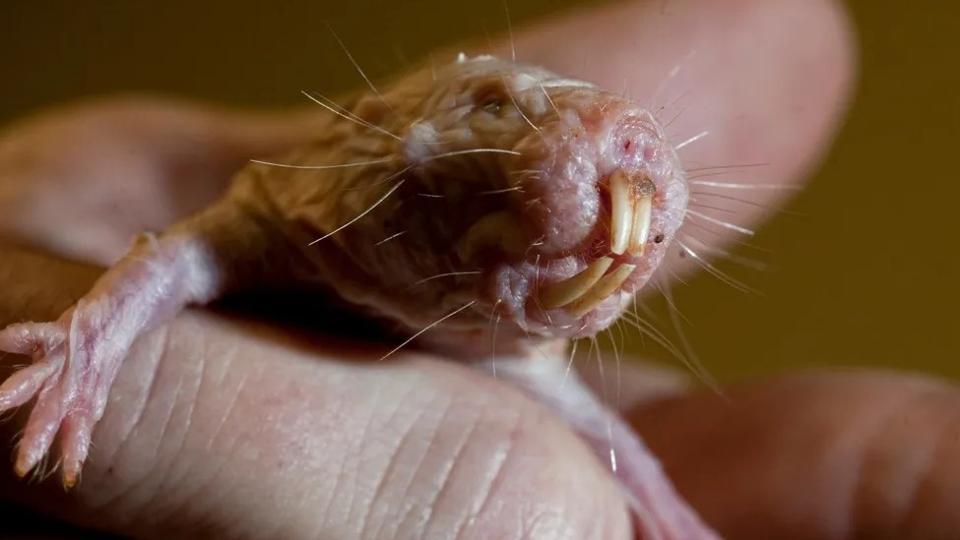
Except for one that seems to have opted out of the process altogether.
The naked mole-rat looks like something that crawled out of a bad dream. It is a rodent that is wrinkled, nearly hairless, and armed with two oversized teeth used to dig tunnels. It lives underground in tightly packed colonies across East Africa, sealed off from the surface world. These creatures can survive without oxygen for nearly twenty minutes and often die not of disease, but from violent fights within their own colonies. They are small and astonishingly long-lived.
While a typical mouse lives about four years, a naked mole-rat can live to nearly forty. That’s ten times longer than expected for an animal its size. Statistically speaking, this rodent does not age in the way other mammals do. Its risk of death barely rises over time, defying the biological rule called Gompertz’s law, which predicts an exponential rise in mortality with age.
And the years don’t seem to touch it. Its heart, kidneys, and brain remain youthful. Its bones stay strong. Out of thousands examined, only a handful have ever developed cancer- quite an astounding feat of biological defiance.
For decades, scientists have puzzled over this mystery. What makes this wrinkled, toothy creature nearly ageless?
Last week, a study in Science from Yu Chen, Zhixi Chen, Zhiyong Mao, and their team in China offered one of the clearest clues. Their work traces the naked mole-rat’s resilience to a single molecular player, a protein called cGAS, and to four tiny changes within it.
This protein is one of the body’s early-warning sensors. It detects when something is wrong inside a cell, such as the presence of viral DNA or fragments of damaged DNA floating where they shouldn’t be. When that happens, it triggers an alarm, setting off a chain of signals that leads to inflammation and immune defense.
The problem is that in humans and most other mammals, cGAS is a bit of a double-edged sword. While it protects us from infections and rogue DNA, it also interferes with the cell’s repair machinery. Think of it as a security system that sounds the alarm so often that repair team can’t get any work done. Over time, the accumulation of unrepaired DNA damage contributes to aging, inflammation, and disease.
In the naked mole-rat, that flaw appears to have been fixed by evolution. The Science team found that four changes in the protein’s amino acid building blocks completely flip what cGAS does. In this species, the protein doesn’t block DNA repair, it helps it.
The altered cGAS latches onto damaged DNA. It brings in two crucial repair workers that help mend DNA breaks through a process known as homologous recombination. Think of this as a meticulous, copy-and-paste method that uses an intact DNA strand as a template to fix the broken one. By keeping this repair process running efficiently, the naked mole-rat’s cells maintain their genomic integrity for far longer than those of other mammals preventing the cellular damage that drives aging and disease.
When the researchers inserted the naked mole-rat version of cGAS into fruit flies, the flies lived longer. When they delivered it into elderly mice using gene therapy, the mice became more robust, fur grayed less, inflammation dropped, and tissues showed fewer signs of cellular aging. When the scientists reversed those four amino acid changes back to the human version, the benefits vanished.
That is extraordinary biology and it’s easy to think that the same changes might help humans too. But before anyone conjures up an immortality gene, caveats are crucial. The results in mice and flies don’t mean we can safely tweak human cGAS to slow aging. This protein is deeply tied to our immune defenses. It helps detect infections, damaged cells, and early cancers. If we change it, we might silence those vital alarms.
Still, the finding gives researchers something concrete to aim at in field filled with charlatans. Rather than vague promises about anti-aging supplements or miracle diets, science now has an actual biological target. If researchers can gently nudge our version of this protein toward helping repair without blunting immunity, it could open new avenues for tackling age-related diseases, from neurodegeneration to chronic inflammation.
The broader lesson is also humbling. Nature hides brilliance in unlikely places. The naked mole-rat is hairless, near-blind, and not a poster child for conservation, yet it holds one of the most important clues to healthy aging in the natural world.
Anirban Mahapatra is a scientist and author, most recently of the popular science book, When The Drugs Don’t Work: The Hidden Pandemic That Could End Medicine. The views expressed are personal.


