
 E-Paper



The strange role of lead poisoning in humanity’s success
The researchers studied 51 teeth from humans and their relatives, covering the past 2m years


 Prefer HTon Google


THE ROMANS built pipes from it. Sixteenth-century women coated their faces in powders containing it. And until a phase-out began in the 1970s it was added to petrol to make cars run smoothly. Poisoning by lead is usually thought of as a disease of relatively modern civilisations. Yet in a paper just published in Science Advances Alysson Muotri, a geneticist at the University of California, San Diego and his colleagues show that it was also common among humanity’s pre-industrial ancestors. Indeed, the toxic metal may have even helped Homo sapiens to become the planet’s sole surviving species of hominin.
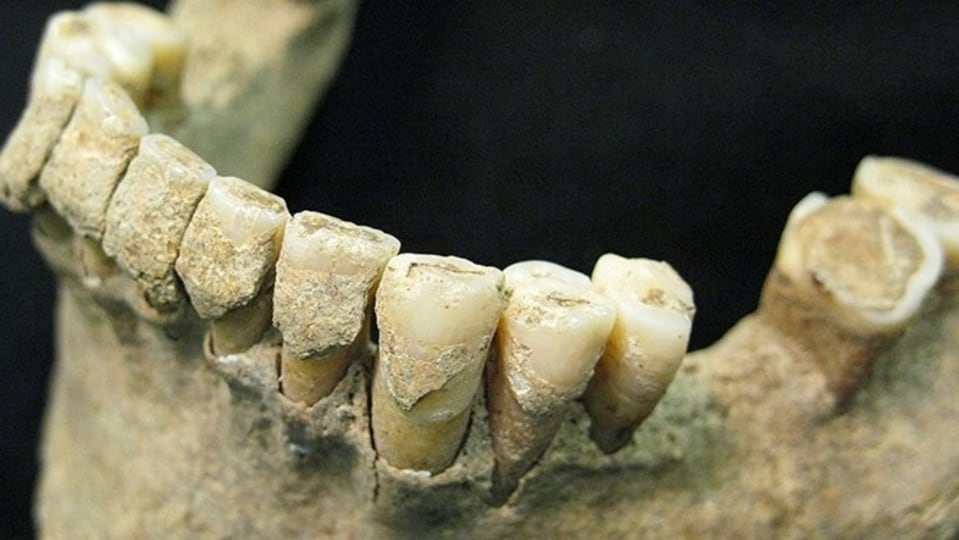
Dr Muotri and his team made their discovery while studying ancient teeth. Teeth survive well as fossils, and can reveal plenty about the lives of their owners. As they grow, tiny traces of chemicals circulating in the body get trapped inside them. If a person regularly drinks water tainted with a specific element during childhood, for instance, traces of that element will be preserved in their gnashers.
The researchers studied 51 teeth from humans and their relatives, covering the past 2m years. They used a laser to vaporise tiny bits of tooth in order to discern what was inside them. To their surprise, lead turned out to be present in 37 of the specimens. It was found in every type of hominin in the sample, including Australopithecus, an ancient ancestor that is thought to have died out around 1.9m years ago, and Homo erectus, which survived until about 100,000 years ago.
Exactly how the lead got into the teeth remains unclear. Although the metal can be released by volcanic eruptions and wildfires, Dr Muotri’s favoured theory is that water was responsible. Early humans used caves as shelter. A cave with a stream in it was particularly desirable. But cave water can often contain lead dissolved from minerals in the surrounding rocks. And the researchers knew from other studies that at least some of the palaeolithic caves used by the various species of Homo were saturated with the stuff.
The levels of lead in many of the teeth were high, with some as great as 50 parts per million. Modern studies show that children with just a few parts per million can suffer cognitive impairments. This left Dr Muotri curious about how ancient humans coped with such exposures. To find out, he grew little tufts of brain-like tissue known as brain organoids.
Some of the organoids were made from cells whose genomes contained a version of a gene called neuro-oncological ventral antigen 1 (NOVA1) that is found in all modern humans. Some had an ancient version of the same gene that has been found in Neanderthal genomes (and which is presumed to be present in earlier species such as Australopithecus, too). The modern version of NOVA1 is vital for human brain development. Previous work led by Dr Muotri has shown that brain architecture is so different when the ancient version of the gene is present that the modern form of NOVA1 is one of the clearest genetic signals setting apart modern humans from their Neanderthal cousins. Moreover, NOVA1 is also involved in the brain’s response to lead contamination.
The researchers exposed the organoids to different amounts of lead and studied how they responded. None reacted well. But one difference jumped out. In the organoids carrying the ancient version of NOVA1, lead poisoning altered the expression of another gene known as FOXP2. In modern humans, a properly functioning FOXP2 gene is vital for learning language. Organoids with the modern version of NOVA1 suffered no such problems.
Dr Muotri, therefore, suggests that the evolution of the new version of the NOVA1 gene helped prevent lead exposure from interfering with the ability to speak. If he is right, then a greater tolerance for lead poisoning may have been one way in which modern humans outcompeted their cousins and went on to make extraordinary things—such as leaded pipes, petrol and cosmetics with which to poison themselves all over again.


