
 E-Paper



‘Goodbye, captain’: A sea of red and black mourns Franco Baresi as Milan icons unite for an emotional final farewell
‘Goodbye, captain’: Thousands of Milan fans and football legends gathered to bid an emotional final farewell to club icon Franco Baresi.


Franco Baresi was more than the captain of AC Milan. For almost two decades, he represented the loyalty, authority and defensive excellence upon which one of European football’s greatest teams was built. The legendary Italian defender spent his entire professional career with Milan, captaining the club for 15 seasons and helping them win six Serie A titles and three European Cups. Baresi, who died last week at the age of 66 following a period of illness, was given an emotional final farewell in Milan on Tuesday as thousands of supporters and several generations of football greats gathered to honour him.
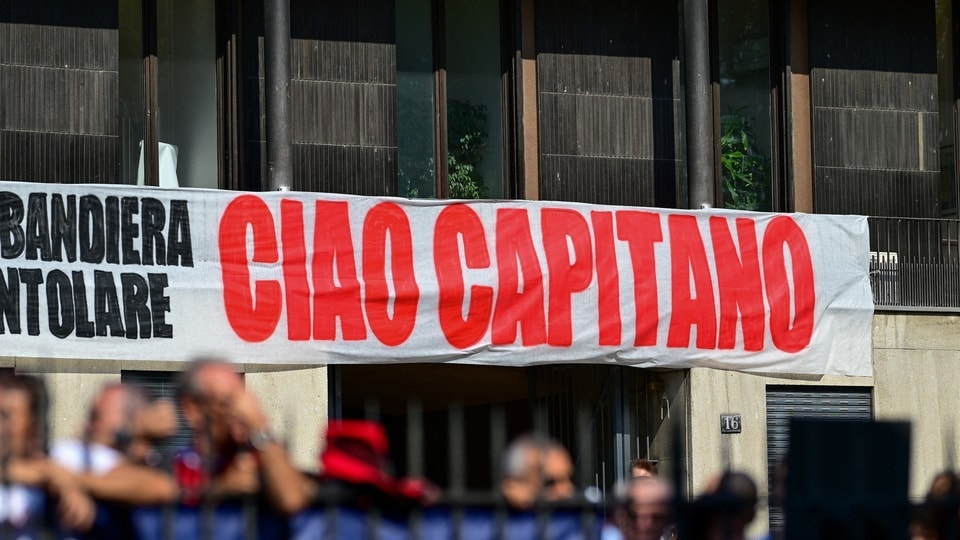
Milan and football royalty unite for Baresi
The funeral was held at the historic Basilica of Sant’Ambrogio, where supporters dressed in Milan’s red and black colours lined the surrounding streets. Flags bearing Baresi’s name and famous number six were held aloft, while a banner outside the church read “Ciao capitano” — goodbye captain.
Paolo Maldini, who played alongside Baresi for both Milan and Italy before succeeding him as the club’s defensive leader, was among the mourners. Marco van Basten, Clarence Seedorf, Roberto Baggio and Alessandro Costacurta were also present, bringing together some of the most recognisable figures from Italian and European football.
Former Milan coach Fabio Capello attended the service, while Gerry Cardinale, the founder of RedBird Capital Partners, which owns the club, was also present. Cardinale’s arrival was met with whistles from sections of the crowd amid continuing supporter frustration over the way Milan are being managed. Christian Pulisic was among the current Milan players who attended. Most of the first-team squad could not be present because they are in Australia for the club’s pre-season tour.
Milan will hold another tribute before Wednesday’s friendly against city rivals Inter in Perth. The players will wear black armbands, while a minute’s silence, commemorative messages and images of Baresi are planned before kick-off. Baresi made 719 official appearances and scored 33 goals for Milan during a career that began in 1978 and ended in 1997. He collected 18 trophies with the Rossoneri, including six league championships, three European Cups, four Italian Super Cups and three European Super Cups.
Milan retired his number six shirt following his retirement, making Baresi the first player in the club’s history to receive the honour. He was later appointed the club’s honorary vice-president in 2020.
His international career was equally distinguished. Baresi won 81 caps for Italy and was part of the squad that lifted the 1982 World Cup. He later captained the Azzurri at the 1994 tournament, famously playing the entire final against Brazil only 25 days after undergoing knee surgery. The missed penalty in the resulting shootout could not diminish the performance or his legacy. More than three decades later, the scenes outside Sant’Ambrogio offered the clearest measure of what Baresi meant to Milan: an entire football city saying goodbye to its eternal captain.


