The last time Avinash Sable slept in his house, or ate his mother’s food, or even spent a day with his father and brother was more than a year-and-a-half ago, when Covid-19 was far from turning into a pandemic. It was in October 2019—after returning with an injury from the Military World Games in Wuhan—that Sable visited his home in Mandava, a small village tucked deep inside Maharashtra's Beed district. That visit too was a quick two-day detour while undergoing rehab in Pune.
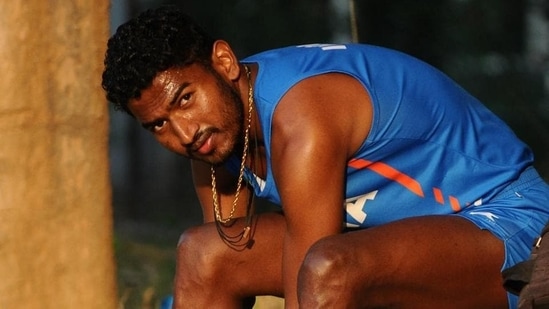
Unlike some of India’s other Tokyo-bound athletes who were forced to stay away from home while training abroad during the pandemic, Sable has been in India all along. Yet, home was not where his heart—and mind—was. It was in Tokyo; never mind all the uncertainty leading up to it.
“It has been a long time since we have seen his face,” Yogesh, Sable’s younger brother, said from Mandava. “We are used to him not coming home for months, but this time it’s been way longer. Our parents miss him, but they understand. They know what he is after.”
He is after a strong show in his debut Olympics, where Sable will represent India in the 3000m steeplechase. So, even after the Games were pushed back in March 2020, not once did the thought of going back home cross the mind of either Sable or his coach Amrish Kumar, who have both made Ooty and Bengaluru their new homes since the start of last year.
“That’s the kind of sacrifice he has made,” Kumar, who is the Indian Army’s long-distance running coach, said from Bengaluru. “Even though we were in India, we didn’t go back home for even a day. Mission Olympics was all that was in our minds.”
{{/usCountry}}“That’s the kind of sacrifice he has made,” Kumar, who is the Indian Army’s long-distance running coach, said from Bengaluru. “Even though we were in India, we didn’t go back home for even a day. Mission Olympics was all that was in our minds.”
{{/usCountry}}Sable, 26, was one of the early Tokyo ticket grabbers from India, when in 2019 he became the first man from the country to make the World Championships final of the 3000m steeplechase – having smashed the national record in Doha. Had the Games happened on time, Kumar would have had eight months to prepare the runner, who switched to steeplechase only in 2017, for his first Olympic Games. He got 20 months instead, each day of which was dedicated to more training.
“The postponement had an impact, but it also helped us. We got more time to create a much stronger base, which, at that point, we didn’t have enough time for,” Kumar said.
They picked two distinct places in order to expand that base—the Madras Regimental Centre (MRC) in Wellington, about half hour from the hills of Ooty in Tamil Nadu and the Sports Authority of India (SAI) centre in Bengaluru. Sable, an army recruit himself, spent a majority of last year in Wellington developing on his endurance and strength while training at an elevation of around 2000m. In Bengaluru thereafter, working on speed took precedence for most of this year.
“We worked on every little aspect, but most importantly on endurance and speed. Earlier if we would do 110-115km in one week for endurance training, we have now touched 150km per week. With respect to speed, earlier he would run at steady pace of 5-8km/hr, but the moment we realised we had more time, we increased that average pace to 12-15km/hr,” Kumar said.
Both those key aspects were put to test in the first two events that Sable participated in after competitions resumed amid the pandemic. At the Delhi half marathon in November last year, Sable finished with a time of 1:00.30, becoming the first Indian man to run 21km under 61 minutes. Then, at the Federation Cup in Patiala in March this year, Sable clocked 8:20.20 in the 3000m steeplechase, lowering his own national record again.
“Both those competitions showed that our training was in the right direction,” Kumar said. “Some people say 3000m and 21km have no relation. But psychologically, when we go to international events, most of the top steeplechase runners do well in half marathons. Because it involves both endurance and speed. Now we have better endurance, strength and speed. So, he is fully motivated. Fully prepared.”
In the two major international events that he has taken part since he began competing in the 3000m steeplechase, Sable has had successful outcomes: bagging silver (8:30.19) at the 2019 Asian Championships in Doha and making the final at the Doha Worlds the same year and finishing 13th with a timing of 8:21.37. Kumar is optimistic that he will hit his peak in Tokyo again, especially after the extended training time.
“Whatever competitions we have taken part in until now, he has done his best. All of the work that we’ve done since last year is for him to peak at the Olympics. Once you’re actually there and competing, several other factors and situations kick in. But as of now, he is set to perform at his best in Tokyo,” Kumar said.
Sable's best, 8:20.20, is some way off from the gold-medal winning timing at the Rio Games, where Conseslus Kipruto ran in 8:03.28. But the bronze winner clocked 8:11.52 in the same race, while the runner who finished seventh clocked 8:22.74. Kumar, however, doesn’t want Sable to bother about competitors and their timings. All he wants from him in Tokyo is to run a time that he has never run before. And Sable is used to that, having already rewritten his own national record four more times since first breaking it in 2018.
“Our common aim is to match our best in training. If we hit that best mark, he can be one of the contenders in Tokyo. Whenever we aim to do our best, we break a national record. We never set out to break national records,” said Kumar. “I’ve told him, “Forget about coming first or last. Even if you come last, it’s fine. But the timing should be your best. Aur yeh banda last toh kabhi aata hi nahi hai (he never finishes last).”