
 E-Paper



Gone with the wind: Kiteboarder Arjun Motha’s love for the ocean led him to this ‘sustainable sport’
As kiteboarding will debut as a sport in the Paris Olympics in 2024 and India has already started holding professional leagues, the sport has officially transitioned from ‘fun’ to ‘viable career’. With Hindustan Times Digital, Motha discusses what lies ahead

 Prefer HTon Google


Kiteboarding, where you harness the power of the wind using a kite to steer your board, is a very new sport in India, only around three months old. New to be recognised anyway, it was being practised by a handful of professionals in the coasts of Tamil Nadu for the last decade. Arjun Motha, 33, is one of them. He is also the founder of Aqua Outback, which teaches the sport to aspirants, including tourists.
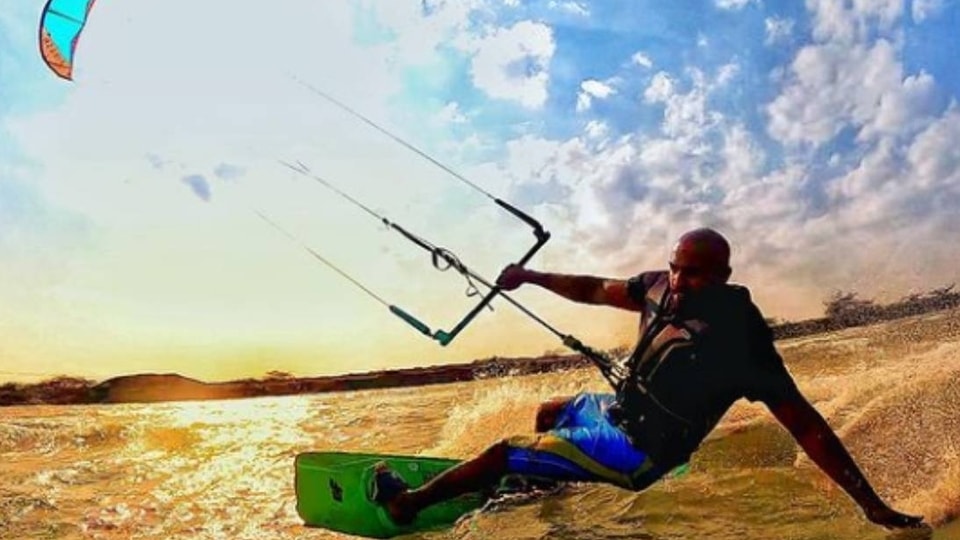
He is an ‘environmentalist athlete’, according to his Instagram profile. He explains how growing up with the ocean in the backyard fuelled his desire for a sustainable sport. How diving, swimming and snorkelling brought him close to marine life and the pollution threatening it. Kite boarders have mobilised local residents to go green as well as turned Tamil Nadu into a water sports hub. As kiteboarding will debut as a sport in the Paris Olympics in 2024 and India has already started holding professional leagues, the sport has officially transitioned from ‘fun’ to ‘viable career’. With Hindustan Times Digital, Motha discusses what lies ahead
Your Instagram profile says you are an environmentalist. Tell us more
I grew up by the ocean as a child. My father studied zoology and would show us different species around the ocean. As I grew up, I started seeing a decline in those species. So I started creating environmental awareness programmes for kids in school about marine life and ecosystems. I have also conducted many beach clean-ups with youth and local communities on how plastic affects ocean life. In 2015, a group of friends and I kayaked 160 km from Rameshwaram to Tuticorin, we pedalled for the environment, educating locals and fishing villages on ocean life and its importance.
Growing up by the sea made me sensitive to the ocean and protecting it, as some of my best memories as a child were by the sea. I’d like to share similar experiences with future generations before it’s too late.
So how did an environmentalist become a kiteboarding champion? How did the journey begin?
It all started with just swimming and snorkelling. Eventually I learnt about sustainable angling, which taught me a lot about tides, marine species, and seasons of the ocean. Through it all, I noticed a decline in species in recent years. But I also saw marine life thriving in some spots, which gave me hope. The only way I could help was by getting locals to switch from non-sustainable fishing to alternate livelihoods, like kayak guides and snorkelling guides. As time went by, I got into SCUBA and free diving, which brought me even closer to understanding marine life better. I saw how serene the underwater world really was. All this time, I wanted to be part of a sustainable sport that let me explore the ocean and stay connected to the elements. Kitesurfing did just that for me. Soon, I became a professional instructor and an athlete, thanks to Tuticorin, TN, which surrounded me with the best conditions.
It must be a very new concept in India?
Yes, it was exciting! When I first saw it in Tarifa, Spain, I wanted to try it immediately. When I started it in India, a lot of people were as mesmerized as I was in Spain and wanted to try this new sport.
Explain kiteboarding
Focus, freedom, adrenaline and being one with the elements of nature
How was kiteboarding introduced to India and when did it become a competitive sport?
Ten years ago, only two to three of us were kiteboarding. Jehan (Driver) was one. We explored some of the best spots to kiteboard. Pretty soon, more people joined in, we got better and started to compete.
Yachting Association of India (YAI) and Premier Kite Boarding Association held a kiteboarding event last month. So, does that mean kiteboarding is officially a sport now?
Yes. We have had many fun kite competitions, but learning the racing rules of sailing was a first for all Indian kiteboarders. Within a few months, our levels got much better
How has the reach of the sport increased?
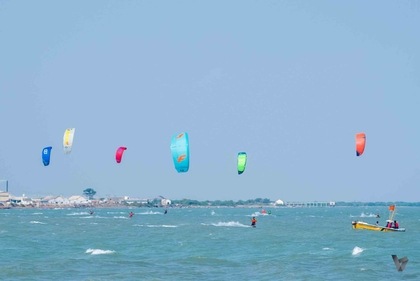
It’s one of the fastest-growing sports in the world. India is now aware that it’s a sport and that it can be played here. Now many students want to pursue it and become athletes and instructors
So which institutes teach kiteboarding? How long does a course take?
Aqua Outback, Tuticorin (www.aquaoutback.com) and Quest Academy are the top schools in India, with professionals who help you learn quickly and get you in the best form
Kiteboarding will debut in the Olympics in Paris in 2024. How inspiring was this news for Indian kiteboarders?
It’s very exciting. India has actually jumped into this sport quite early, giving us a good chance to represent our country and win medals.


