Bengaluru: The story goes that during the 1990 Commonwealth Games in Auckland, a man from Nauru called home from the host city, describing every lift as it happened. Back on the tiny Pacific island, people gathered around the line, listening intently. Nauru had neither television nor widespread radio coverage, so the crackling voice from New Zealand was the nation’s only window into the competition.
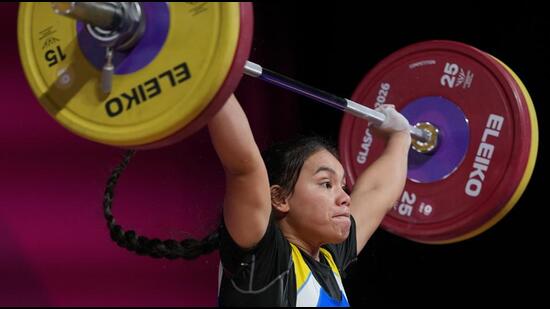
At the centre of it all was 20-year-old weightlifter Marcus Stephen, the country’s lone representative at the Games. He competed in three events and returned with medals in each of them – one gold (60 kg snatch) and two silver (60 kg clean & jerk, 60 kg combined), and a public holiday was declared on his arrival.
Between 1990 and the ongoing Games, 34 medals have been won by the country – all of them in weightlifting. Marcus alone won 12 of them – seven of them gold. He followed his father into politics and later became the president of Nauru.
With an area of 21 square kilometres (comparable to the size of an international airport) and a population of roughly 12,000, Nauru is considered the world’s third-smallest country by land area after Vatican City and Monaco.
It’s also home to an astonishing Commonwealth Games statistic: with roughly one medal for every 450 people, Nauru is the most successful nation in Commonwealth Games history on a per capita basis.
{{/usCountry}}It’s also home to an astonishing Commonwealth Games statistic: with roughly one medal for every 450 people, Nauru is the most successful nation in Commonwealth Games history on a per capita basis.
{{/usCountry}}Stephen stumbled upon weightlifting while studying in Australia on scholarship. He wanted to play Aussie Rules football but couldn’t make the team. Weightlifting seemed to be the perfect sport for his physique – short, stocky and powerful. He along with Australian coach Paul Coffa, was instrumental in weightlifting becoming a popular sport in Nauru.
Lying between Australia and Hawaii, Nauru’s story is one of extraordinary fortunes and profound tragedy. Its phosphate-rich soil was mined through centuries, going as far back as 1905, when a British-owned firm struck a deal with Germany.
After Germany lost in World War I, Nauru was placed under joint administration by Australia, New Zealand and the UK. They finally gained independence in 1968, but mining continued. As phosphate prices rose in the 1970s, Nauru became one of the richest nations in the world per capita (estimated $50,000), second only to Saudi Arabia. As with natural resources, the country’s phosphate reserves were finite and were exhausted by the early 2000s.
With its primary revenue source disappearing and desperate for earnings, Nauru began selling citizenship, hosting offshore banks and serving as a detention centre for asylum seekers, from Australia.
The heavy strip mining left a trail of environmental and economic devastation and turned its once fertile land unusable for agricultural purposes. Its population became dependent on imported processed food as fresh produce turned rare and expensive.
Today, Nauru has some of the world’s highest rates of obesity and type 2 diabetes.
“We’re not built to run or anything else, we’re built to be weightlifters. Because that’s our sport, we’re built for it,” weightlifter Yukio Peter who won gold in the 2010 Delhi Games, told Sydney Morning Herald.
In this edition, Nauru is competing in weightlifting, athletics, judo and boxing.
On Monday, Nauru won its first medal at these Games – a bronze in the men’s 71 kg weightlifting event. Ezekial Moses was 16 when he stepped onto the platform at the 2018 Gold Coast Games, the youngest lifter in his division. Eight years later, he has a medal to show for his journey. One that carries Nauru’s weightlifting tradition forward.