Bengaluru: Months after Saurav Ghosal came out of retirement and won a PSA Challenger title in Sydney, the squash pro is coming to terms with a difficult decision.
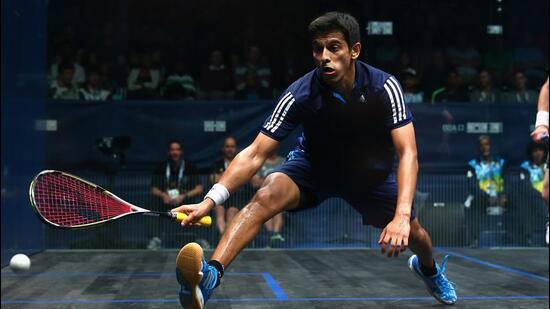
The first Indian male player to break into the top 10, Saurav had announced his retirement in April last year after spending over two decades on the PSA Tour. Early this year, he returned with the goal of making it to the 2028 Los Angeles Olympics, where squash will make its debut.
That dream has now been extinguished.
“Basically, I can’t play anymore,” Saurav revealed to HT, fighting back emotions. “My right hip is gone. There’s too much degeneration. It’s essentially early-stage arthritis of the bone. The specialists have said they can manage it for maybe 12-18 months – but three and a half years is something they can’t guarantee. Apparently, the damage can’t be reversed. So, if I don’t have a guarantee that I can properly try for the Olympics, then it just seems futile in the grand scheme of things.”
Had the Olympics been next year, Saurav says he would have put his body on the line. “I would have tried to manage it with PRP injections and artificial cartilage injections if it were the Olympics instead of the Asian Games next year.” Next year’s Asian Games, which he originally planned to play when he announced his comeback, “doesn’t make sense” for him anymore without the end goal of the Olympics. “An individual Asian Games gold would be nice, but it doesn’t pull me hard enough.”
For the 38-year-old, the diagnosis hit like a cold shower from hell. “Now when I look back, since early last year, I’ve been having issues with my glute and abductor. Only now do we know that it’s because the hip is degenerating. When I was in Sydney, I wasn’t able to stretch properly after matches because it was hurting. I played through the tournament and afterwards I was limping. I got an MRI done and that’s when I learnt I have a condition called Avascular Necrosis (AVN), which is basically lack of blood flow to the bone tissue. Doctors think that the AVN has been triggered by early arthritis. I’ve been told that I might need a hip replacement at some point. It could be in five years or ten years.”
{{/usCountry}}For the 38-year-old, the diagnosis hit like a cold shower from hell. “Now when I look back, since early last year, I’ve been having issues with my glute and abductor. Only now do we know that it’s because the hip is degenerating. When I was in Sydney, I wasn’t able to stretch properly after matches because it was hurting. I played through the tournament and afterwards I was limping. I got an MRI done and that’s when I learnt I have a condition called Avascular Necrosis (AVN), which is basically lack of blood flow to the bone tissue. Doctors think that the AVN has been triggered by early arthritis. I’ve been told that I might need a hip replacement at some point. It could be in five years or ten years.”
{{/usCountry}}He consulted top doctors, including a hip specialist who works with the British Olympic team. “He said if I really want to play he’d help me as much as he possibly can. But six months down the line, it could just break down.”
Eager to pull all stops for LA 2028, Saurav even considered going for a hip replacement surgery right away. “It takes nine to twelve months for the prosthesis to set fully. The time frame to qualify for the Olympics then becomes harder because the Asian Games is obviously out. To make it via ranking in a draw of 16, I’ll have to be top 15 in the world. To make it into the top 15 in two years, is difficult. Everything put together, it’s pretty much like running up a hill the entire time.”
He has broken the news to his innermost circle and key stakeholders – family, coaches and sponsors – and was recently announced director of high performance sports at Agilitas, a sportswear manufacturer. He’s doing things he’s never done before – coordinating with product designers on footwear and apparel for various sports, brainstorming marketing strategies, helping decide athlete endorsements and institutional partnerships and closing the loop with athlete feedback. “The good thing is it’s keeping me really busy so it helps manage the mental pain.”
Still, the decision to call off his comeback remains what he calls an “open wound.”
“I was at the International Olympic Committee athlete forum in Lausanne a few days ago, and in my head, I went, ‘Damn, man, I can’t play the Olympics.’ It really hits you in some moments. It’s going to take some getting used to.”