E-Paper



Why the Chess World Cup tests the mind and the body
There are not many knockout format tournaments in the sport and that makes this a very high stress event

 Prefer HTon Google


Mumbai: There is a certain level of uncertainty that comes with the Chess World Cup. Most tournaments follow a straight-forward round robin format. But the World Cup, a near month-long competition with 206 players vying for the title, is one of the sport’s most treacherous events.
So much so that the great Magnus Carlsen, a five-time world champion and the world no.1 for over a decade, won the World Cup for the first time at the last edition in 2023.
And it all stems from the fact that the mega-event follows a knockout format. Getting to the final means an unseeded player will have to win seven rounds - each consisting two classical games, followed by and a series of rapid and blitz tiebreaks if it is required - to get to the final.
“This is a very long event,” said GM Abhijit Kunte to HT. “There are not many knockout format tournaments in chess, and this is one of the very high stress events.
“In other events, if you make a mistake and lose a match, you can always come back because it’s a round robin event. Here, you won’t be able to. The margin of error is much smaller.”
The benefit of the round robin events is that each player knows who the opponent will be and on what day before the tournament. But at the Chess World Cup, the latest edition of which begins in Goa next week, one can only predict who the next opponent could be.
“You generally expect to see higher-level players get to the later matches,” explained GM RB Ramesh. “But it is not very easy because it depends on who wins. If anyone comes up with some new radical ideas, they will get an advantage and the (predictions) can be disturbed.”
What also adds to the intrigue is the fact that there is not much time between rounds, especially if a tiebreak comes into play. Each round lasts at least two days - one day per classical match. The tiebreaks are held on the third day. Should a round be decided at the end of the classical matches, the third day is a rest day and could give the player time to prepare for the next round.
However, how soon one gets to know who the next opponent is will depend on if that match goes into a tiebreak as well. As a result, players might not get the luxury of time to prepare, and their own chess skills and innovation on the board will come into play.
“Every player now thinks about the immediate opponent and the next opponent, not beyond that,” said GM Pravin Thipsay.
“For matches after that, there are a lot of extempore decisions that come into play. Then there are also times when an opponent makes a move you haven’t prepared for.”
Players, though, have relied on their trainers to help them prepare as much as possible despite the short turnover period between rounds.
“Now players save a lot of time by outsourcing the preparation,” Thipsay added. “If you and your next opponent do not have a tiebreak, you both have a day’s gap to prepare. But if either one has a tiebreak, then you only have hours. In that case, the trainer will work the whole night and give you the data in the morning. So there are a lot of off-the-board strategies.”
“The most crucial thing is how quickly the trainer can give you the data. It all has to be managed very well.”
In a high stress competition like the World Cup, there can be a few surprises, particularly from the underdogs.
“Usually, they are under less pressure because if they lose, it is anticipated,” said Ramesh.
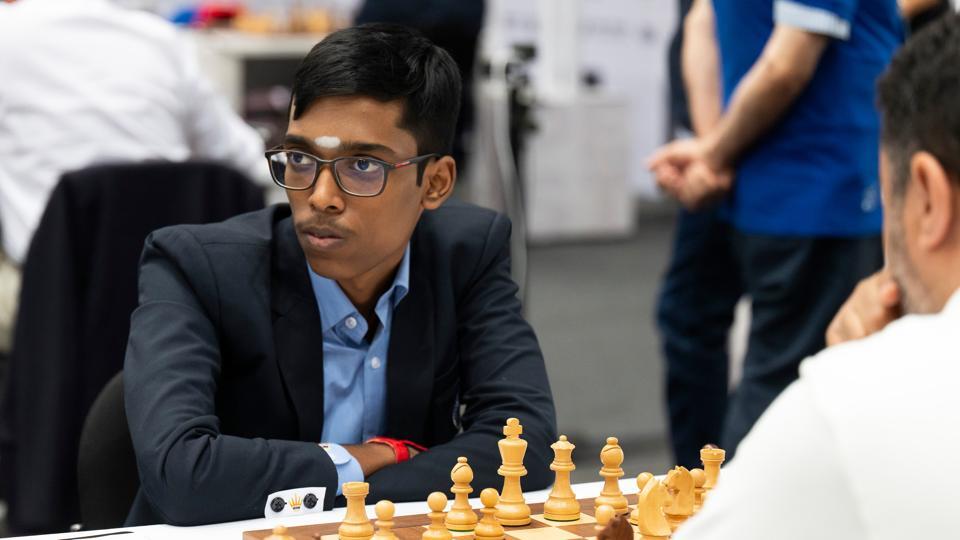
Interestingly, Ramesh’s former student R Praggnanandhaa was an underdog at the last edition in 2023. The Indian pulled off wins over the likes of world No.2 Hikaru Nakamura and No.3 Fabiano Caruana en route to the final, where he lost to Carlsen.
In hindsight though, given the format of the World Cup and how rewarding it is for innovative players, it was not entirely a surprise that Praggnanandhaa, the current world No.5 in standard chess, did that well.
It will not be a surprise this time either if any of the Indian players manage to get far in the tournament.
“Players like Praggnanandhaa, Arjun Erigaisi, Nihal Sarin and D Gukesh have an advantage because they are versatile players and can surprise the opponent,” Kunte added.
“They don’t have to put in too much effort before the game. They can come with some ideas and play, and that’s a big advantage.”
For a tournament that tests the mind and physicality of the players, everything will count.