In a work generally dated to around 825 CE, the Baghdad-based scholar Muhammad ibn Musa al-Khwarizmi explained calculation using Hindu numerals, including zero. Medieval Latin versions of his name helped give us “algorithm”; the title of another work, al-jabr, gave us “algebra.”
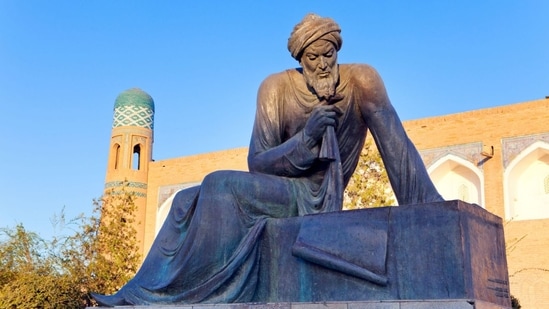
The etymology carries a warning. An algorithm is not an oracle, but a method for turning inputs into outputs—once through human-written rules and now, increasingly, through patterns learned from data.
The recent machine-learning era of AI was largely about prediction: finding patterns in data. Generative AI made it possible to produce language, images, and code. The new systems go further—models can now propose proofs, diagnoses, designs, and decisions that appear original and authoritative. Each advance has reduced the cost of producing plausible answers. It has not reduced the cost of deciding whether those answers are correct.
That gap matters, especially for India. Few countries are connecting AI tooling to identity, payments, healthcare, insurance, and public services at a comparable population scale. If generation continues to outrun verification by lengths, the consequences will also be felt at population scale.
Two men, one week
Consider what happened at the International Congress of Mathematicians in Philadelphia last month.
{{/usCountry}}Consider what happened at the International Congress of Mathematicians in Philadelphia last month.
{{/usCountry}}On July 23, Jacob Tsimerman received the Fields Medal, his profession’s highest honour. Hours later, he announced that he was taking leave from the University of Toronto to join OpenAI and work on AI safety. He expects AI to become “robustly superhuman at the act of doing mathematics” within a few years and believes the mathematical career will not survive in its present form. He had stopped taking on graduate students who weren't engaging with AI.
The next day, Terence Tao told the same congress that mathematics faced a crisis in the foundations of its values and practices. Tsimerman was responding to what AI may soon produce. Tao was asking what humans will do with everything it produces.
Rather than debate whether machines will become good at mathematics, Tao assumed they would—and asked what happens after a proof is produced.
Tao described a pipeline: a proof is generated, verified, explained, published, and finally canonicalised—connected to earlier knowledge, contested, taught, and absorbed into what the field confidently knows. Canonicalisation, he said, is “the stage least amenable to optimisation by AI tools”, yet also “the most valuable part of the entire process”. A result does not become useful knowledge merely because it exists.
We are becoming extraordinarily good at the first step while neglecting the last. Tao calls the result “proof indigestion”—proof abundance arriving inside institutions designed for proof scarcity.
Also Read: Meta's newest open-weight AI model 'Muse Glimmer' launched - Everything you need to know
216 characters and 125 pages
Two results from this year show where the bottleneck sits.
In May, an internal OpenAI model disproved Erdős’s 1946 unit distance conjecture. The model's output ran to about 125 pages. Nine external mathematicians then wrote a nineteen-page companion paper to make it comprehensible; their term was a “digested, human-verified version”. Tsimerman’s reaction was telling: “By page 12, I would’ve had a headache.”
In July, a mathematician working at Anthropic used the company’s Fable 5 model to find a counterexample to the Jacobian conjecture, open since 1939. It was 216 characters long—short enough for a social-media post and checkable by hand within a day. It settles the conjecture in three dimensions and above; the two-dimensional case remains open.
When a machine produces 216 characters, digestion is almost free. At 125 pages, it consumed the time of nine mathematicians. As systems tackle harder problems, more output will be plausible, elaborate, and expensive to verify—and there will not be nine spare mathematicians for every result.
This is the new economics of expertise. AI can make production dramatically cheaper without making verification, explanation, or accountability correspondingly cheaper.
Proof indigestion to answer indigestion
Mathematics is not uniquely vulnerable to "indigestion". It simply exposes the problem clearly. AI can generate a convincing proof in seconds while experts may need hours to find the faulty step. The same imbalance appears in law, medicine, and engineering, where arguments, diagnoses, and designs arrive faster than institutions can verify them.
By June 9, an HEC Paris database had recorded 1,598 court cases worldwide involving AI-hallucinated citations, up from roughly 200 a year earlier and rising by about eight a day. A fabricated mathematical step may mislead a specialist; a fabricated precedent can affect someone’s liberty, livelihood, or reputation.
A study by METR found that 16 expert developers were 19% slower when using AI. However, the developers believed they were 20% faster. Writing the code felt faster. Checking, correcting, and integrating it ate the gains.
There is a second cost: the checkers themselves get worse. After Polish doctors started using AI regularly, their own ability to find cancer-precursor growths dropped from 28.4% to 22.4%. It was the first real-world evidence of clinical deskilling associated with routine AI use. The more reliable the machine seems, the less we practise the skill of doubting it.
Also read: Google's AI is killing the web. Now the web is fighting back
When the referee depends on the players
Verification is also a relationship of power.
Both results emerged from inside AI companies—one announced by the company, one by its researcher—and were examined by mathematicians the companies helped convene. Nobody alleges bad faith; that is precisely the point. Frontier models, specialised compute, and the researchers capable of testing them are concentrated inside a few companies. Even First Proof, among the most rigorous independent assessments of frontier models, relies on unrestricted donations from Anthropic and OpenAI.
Evaluation capacity is so thin that vendors must often help fund the referee.
There is no neutral global system waiting for India to adopt. The US relies heavily on corporate testing, litigation, and fragmented state rules. Europe is building formal compliance machinery but has delayed it due to industry pressure. China is exporting de facto standards and governance norms alongside open-weight models and new institutional alliances. India cannot assume somebody else will produce an uncontested definition of trustworthy AI for it.
India’s real deficit
India excels at turning digital architecture into population-scale infrastructure. Its independent evaluation capacity has not grown at the same speed.
The scale is already extraordinary. In July, India's UPI system handled over 23 billion digital transactions worth nearly 30 lakh crore rupees, which accounts for roughly half of all real-time payments made globally. At the same time, healthcare initiatives have deployed more than 500 AI-powered, handheld chest X-ray units to detect tuberculosis, with 1,500 more on the way. In a Chhattisgarh study, using these AI tools increased TB case notifications by about 80%.
India is also building indigenous AI capability. In February, Sarvam released a 105-billion-parameter model trained from scratch in India; UIDAI and SBI Life are already deploying Sarvam's models.
These are considerable achievements—and they raise the cost of being wrong. A flawed chatbot inconveniences a user; a flawed system connected to identity, healthcare, credit, or insurance can exclude someone from a service, misclassify a patient, or produce a consequential decision that is difficult to contest.
Yet the benchmarks used to establish that these models work are largely company-reported. India still lacks an internationally recognised institution with the access, compute, expertise, and independence to reproduce those claims across Indian languages and real deployment conditions. We may be able to train a sovereign model while remaining unable to prove independently where it works, for whom, and where it fails.
No system should certify itself. Indian banking understands this through maker-checker controls. Companies do not audit their own accounts, and laboratories do not approve their own medicines. AI needs the same separation between the organisation building a system, the organisation deploying it, and the organisation assessing its claims.
We need to build the checking layer
Brakes are not there to slow the car; they are what make it safe to drive fast. Verification does the same for AI—not a drag on progress but the thing that makes speed survivable. India must now build that layer deliberately.
First, fund the IndiaAI Safety Institute properly and protect its independence—especially when its findings embarrass powerful companies or government departments. The institute needs access to major AI models to test them before and after they launch. It also needs the power to investigate errors and publish reports. An institute that can issue principles but cannot inspect systems risks is merely certifying optimism.
Second, India must develop its own independent testing system to vet AI models. A country with 121 languages and more than 19,500 language variants cannot rely on predominantly English-language benchmarks. Testing must reflect regional usage, context and dialect so models are judged not merely on fluency, but accuracy.
Third, make AI auditing an officially recognised profession. The audits should assess algorithmic flaws, privacy risks, security weaknesses and the extent of human oversight required. Standards may vary by sector: hospitals should track missed diagnoses, banks should track unfair loan denials, and identity systems should track false matches. And because AI systems are constantly evolving, both the systems and their auditors should be recertified regularly.
Finally, build and reward the institutions that keep AI honest: independent testing groups, university labs, benchmarking bodies, incident databases—organisations strong enough to contradict a trillion-dollar company. Today, the money and the prestige go to those who build; those who check are supporting actors. Unless that changes, our capacity to verify will shrink exactly when the need for it explodes.
Al-Khwarizmi transmitted those Indian numerals in the ninth century. Europe took centuries to absorb them; Florence’s money-changers even banned them from account books in 1299. The invention travelled quickly. The slower work was standardising it, teaching it and building enough trust for people to conduct commerce with it. That institutional digestion helped make modern finance possible.
For decades, the world built machines to produce answers. Now, we must learn which answers to trust. India already built the digital rails. Next, we must build the inspectors.
(The views expressed in this article are personal)