
 E-Paper



IIT Madras breakthrough: India’s first high-speed Quantum RNG is here. Why is it a big deal for ‘unhackable security’
IIT Madras has developed India’s first Silicon Photonics-based high-speed Quantum Random Number Generator (QRNG) and licensed it for Rs. 1 crore.

 Prefer HTon Google


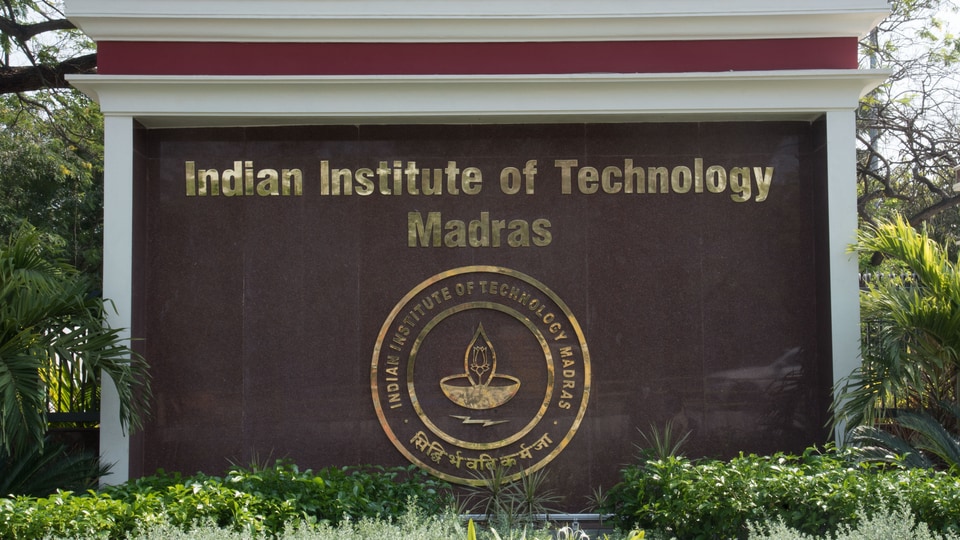
IIT Madras has indigenously developed and licensed to the industry India’s first Silicon Photonics-based high-speed Quantum Random Number Generator (QRNG) in a deal worth Rs. 1 crore. The technology has been transferred to Indrarka Quantum Technologies Pvt. Ltd. for commercial deployment, marking a landmark moment in India’s quantum research journey.

What is a Silicon Photonics-Based High-Speed Quantum Random Number Generator (QRNG)?
Computers and algorithms need random numbers for encryption, simulations, gaming, finance, etc. But most of the time, “random numbers” generated by software aren’t truly random, they’re pseudo-random, because they come from a predictable formula.
A Quantum Random Number Generator taps into the laws of quantum physics, where outcomes are truly unpredictable (like the path of a single photon). That gives you real randomness, which is far more secure.
Think of QRNG as a dice that can never be loaded, hacked, or predicted except it rolls billions of times per second. India building its own high-speed version means we can power next-gen secure communications, banking, defence, and even entertainment systems, without depending on foreign tech.
The “Silicon Photonics-Based” part means this technology uses light (photons) on a chip made with silicon, similar to how regular computer chips are made. This makes it scalable, compact, and manufacturable at low cost compared to bulky quantum lab setups. And “high-speed” means it can generate these truly random numbers extremely fast, suitable for practical, real-world applications.
Why is it a big deal?
India developing its own QRNG matters because most quantum security hardware today comes from abroad, which is expensive and geopolitically sensitive. In terms of scalability, silicon photonics means this isn’t just a lab demo, it can be industrialised and used widely. As quantum computing grows, existing encryption methods may become obsolete. QRNGs will be part of the defence against that.
What are the use cases?
IT security for military and defence: Secure communications need strong keys. With QRNG, encryption keys can’t be guessed, making it much harder to hack sensitive communications.
Cryptographic algorithms and Quantum Key Distribution (QKD): These rely on truly random numbers for security. QRNG makes the encryption “uncrackable” compared to pseudo-random methods.
Scientific modelling and simulations: Weather models, physics simulations, drug discovery: all use randomness. Better randomness improves accuracy and reduces biases.
Financial transactions, blockchain, OTP generation: Banks and blockchain rely heavily on randomness for secure PINs, OTPs, and transaction verification. QRNG makes fraud much harder.
Gaming applications: Online casinos, lotteries, or even e-sports prize systems need certified randomness to be fair. QRNG ensures outcomes are unbiased and tamper-proof.
By licensing the QRNG for Rs. 1 crore, IIT Madras has shown that cutting-edge research can be turned into market-ready products. More importantly, it positions India as a serious player in the global quantum security landscape and strengthens the country’s technological self-reliance.
Mobile Finder: iPhone 17 Pro LATEST specs, features, and price


