
 E-Paper



Interview: How this Dutch engineer developed a spider web-shaped ‘lens-less camera’
Drawing inspiration from the Mole's nose, a Dutch Engineer has developed “lens-less camera”. Read this interview with the developer Bjørn Karmann.


In a world where standalone cameras are being replaced by smartphones, Dutch engineer Bjørn Karmann has created a “lens-less camera.” This device, which looks like a prop from a sci-fi film and is inspired by Star-nosed Mole, utilises artificial intelligence to produce images.
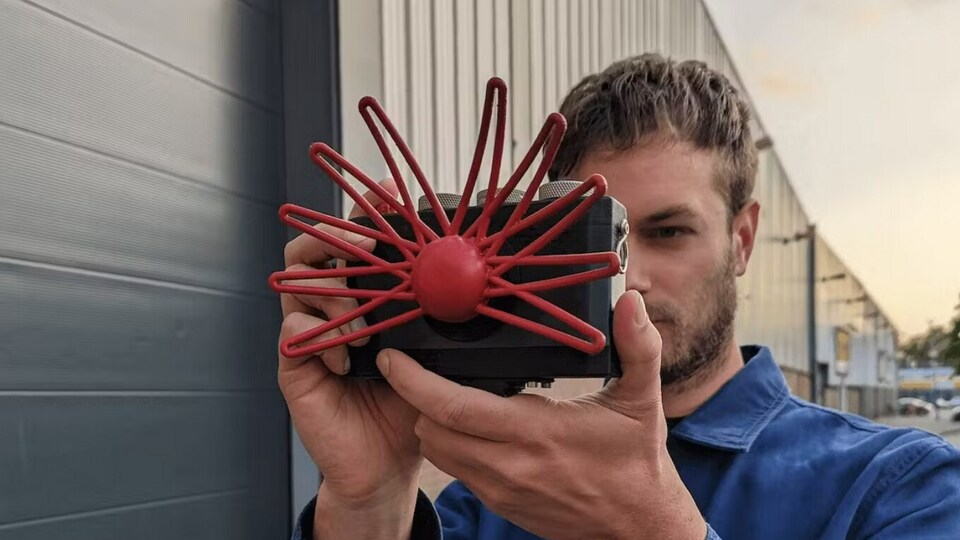
The device called Paragraphica, is a context-to-image “camera” that visualises a "photo" of a certain area using location data and artificial intelligence. While it is available as a real prototype, one can also try it online (the website is presently lagging). (ALSO READ: Click here for comprehensive coverage from day 1 of Apple WWDC 2023)
The Hindustan Times spoke to the Dutch techie to understand details about his innovation. Here is the edited excerpt:
1. Can you explain the technology behind your "camera" product?
Bjørn Karmann: In simple terms, Paragraphica is a camera that uses data instead of light to create images. It uses internet connectivity to gather data about its current location, including the address, weather, time of day, and nearby places. This data is then used to compose a description of the current place and moment. This description is converted into an image using a text-to-image AI model. The camera itself doesn't use GPS technology directly; instead, it uses APIs that provide location-based data.
2. What inspired you to develop this product?
The inspiration for Paragraphica came from the book "An Immense World," which explores how animals perceive the world differently than humans. The star-nosed mole, a creature that "sees" the world through its touch-sensitive snout, was a particular source of inspiration.
It took about six weeks for development.
ALSO READ: Loving ChatGPT? Check these other 5 AI tools
3. What do you envision as the potential use cases for this product?
Paragraphica is at the moment just artistic exploration, educational demonstrations of AI capabilities and highlighting that AI is already starting to change the photos we take with our phones.
4. How does your "camera" differ from existing text-to-image AI tools that generate pictures based on prompts?
Unlike existing text-to-image AI tools, Paragraphica uses location data to generate its prompts, creating a unique representation of a specific place and moment. It also exists as a physical camera, with dials that let you control the data and AI parameters to influence the appearance of the photo, similar to how a traditional camera is operated. But at the end of the day nothing I am doing, is not already possible on any of the existing text-to-image tools.
ALSO READ: How this VR headset helps a mother see her visually impaired daughter's world
5. What measures have you implemented to address privacy concerns, specifically with regard to the possibility of someone using your tool to develop images of individuals without their consent?
Privacy is indeed a significant concern when dealing with location data and AI. Paragraphica uses open APIs to gather location data and does not capture or store personal data. It's designed to create a representation of a place, not individuals.


