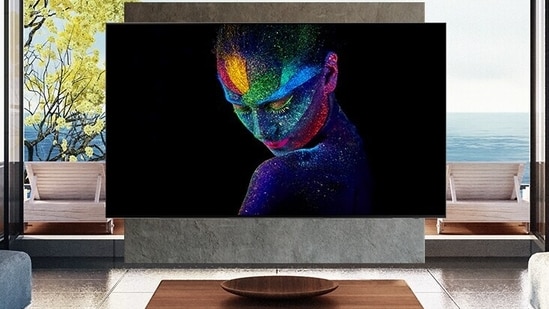
The television industry stands at a turning point, where two powerful display technologies, OLED and Micro-LED, are set to define the next era of home entertainment. For over a decade, OLED screens have led the market with their impressive picture performance, but a new contender, Micro-LED, is gradually stepping forward with the promise of even greater capabilities. With competition intensifying, the big question is whether OLED will continue to dominate or whether Micro-LED will take over in the years ahead.
OLED vs Micro-LED
You may be interested in
50% OFF
Original BL-42D1F Part Compatible for LG G5 SE (G5 Lite) - (2800mAh) - 1 Year Warranty_MTR
Original BL-42D1F Part Compatible for LG G5 SE (G5 Lite) - (2800mAh) - 1 Year Warranty_MTR
₹999
₹1,999Get This
59% OFF
Charger for LG G5 Original Like Charging Adapter Fast Charging Super Fast Wall Adapter with 1m Type C USB Data Cable O-OPP-RED
Charger for LG G5 Original Like Charging Adapter Fast Charging Super Fast Wall Adapter with 1m Type C USB Data Cable O-OPP-RED
₹495
₹1,199Get This
21% OFF
LG 139 cm (55 inches) 4K Ultra HD Smart OLED TV 55B2PSA (Black)
LG 139 cm (55 inches) 4K Ultra HD Smart OLED TV 55B2PSA (Black)
₹1,16,490
₹1,47,490Get This
64% OFF
KAEEL ORIGINAL BL-42D1F Genuine Replacement for LG G5 VS987 US992 H820 H830 H840 H850 H860 H868 LS992 F700-2800mAh - with 12 Months Warranty* (Gold)
KAEEL ORIGINAL BL-42D1F Genuine Replacement for LG G5 VS987 US992 H820 H830 H840 H850 H860 H868 LS992 F700-2800mAh - with 12 Months Warranty* (Gold)
₹1,091
₹2,999Get This
Both OLED and Micro-LED share one essential feature: each pixel produces its own light. This self-illuminating property allows both technologies to achieve perfect black levels, exceptional contrast, and wide viewing angles. The key difference lies in their construction. OLED panels use organic compounds to generate light, while Micro-LED panels rely on microscopic light-emitting diodes made of inorganic material.
Also read: Google raises red flag on AI scams fooling job seekers and small businesses
This difference has practical effects on performance. OLED displays are known for deep blacks and vivid colours, but their organic nature makes them prone to burn-in - a permanent image retention caused by static visuals. Micro-LED technology, being inorganic, is resistant to this problem and offers superior durability.
The Brightness Battle
One of the main advantages of Micro-LED over OLED is brightness. Modern OLED models, such as the LG G5, can reach between 2,000 and 2,500 nits, which is considered bright for this display type. However, Micro-LED panels can reach brightness levels of 4,000 to 5,000 nits, with some prototypes going even higher. This capability gives Micro-LED displays a strong edge for viewing in brightly lit environments and for delivering lifelike highlights in HDR content.
Also read:iPhone Air 2 tipped to come with dual camera setup with new upgrades- All details
Despite these strengths, OLED remains a popular choice for most consumers because of its established production ecosystem and significant price drops over the years. Manufacturers like LG and Samsung have also refined OLED performance with new variations such as Quantum Dot OLED, which enhances colour and brightness beyond earlier models.
The Challenge for Micro-LED
Micro-LED’s potential is evident, but its path to mainstream adoption faces challenges. Manufacturing remains complex and expensive, particularly for smaller screen sizes. Currently, Micro-LED televisions, such as Samsung’s 2024 models, are available only in sizes exceeding 100 inches and cost well above $100,000. The production process must be simplified before Micro-LED can compete in the consumer market.
{{/usCountry}}Micro-LED’s potential is evident, but its path to mainstream adoption faces challenges. Manufacturing remains complex and expensive, particularly for smaller screen sizes. Currently, Micro-LED televisions, such as Samsung’s 2024 models, are available only in sizes exceeding 100 inches and cost well above $100,000. The production process must be simplified before Micro-LED can compete in the consumer market.
{{/usCountry}}Like OLED’s early years, Micro-LED will likely undergo a period of refinement before becoming widely available and affordable. Companies including Samsung, Sony, and Hisense are already working on bridging technologies like Mini-LED, which deliver some benefits of Micro-LED at a lower cost.
Also read:iPhone 18 Pro tipped to follow Nothing’s transparent rear panel design
OLED is constantly being improved to offer brighter displays and longer lifespan thanks to ongoing innovation. Meanwhile, Micro-LED promises greater efficiency, longer durability, and unmatched luminance once production hurdles are overcome.
The coming decade will reveal which display technology captures the market. For now, OLED remains the leader in living rooms, while Micro-LED is poised as the next big step once it becomes accessible to everyday consumers.