E-Paper



For India's Instagram sellers, India Post's tariff hike changes the maths: ‘I was shocked’
India Post's recent fare hike significantly impacts small online sellers. Hindustantimes.com spoke to three people who raised concerns about the revised rates.

 Prefer HTon Google


Shefali Sharma is in a fix. The 21-year-old runs a thrift store on Instagram, where she has over 6,000 followers. As a small seller, Sharma relies on India Post to ship dozens of parcels every month. The recent tariff revision by Indian Post has almost doubled her shipping costs.
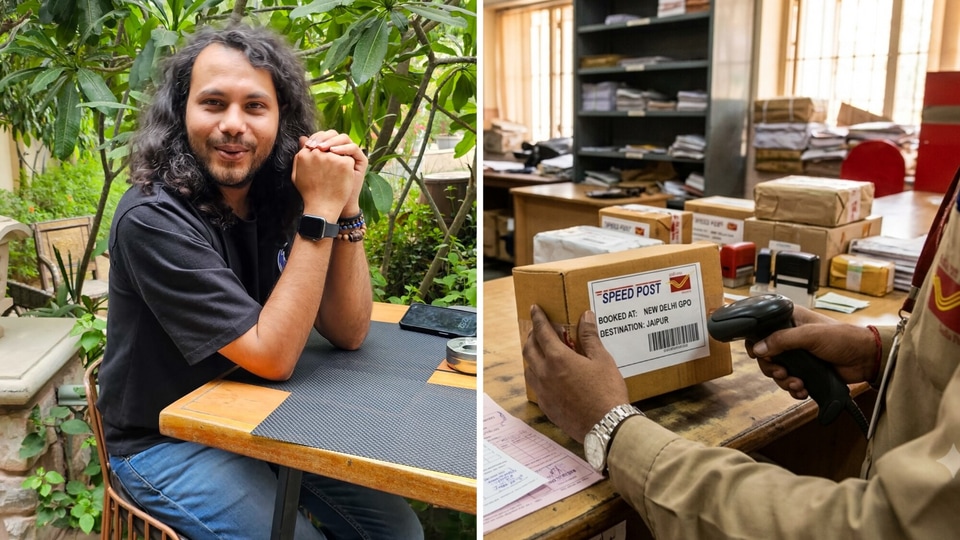
“Earlier, when shipping was around ₹40– ₹50, small businesses could sometimes absorb that cost to make the shopping experience better for customers. But now, when even normal post is costing ₹100– ₹130, it's simply not practical anymore,” Sharma told Hindustantimes.com.
She is not alone in facing this dilemma. Many small business owners and Instagram sellers have already informed customers that their shipping costs will increase. Others have shared posts requesting clients not to bargain over shipping anymore.
Hindustantimes.com spoke to three small business owners who depend on the government-run postal network to reach customers across the country. Each of them expressed concerns about the fare hike and how it would impact their business.
India Post fare revision
India Post broadly serves two kinds of customers: retail customers and contractual (or business) customers.
Retail customers are individuals or small businesses who walk into a post office to book parcels and pay the published counter rates. This is the category that includes many home-based sellers, small e-commerce businesses and independent entrepreneurs. The revised tariff that came into effect on August 1 primarily affects these customers, with higher charges for ordinary parcel bookings.
According to the revised fares, shipping a 500 gram parcel to another state will now cost ₹84 if one chooses the retail parcel service. For speed post, the same 500 gram parcel will cost ₹106.
“I'd rather choose a private courier”
Delhi-based Shefali Sharma, the 21-year-old who runs an Instagram thrift store called Little Spice Closet, said that she is now looking into a private courier service. She said that the main reason she chose India Post for shipping orders was because of its “affordability”.
“For a normal top, earlier the shipping cost through India Post's normal service was around ₹35– ₹45. Speed Post usually costs around ₹60– ₹80. But now, even for a simple top, the normal postal charge has gone up to around ₹84– ₹85. If you choose Speed Post, it can easily cost ₹110– ₹120,” she told Hindustantimes.com.
The revised tariffs have her worried about losing customers who may be unwilling to pay higher prices.
“I recently visited the post office to dispatch parcels, and I was honestly shocked,” Sharma said. “The shipping rates have almost doubled. For small businesses like ours, this is a huge challenge because shipping costs directly affect our pricing and customers' buying decisions. It's becoming increasingly difficult to absorb these additional expenses.”
Sharma said that she may now give up on India Post entirely as it no longer makes sense to continue using the service.
“If we're already paying ₹80– ₹100 or even more for normal post, it makes more sense to consider private courier services,” she said.
“With India Post's normal service, deliveries can take over a week, and if a parcel gets lost, there's often very little accountability.
“If I'm paying nearly the same amount, I'd rather choose a private courier that delivers within a couple of days and provides better tracking, customer support, and responsibility in case something goes wrong,” she reasoned.
“Revised rates will impact business”
Agam Raj Gupta is the 34-year-old owner of Jaipur Haat in the city of Jaipur. Besides his offline store, he also runs an online storefront on Instagram under the handle @craftsinindia. They sell Indian handicrafts and traditional block printed fabrics.
Gupta also chose India Post for shipping orders because it was more affordable than private courier services. Now, the difference between the two is nominal.
“We initially chose India Post because of its affordable shipping rates and its extensive network covering thousands of PIN codes across the country. There are still many locations that private courier companies do not reach as effectively,” he said.
“Even today, India Post remains an important option for us because of its nationwide reach and ability to deliver to customers in remote areas.”
Even though Gupta does not rely exclusively on India Post, he sees the revised fares as a challenge.
“Yes, the revised rates will have an impact on our business, although the extent depends heavily on the value and margin of the product,” he said.
“Since we are registered as a business within the India Post ecosystem, the shipping cost for us has approximately doubled compared to what we were paying earlier,” Gupta revealed.
The products sold by Jaipur Haat can range between ₹250 to ₹25 lakh, he explained. For lower priced items, the higher shipping costs will present a challenge.
“The impact is much more significant on lower-priced, lower-margin products where shipping costs form a considerable part of the overall order value. In such cases, increased shipping costs can directly affect our margins or make the product less attractive to customers,” he said.
Price hike unjustified?
Agam Raj Gupta, like Shefali Sharma, also raised concerns about the reliability of India Post even as he said he would continue using the service.
“Our concern is increasingly about the reliability and consistency of the service,” he said.
“In recent times, we have experienced situations where there is limited or no proper response regarding lost shipments. Return deliveries can also be problematic — sometimes the product is missing when the parcel is returned, and in some cases, delivery attempts are not properly made.
“So, while the increased prices definitely affect smaller orders, the bigger concern for us is that the service quality and reliability do not always justify the increased cost,” he concluded.
“We’ll have to hike prices”
Much has been said and written about the booming thrift culture of Northeast India. This part of the country has been called India’s ‘style underground’ for its many, many shops and Instagram pages that deal in thrifted, export surplus and preloved clothing.
Hindustantimes.com spoke to one such Instagram seller from Itanagar, Arunachal Pradesh, who is worried about the impact that India Post price hike will have on her orders.
Shaingam Mashangva is the 41-year-old woman behind @Themellow_lane, an Instagram page selling primarily western clothing.
Active for the last five years, Mashangva relied exclusively on India Post to ship orders across India.
“Yes, the price hike will be a problem for us,” she said. “We use to pay roughly ₹87-89. But now since August 1, we had to pay ₹137 for the same weight category. The difference comes to 50,” she revealed.
Mashangva does not plan to change shipping partners because the post office is just five minutes away from her home, so it’s convenient for her. However, she says she will have to raise her prices to keep up with the higher shipping costs.
“We'll have to hike the prices for our winter collection because winter clothes weigh much more than summer clothes, which means higher shipping charges,” she said.
For sellers like Shefali Sharma, Agam Raj Gupta and Shaingam Mashangva, the tariff revision is more than just a higher shipping bill. It has forced them to rethink pricing strategies, profit margins and their choice of logistics partner. As India's online seller ecosystem continues to grow, many small businesses say affordable shipping will remain crucial to their survival.